




5 Visual Red Flags of a Fake "925" Hallmark

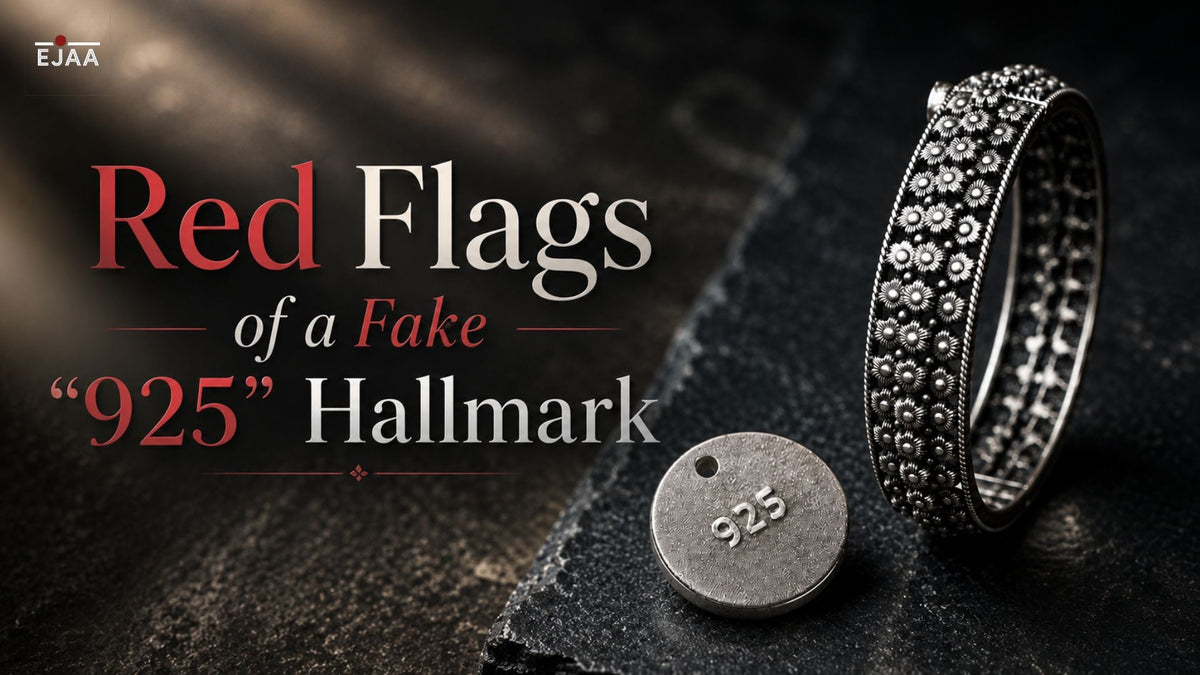
A fake "925" hallmark usually shows up through a blurry or uneven stamp, a peeling or bubbling finish, rust or discolouration, a missing BIS mark on larger pieces, or a price too low for the item's size. Since sterling silver isn't 100% pure, sellers rely on the "925" stamp to confirm purity, an easy detail for counterfeiters to fake with a cheap punch tool. Spotting these signs before buying can save you from paying silver prices for a base-metal piece.
1. Blurry or Shallow Stamp Engraving
A genuine hallmark is pressed cleanly and consistently into the metal. Counterfeiters often use cheap or worn punch tools, which leaves the engraving looking shallow, uneven, or smudged rather than sharp.
- Real stamps look crisp, deep, and evenly spaced
- Fake stamps often look faint, uneven, or barely visible
- Compare the "925" text against known genuine pieces if unsure
2. Peeling, Bubbling, or Flaking Finish
Since plating is just a thin outer layer, everyday wear eventually wears it thin enough to expose the base metal underneath. Once this starts happening, it typically doesn't stop, and the piece will continue to flake over time.
- Chipped or worn areas revealing a different colour underneath indicate plating.
- Genuine 925 silver doesn't flake, since it's solid metal, not a coated layer.
- Check high-friction areas like clasps and ring bands first.
3. Rust Spots or Unusual Discolouration
Real silver tarnishes over time, but it doesn't rust. Rust or odd colour changes almost always indicate an iron, steel, or copper base beneath a thin silver coating. This distinction matters, since natural tarnish is completely normal and doesn't indicate a fake.
- Reddish-brown or greenish spots usually point to a hidden base metal core
- Natural tarnish looks dull grey or black, not rust-coloured
- Persistent green or orange staining is a strong red flag
4. Missing Purity or BIS Hallmark Details
In India, genuine silver jewellery is expected to carry more than just the number "925." A single stamped number is easy to fake, but pairing it with an official hallmark or maker's mark adds a layer that's harder to replicate convincingly.
- Look for a BIS hallmark alongside the purity stamp, especially on larger pieces
- Larger bracelets, chains, or chokers without any mark at all are suspicious

- Smaller items like thin rings may have limited stamping space, but should still show something
5. A Price That's Too Good to Be True
Genuine silver has a baseline material cost tied to the day's silver rate. If a heavy or elaborately designed piece is priced well below what that weight of silver should cost, it's a strong signal something's off.
- A heavy piece priced far below expected silver value is a warning sign
- Compare listed weight against current silver rates before buying
- Unusually low prices are one of the most common tells across online listings
Final Thoughts
Checking a hallmark closely takes a few extra seconds but can prevent an expensive mistake. Genuine 925 silver jewellery, like Ejaa's handcrafted Pahadi and Kumaoni pieces, carries clear, verifiable hallmarking rather than a stamp that's easy to question. When in doubt, buy from sellers who are transparent about purity and hallmarking upfront.
FAQs
Is 92.5 silver considered pure silver?
No, 92.5 silver (sterling silver) is 92.5% pure, alloyed with other metals for strength, unlike 999 fine silver, which is nearly 100% pure.
What's the difference between 925 and 999 silver?
925 silver is more durable and common in jewellery, while 999 silver is purer but softer, typically used for coins or investment pieces.
Is a 925 hallmark always real silver?
Not necessarily. A stamp alone doesn't guarantee authenticity, since fake stamps can be applied to base-metal jewellery.
Can a 925 stamp be faked?
Yes, counterfeiters can easily punch a "925" mark onto plated or base-metal jewellery, which is why visual and physical checks matter.
Does fake silver tarnish like real silver?
Fake or plated silver may develop rust, greenish stains, or peeling, which differs from the natural grey-black tarnish seen on genuine silver.
What does a BIS hallmark on silver indicate?
A BIS hallmark confirms the piece has been certified for purity by India's official hallmarking authority, adding a layer of verification beyond the "925" stamp alone.
Why is checking silver hallmark authenticity important before buying?
Because a stamp can be faked, checking hallmark quality helps confirm you're paying for genuine silver rather than a coated base-metal alloy.