




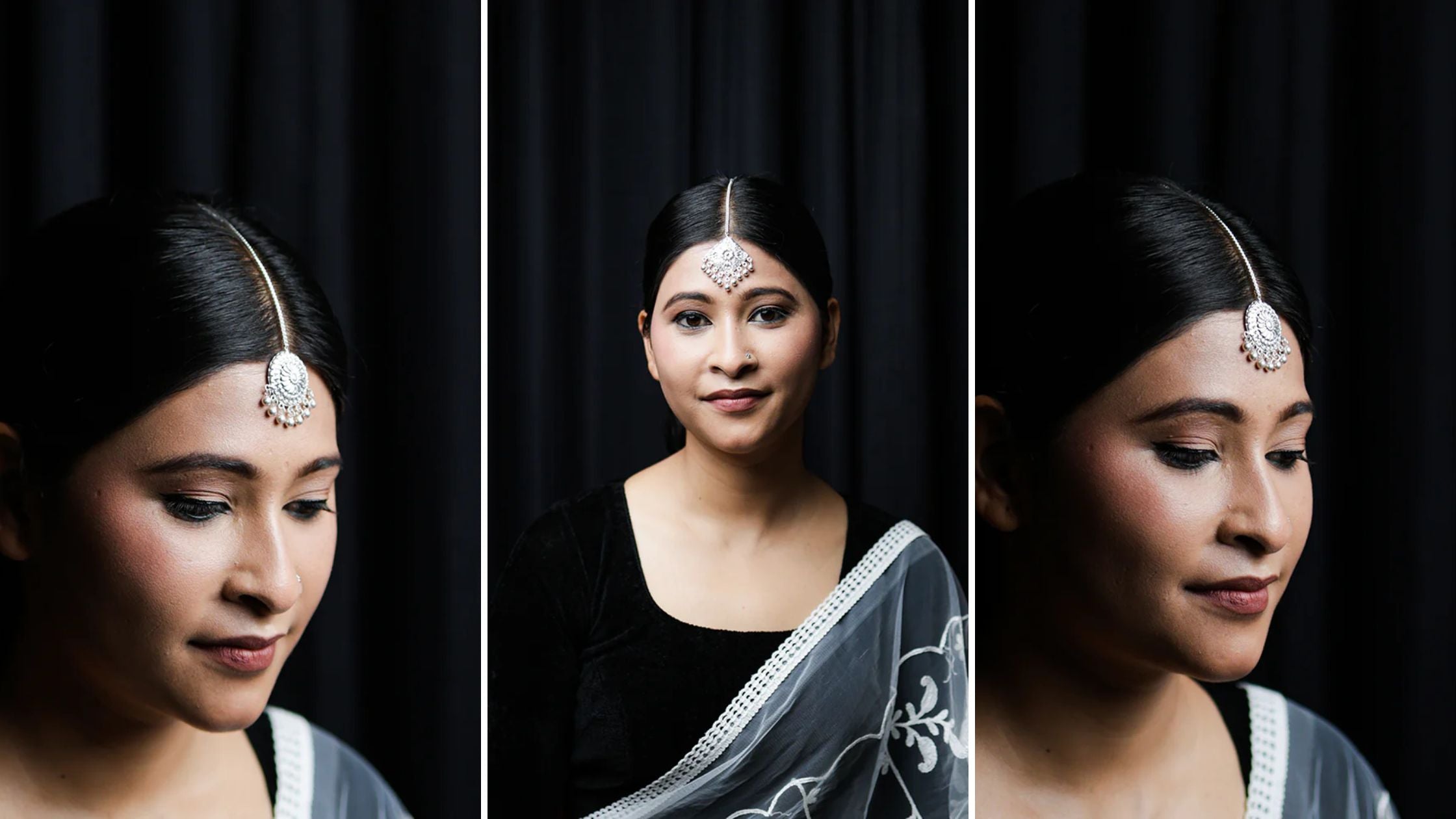
Silver Maangtika Designs: How to Choose the Right One for Your Face Shape and Outfit

The right silver maangtika depends on two things: your face shape and your outfit. Round faces suit drop-style tikkas that add length, oval faces can wear almost any design, heart-shaped faces suit smaller and more delicate pieces, and square or long faces do best with softer, rounder motifs. Outfit matters just as much bridal and saree looks call for fuller, more ornate designs, while fusion or everyday outfits suit a single clean pendant on a minimal chain.
This guide breaks down exactly how to match a design to your face shape, your outfit, and the occasion.
Why Silver? (And Why It Actually Matters in 2026)
Gold has always been the default for bridal jewellery. But silver is having a real moment and for good reason.
Silver sits lighter on the forehead. It catches light differently, with a cooler, moon-like sheen that complements both fair and dusky skin tones. And when the design is rooted in traditional craft like the Pahadi and Kumaoni styles that Ejaa revives, it carries a kind of quiet depth that gold often doesn't.
For anyone navigating the silver maangtika designs, how to choose a question in 2026, the short answer is: silver gives you more versatility. It works for weddings, festivals, and even styled everyday looks. You just need to match it right.
Silver Maangtika Designs by Face Shape
Face shape is the single biggest factor most people ignore. Here's how to think about it:
Oval Face
Lucky you, oval faces are the most versatile. Almost any silver maangtika design will work.
That said, chandelier or layered tikkas with a bit of length tend to look especially striking.
• Go for: Long pendant tikkas, floral motifs, intricate Kumaoni-style designs
• Avoid: Nothing major, feel free to experiment
Round Face
The goal is to add some vertical length. A tikka that drops lower on the forehead or has a longer maang chain helps elongate the face.
• Go for: Drop-style tikkas, single pendant with a longer chain, teardrop or elongated shapes
• Avoid: Wide, flat disc-style tikkas; they add horizontal emphasis
Heart-Shaped Face
Heart-shaped faces are wider at the forehead and narrower at the chin. A lighter, more delicate tikka keeps the focus balanced.
• Go for: Small to medium maangtikas, minimal chain, subtle floral or paisley designs
• Avoid: Very large statement tikkas, as they can make the forehead appear wider
Square or Angular Face
Soft curves work best. Look for round or floral motifs in the tikka head rather than geometric shapes.
• Go for: Round medallion tikkas, floral designs, curved chains
• Avoid: Angular or structured geometric patterns
Long or Oblong Face
You want to add some width. Choose tikkas with a wider pendant head, or go for side-maangtika styles that sweep across the hairline.
• Go for: Wide, ornate tikka heads, side tikkas, layered designs
• Avoid: Very long chain styles, they'll elongate the face further

Matching Silver Maangtika Designs to Your Outfit
Face shape is half the equation. Outfit context matters just as much.
Sarees and Lehengas
For heavy embroidered fabrics, you want a tikka that holds its own without competing. Traditional Pahadi-inspired designs with oxidized silver detailing and fine filigree pair beautifully with both Banarasi silks and Chanderi weaves.
Tip: If your saree has heavy work at the border, let the tikka carry the weight. Keep other jewellery minimal.
Anarkali and Salwar Sets
A mid-weight tikka works best here. Not too delicate, not too statement. A floral pendant on a simple chain is almost always the right call.
Fusion and Contemporary Outfits
This is where silver maangtikas really shine. A single clean pendant tikka on a minimalist chain looks stunning with an off-the-shoulder top, a white kurta, or even a structured blazer paired with ethnic separates.
Look for Ejaa Weightless or Ejaa Pride collection pieces designed with exactly this kind of modern, everyday styling in mind.
Bridal Looks
Go fuller. Layered tikkas, ornate pendants, and designs with fine stone or bead detailing are all appropriate here. The Ejaa Vintage collection draws from 200-year-old Kumaoni moulds; these are pieces with real ceremony to them.
A Quick Buying Guide: What to Check Before You Buy
Once you've narrowed down style and face shape, run through these basics before purchasing:
• Weight: A tikka that's too heavy becomes uncomfortable within an hour. Check if the brand mentions lightweight or adjustable options.
• Chain length: Longer chains sit lower, which affects both the look and the parting coverage. Most good brands offer adjustable lengths.
• Finish: Oxidized silver has an antique, traditional feel. Polished silver is brighter and more contemporary. Choose based on your outfit palette.
• Craftsmanship: Look for clean soldering, no sharp edges, and solid pendant attachment. Handcrafted pieces often have small natural variations that's a feature, not a flaw.
• Occasion fit: An intricate bridal tikka can be too much for a daytime function. Have at least one light, versatile piece in your collection.
The Ejaa Difference: Pahadi Silver, Modern Sensibility
At Ejaa, every maangtika is rooted in Kumaoni craft tradition. The designs are drawn from the rich pahadi jewellery heritage of Uttarakhand, a region where silver has always been worn close to the body, believed to carry the calm of the mountains.
What makes Ejaa's silver maangtika designs worth looking at seriously is the balance: traditional motifs reimagined for real, contemporary wear. Pieces that aren't just for the wedding day, but for every day you want to feel a little more yourself.
Browse the Ejaa Maangtika collection at ejaa. In to find pieces arranged by style, weight, and occasion, with video call assistance available if you want to see the finish and size up close before buying.
Frequently Asked Questions
Q1. Which silver maangtika design suits a small forehead?
For a small forehead, opt for a delicate, compact tikka with a shorter chain. A small floral or circular pendant keeps proportions balanced without overwhelming your features. Avoid large, heavy pendants that can look disproportionate.
Q2. Can I wear a silver maangtika with a non-bridal outfit?
Absolutely. In fact, styled right, a silver maangtika looks stunning with everyday ethnic and fusion wear. A minimal single-pendant design on a thin chain pairs well with kurtas, dresses, or even formal Indo-western outfits.
Q3. How do I maintain silver maangtika jewellery?
Store it in a dry place, away from perfumes and moisture. Wipe gently with a soft cloth after wearing. For oxidized silver, avoiding aggressive polishing will remove the intentional dark finish that gives the piece its character.
Q4. What is the difference between oxidized and polished silver maangtika?
Oxidized silver has a darker, antique tone that highlights intricate engraving and traditional motifs ideal for ethnic and festive wear. Polished silver has a bright, mirror-like shine that suits contemporary and fusion outfits. Both are made from the same quality silver; the finish is the only difference.
Q5. Is it okay to wear a maangtika if I don't part my hair in the centre?
Yes! Side partings are common, and side maangtikas are a beautiful design category made specifically for this. Even centre-parting tikkas can be adapted to simply position the chain along your natural parting. The piece is yours to style your way.