




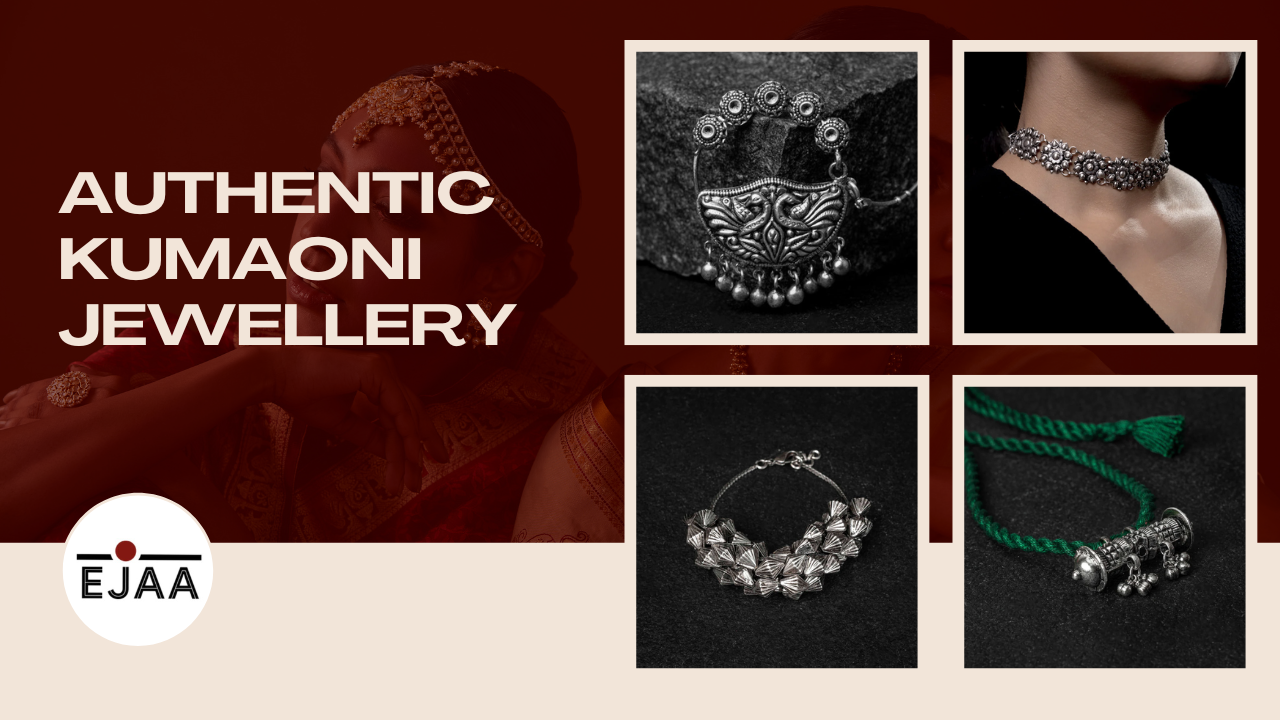
Traditional Kumaoni Bridal Jewellery: What Every Pahadi Bride Wears

A Kumaoni bride doesn't just wear jewellery on her wedding day. She wears centuries of culture, love, and mountain memory.
Every piece in a traditional pahadi bridal set has a name, a place, and a meaning. From the heavy silver choker at her throat to the delicate maangtika parting her hair, nothing is random. Nothing is merely decorative.
If you're planning a pahadi wedding, shopping for Kumaoni bride silver jewellery, or simply want to understand the heritage behind these extraordinary pieces, this guide is for you.
Why Kumaoni Bridal Jewellery Is Unlike Anything Else
The mountains of Uttarakhand shaped a culture that is deeply intimate with nature, ritual, and community. Kumaoni bridal jewellery reflects exactly that.
Unlike the heavily gold-laden bridal sets of the plains, traditional pahadi bridal set jewellery leans into silver, moon-like in its sheen, cooler to the skin, deeply rooted in the region's identity. Silver here isn't a second choice. It is the choice.
These pieces are also remarkably wearable. Lightweight, adjustable, genderless in many ways, they are made to be lived in, danced in, and passed down.
The Essential Pieces in a Traditional Pahadi Bridal Set
Here's a walk-through of what a Kumaoni bride traditionally wears, from head to toe.
1. Maangtika The Crown of the Parting
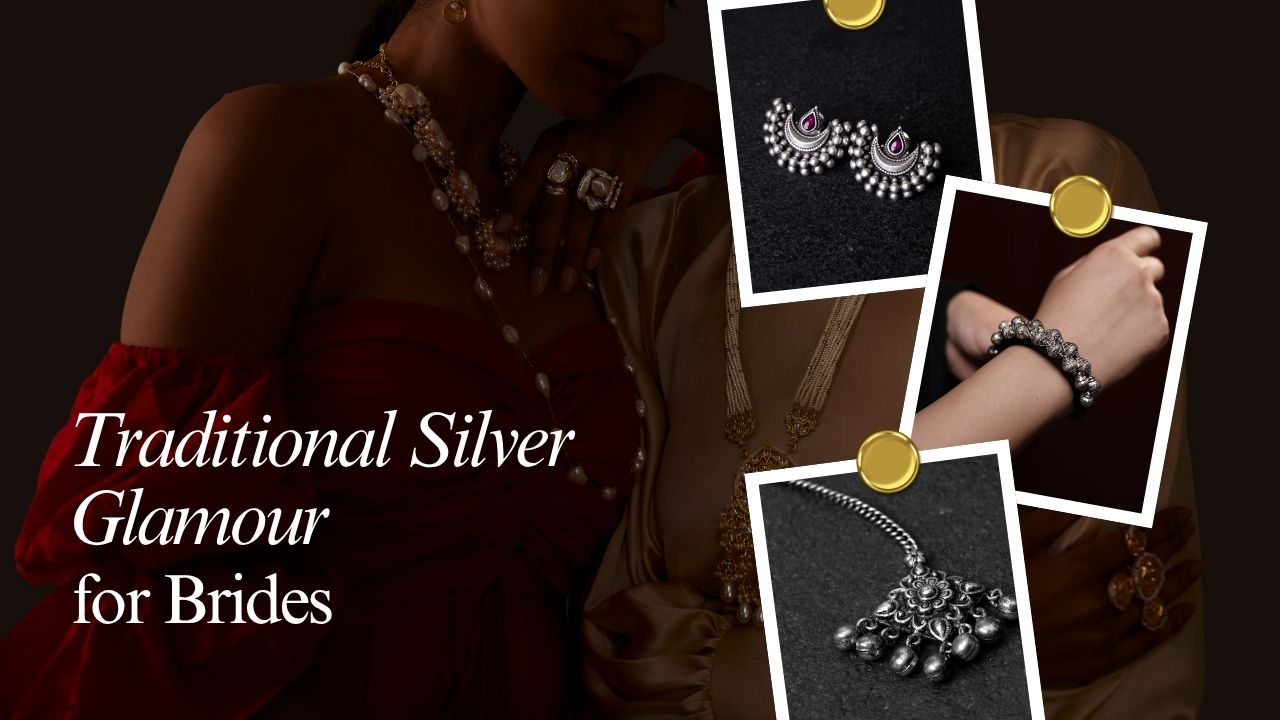
The maangtika sits at the centre of the bride's forehead, resting along her hair parting. In Kumaoni tradition, it marks the sacred beginning of her married life.
Traditional designs feature sun and moon motifs, floral patterns, or abstract tribal forms, all rendered in oxidized or polished silver. It's always the first thing people notice.
2. Nath The Pahadi Nose Ring
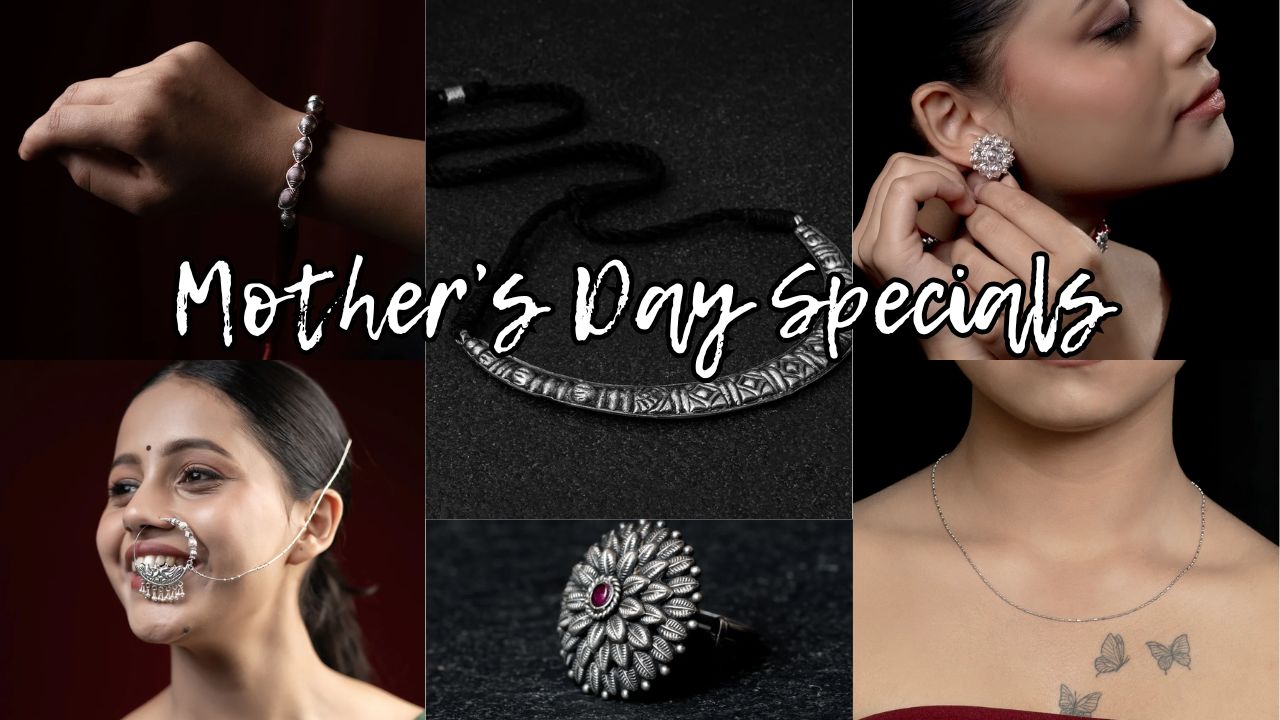
The Kumaoni Nath is one of the most iconic pieces of the Uttarakhand bridal jewellery tradition. Larger and more elaborate than everyday nose rings, it sits to one side and is often connected to the hair with a chain.
It is worn as a symbol of marriage, femininity, and social identity. Some naths are passed down as heirlooms worn by a grandmother, then a mother, then a bride.
3. Guluband The Silver Choker
Perhaps the most powerful piece of Kumaoni bridal silver jewellery, the Guluband is a wide, structured choker that sits boldly at the base of the neck.
In older traditions, a guluband was made using intricate filigree work or beaten silver plates. Today, contemporary interpretations maintain that same presence while adapting to modern necklines and fabrics.
It's the piece that anchors an entire bridal look.
4. Matarmala The Long Silver Necklace
Worn layered beneath or alongside the guluband, the matarmala is a long, beaded silver necklace that falls gracefully over the chest.
It adds length and movement to the bridal look, and when it sways as the bride dances in her baraat, it becomes unforgettable.

5. Pahuchi & Kada Wrists That Tell a Story
The Pahuchi is a traditional Kumaoni bracelet, wide and often embossed with pahadi motifs, worn on both wrists. Alongside it, the Kada (a solid silver bangle) adds structure and weight.
Together, they create that characteristic sound of silver on silver, a sound that many describe as the music of a pahadi wedding.
6. Janjeer The Silver Waist Chain
Less commonly seen at modern weddings but deeply traditional, the Janjeer is a delicate silver chain worn around the waist. It cinches the silhouette and has deep cultural roots in pahadi bridal dressing.
How to Style Kumaoni Bridal Jewellery in 2025
You don't need to wear every piece at once. A modern pahadi bride often picks intentionally.
• For a traditional ceremony: Guluband + Matarmala + Maangtika + Nath + Pahuchi the full ensemble.
• For a reception or mehendi: A single statement piece (like the guluband) with minimal other jewellery lets it breathe.
• For fusion outfits: The nath or maangtika alone with contemporary clothing is a beautiful nod to tradition without going full traditional.
• Oxidized vs. polished: Oxidized silver suits more dramatic, dark outfits. Polished silver works beautifully with pastels and ivory.
Why Silver, Not Gold, Is the Heart of Uttarakhand Bridal Jewellery Tradition
In Kumaoni culture, silver has always been preferred for its connection to nature, to moonlight, to the rivers, to the snow on the peaks. Gold fell on the plains. Silver felt of the mountains.
Practically, silver also suited pahadi life; it's lighter, more durable in cold climates, and easier to work with for local artisans using traditional techniques.
At Ejaa, every piece is crafted in hallmark 92.5 sterling silver, keeping that connection to the mountain's soul intact, whether it's a bridal set or an everyday piece.

Gifting Kumaoni Bridal Jewellery: What to Choose
Attending a pahadi wedding? Kumaoni bride silver jewellery makes the most meaningful wedding gift, especially when it's a piece with cultural roots rather than something generic.
A few gifting ideas that always land well:
• A silver maangtika for the bride is timeless and personal.
• A pahuchi bracelet pairs beautifully with both traditional and fusion bridal wear.
• A silver necklace is especially meaningful if chosen in a traditional Kumaoni style.
At Ejaa, all pieces come in premium gift packaging suited for weddings and celebrations, so it's ready to gift as-is.
FAQs
Q1. What is the most important piece of jewellery for a Kumaoni bride?
The Nath (nose ring) and Maangtika are considered the most sacred bridal pieces in Kumaoni tradition. Together, they mark the transition from girl to bride, and in many families, these are the pieces that are given as part of the dowry or passed down through generations. The Guluband (choker) is often considered the most visually defining piece of the entire set.
Q2. Is Kumaoni bridal jewellery only silver, or does it include gold too?
Traditionally, silver is the dominant metal in Uttarakhand bridal jewellery. While wealthier families sometimes incorporated gold pieces, especially in necklaces and earrings, silver remains the cultural heart of pahadi bridal tradition. Its cool sheen, lightweight nature, and connection to mountain aesthetics made it the natural choice for generations of Kumaoni and Garhwali brides. Today, most couples specifically seek authentic silver for that reason.
Q3. Can non-Pahadi brides wear Kumaoni bridal jewellery?
Absolutely. Kumaoni bridal jewellery transcends regional boundaries because of its timeless design sensibility. Many brides from other states and even outside India are drawn to the bold, nature-inspired forms of pahadi silver jewellery. Wearing it respectfully and knowingly, understanding the culture behind each piece, is all that's needed. At Ejaa, the designs are intentionally genderless and trans-seasonal, made for anyone who connects with the aesthetic and the story.
Q4. How do I care for silver bridal jewellery after the wedding?
Silver jewellery needs a little care to retain its beauty, especially pieces worn for long ceremonies. Store pieces in a dry, airtight box away from moisture, perfumes, and chemicals. After wearing, gently wipe each piece with a soft, dry cloth. For oxidized silver, avoid harsh polishing, the dark patina is part of its character and design. If your pieces lose their shine over time, a professional silver polish or a quick buff with a microfibre cloth can restore them beautifully.
Q5. What's the difference between Kumaoni and Garhwali bridal jewellery?
Both traditions are rooted in the mountains of Uttarakhand and share a love for silver and nature-inspired design, but the regional nuances differ. Kumaoni jewellery (from the Kumaon division) tends to feature more geometric and floral motifs, with pieces like the Guluband and Nath being especially prominent. Garhwali jewellery (from the Garhwal division) often has slightly heavier, bolder forms and different regional names for similar pieces. At Ejaa, the designs draw from both traditions, celebrating the full richness of pahadi culture.
The Jewellery That Carries the Mountain Forward
A Kumaoni bride's jewellery isn't chosen casually. Each piece is a conversation between the past and the present, between a grandmother's hands and a granddaughter's wedding day.
That's what makes traditional Kumaoni bridal jewellery so enduring. It doesn't go out of style because it was never about trends. It's about belonging to a place, to a people, to a way of life that the mountains have protected for centuries.
At Ejaa, we carry that tradition forward one handcrafted silver piece at a time.