




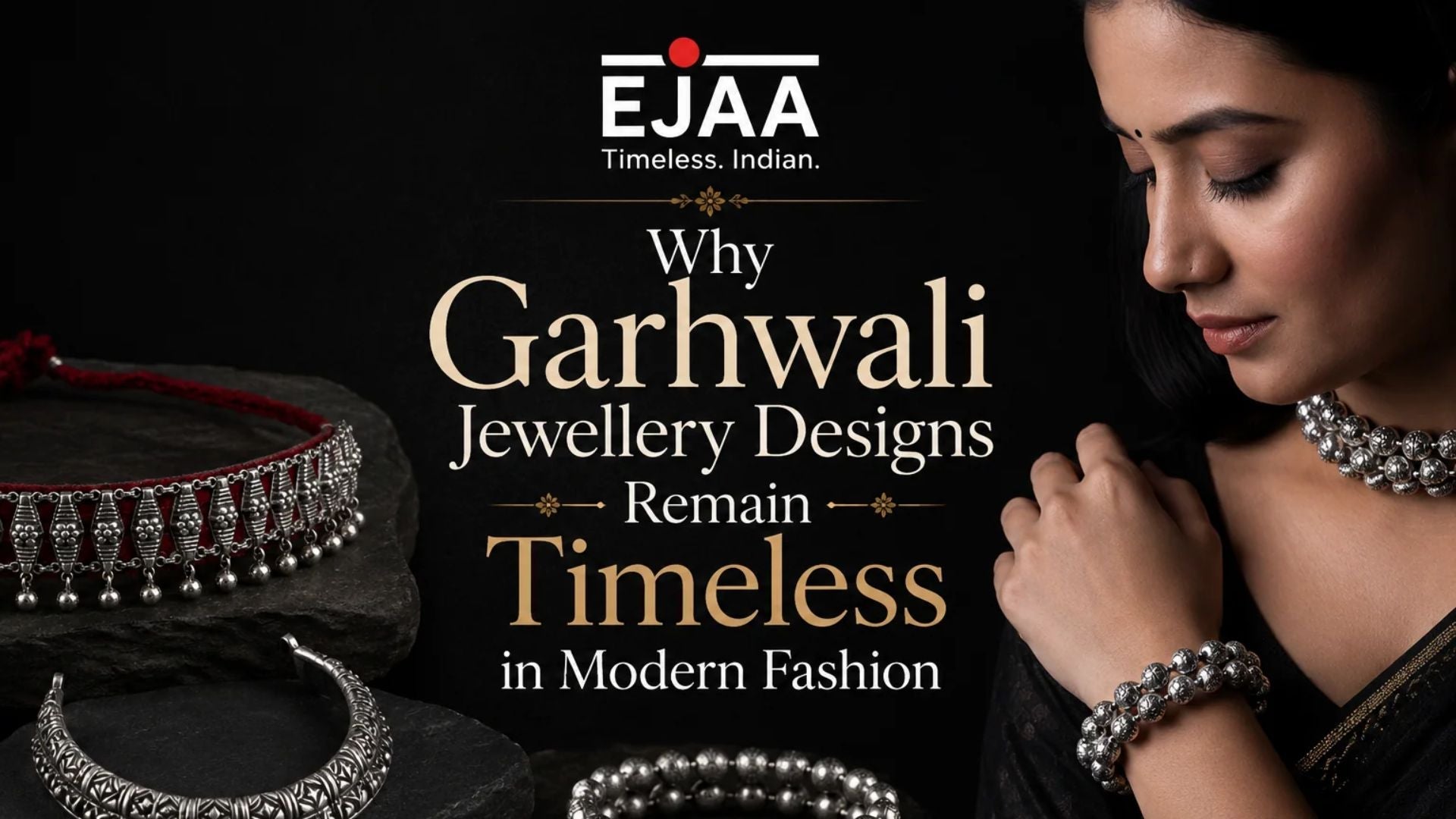
Why Garhwali Jewellery Designs Remain Timeless in Modern Fashion
 Garhwali jewellery designs are traditional silver ornaments from the Garhwal region of Uttarakhand, including the guluband, pahuchi, nath and hansuli worn for weddings, festivals, and everyday styling. These designs are culturally significant because they represent generations of mountain artisans preserving Garhwali heritage through handcrafted silverwork rather than mass production. Garhwali brides traditionally wear a guluband as the main neckpiece, paired with pahuchi bracelets and a nath, often finished in oxidised silver for bridal occasions. Below, you'll find each ornament explained, how to identify authentic handcrafted pieces, and how to style them with modern outfits.
What Makes Garhwali Jewellery Designs Unique
Garhwali jewellery isn't something that comes off a factory line. It's shaped by mountain artisans who learned the craft from family before them, often without any formal training beyond what was passed down at home. That hands-on lineage is part of why each piece feels a little different from the next, even within the same design.
A few things set it apart:
-
Made almost entirely in silver, which is the traditional metal of choice in Garhwal
-
Designs are passed down through oral tradition and family workshops, not catalogues
-
Motifs often reflect local nature, deities, and rural life in the mountains
-
Pieces are meant to be heirlooms built to last decades, not seasons
At Ejaa, every piece is handcrafted in Uttarakhand, supporting the same artisan communities that have shaped this craft since 1985.
Most Popular Garhwali Jewellery Designs
If you're exploring traditional Garhwali silver jewellery for the first time, a handful of pieces come up again and again. Each one has a distinct role, and most families stick to the same core set regardless of region or budget.
-
Guluband – a bold silver choker-style necklace, often the centrepiece of a bridal set
-
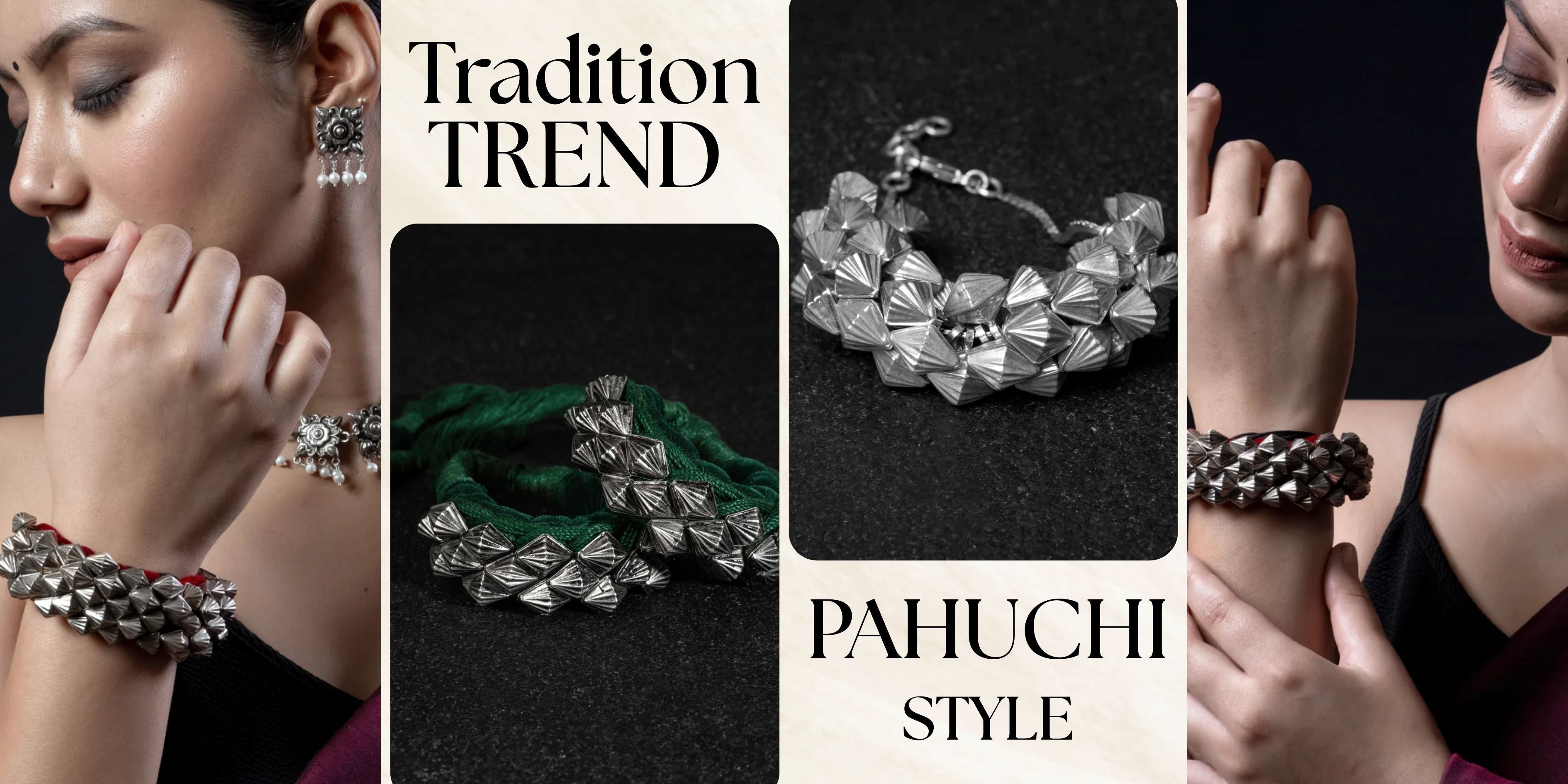
Pahuchi – a wide silver bracelet worn in pairs, traditionally on both wrists
-
Nath – the traditional nose ring, varying in size depending on region and occasion
-
Hansuli – a rigid silver neck ornament, often worn by older generations and revived in modern bridal looks

These pieces have stayed relevant because the designs themselves are flexible and equally suited to a wedding stage or a simple festival outfit.
Why Silver Is Central to Garhwali Ornaments
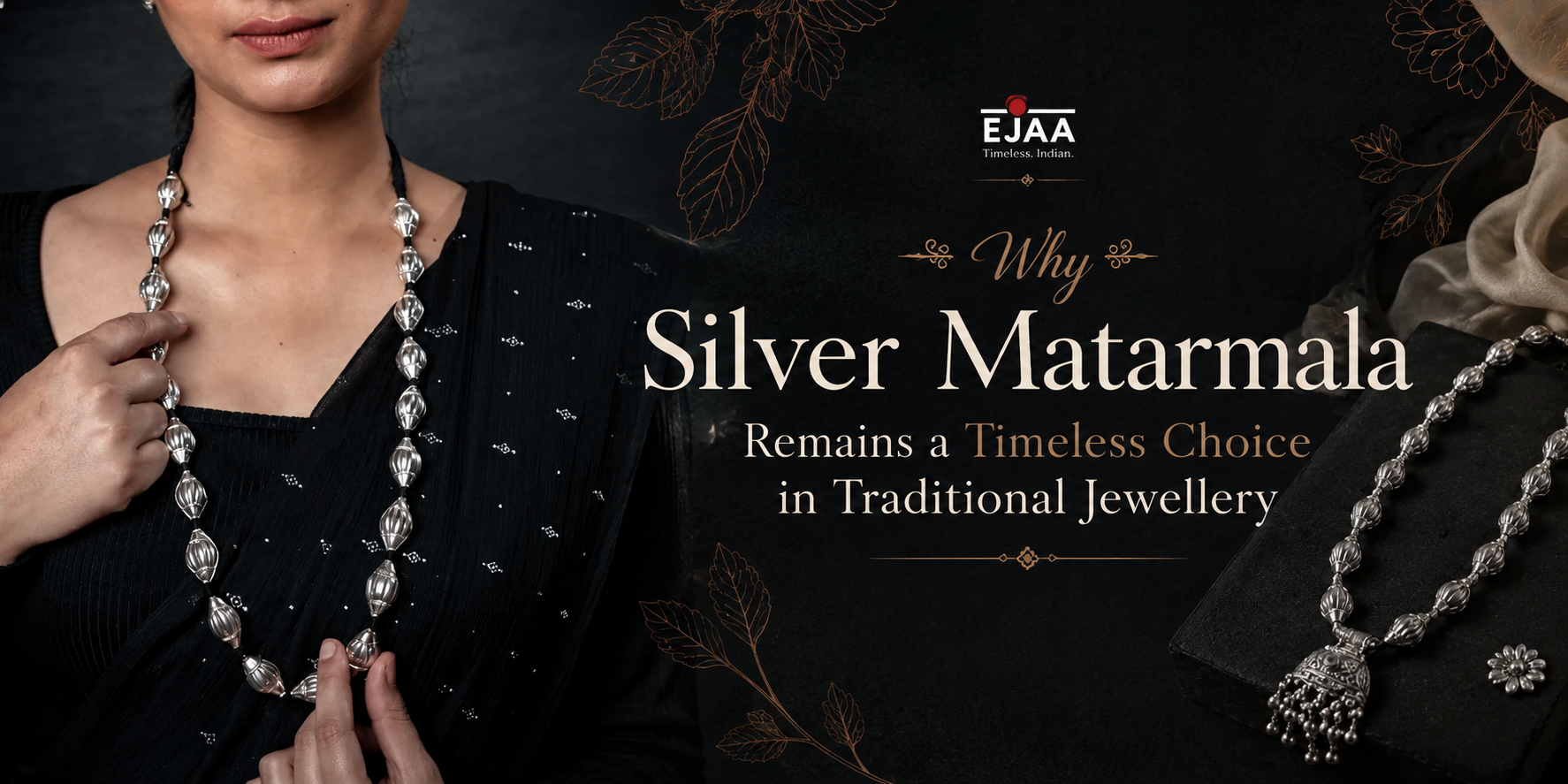
Unlike many Indian regional jewellery traditions that lean heavily on gold, Garhwali ornaments are built almost entirely around silver. This isn't just a stylistic preference; it has practical roots. Silver was historically more accessible to mountain communities than gold, and it holds up better under the bold, sculptural shapes typical of Pahadi jewellery. It's easier to maintain detailed engraving on silver without the design wearing flat over time
Garhwali Jewellery vs Kumaoni Jewellery: Where They Differ
It's common to see Garhwali and Kumaoni jewellery used interchangeably under the broader label of "Pahadi jewellery," but they aren't the same thing. Garhwali designs tend to be heavier and more structured, with pieces like the guluband and hansuli being fairly specific to the region. Kumaoni jewellery, by contrast, often leans toward finer filigree work, with naming conventions that can differ even for similar-looking pieces.
Both traditions share the same base material sterling silver, but the proportions, motifs, and regional history behind each are distinct enough that they shouldn't be treated as one category.
Styling Garhwali Jewellery With Modern Outfits
Traditional doesn't have to mean outdated. Garhwali jewellery designs work well with contemporary clothing far more often than people expect, mostly because the silhouettes are bold enough to stand on their own without needing a fully traditional outfit around them.
-
A guluband over a plain kurta or fitted blouse instantly elevates a simple outfit
-
Pahuchi pairs well with both ethnic and Indo-Western sleeves

-
Mixing oxidised and polished silver pieces is increasingly popular for layered looks
Where to Buy Authentic Garhwali Jewellery Online
When purchasing traditional Garhwali jewellery online, authenticity and craftsmanship matter as much as the design itself. At EJAA, every piece is crafted in 92.5% sterling silver, inspired by traditional Pahadi designs, and thoughtfully packaged with care instructions to preserve its beauty for years to come.
Frequently Asked Questions
1. What is traditional Garhwali jewellery?
Traditional Garhwali jewellery refers to handcrafted silver ornaments native to the Garhwal region of Uttarakhand, including pieces like the guluband, pahuchi, nath, and hansuli.
2. What jewellery do Garhwali brides wear?
Garhwali brides typically wear a guluband as the main neckpiece, pahuchi bracelets on both wrists and a nath usually finished in oxidised silver for bridal occasions.
3. Is Garhwali jewellery made of silver?
Yes. Unlike many regional jewellery traditions that favour gold, Garhwali ornaments are predominantly made from sterling silver, which suits the bold, sculptural style of the designs.
4. What is the meaning of Guluband?
Guluband is a wide, bold silver choker-style necklace and one of the most recognisable pieces in Garhwali jewellery, traditionally worn for weddings and festive occasions.
5. What is the significance of Pahuchi in Uttarakhand?
Pahuchi is a wide silver bracelet worn in pairs, one on each wrist. It's considered an essential part of Garhwali bridal jewellery and is also worn during festivals.
6. Why is traditional Pahadi jewellery becoming popular again?
Growing interest in heritage craftsmanship, sustainable fashion, and handcrafted products has brought renewed attention to Pahadi jewellery, especially among buyers seeking authentic, artisan-made pieces over mass-produced alternatives.
7. What are the names of traditional Garhwali ornaments?
Common traditional Garhwali ornaments include guluband, pahuchi, nath and hansuli, each tied to a specific occasion or region within Garhwal.
8. How do you identify authentic handcrafted Garhwali jewellery?
Check for hallmark certification of silver purity, slight handmade irregularities in finish, appropriate weight, and a seller who can clearly explain sourcing and artisan origin rather than generic descriptions.