




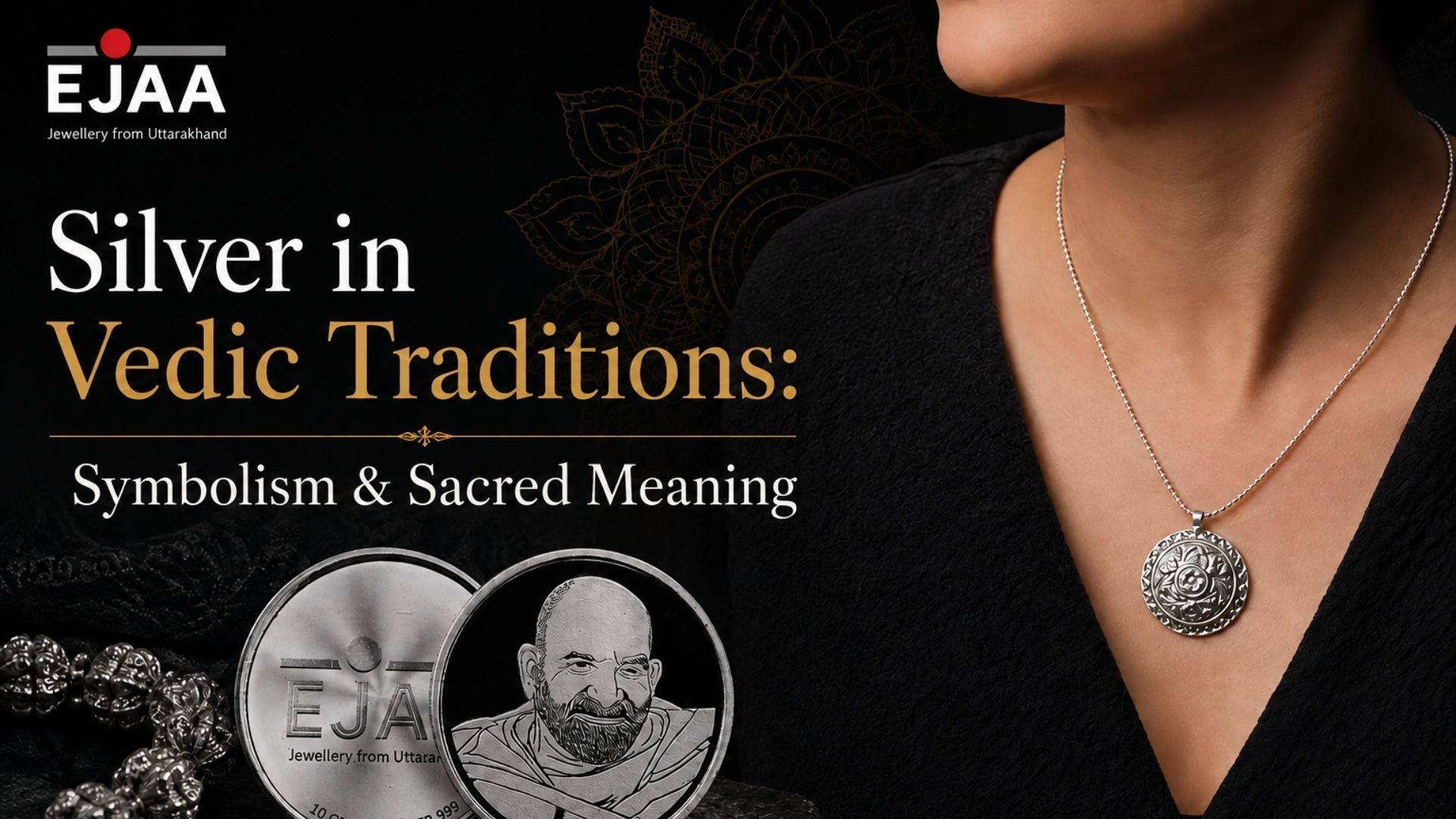
Why Is Silver Considered Sacred in Vedic Traditions? A Look at Its Symbolism

In Vedic tradition, silver is considered sacred because it's associated with purity, the moon, and the goddess energy connected to calmness and emotional balance. Ancient Indian texts and long-standing ritual practices treat silver as a "cooling" and auspicious metal, often used in temple items, offerings, and daily rituals. Its untarnished shine has traditionally symbolised clarity and honesty. Over centuries, this belief shaped how silver is used from puja items to jewellery worn during festivals. This blog explores where these beliefs come from and how they continue to influence how silver is worn and used today, without presenting them as scientific or medical fact.
Silver's Symbolic Roots in Vedic Thought
-
In Vedic and broader Hindu tradition, silver is often linked to the moon (Chandra), associated with calmness, reflection, and emotional balance.
-
It is frequently described as a peaceful metal, in contrast to gold, which is associated with the sun and heat.
-
Many traditional texts and cultural practices treat metals as carrying symbolic, not medical, significance. Silver's association with purity is a belief system, not a proven scientific claim.
Why Silver Is Used in Rituals
-
Puja items: Silver coins, idols, and vessels are common in Hindu rituals, valued for their untarnished shine, which is symbolically linked to cleanliness.
-
Offerings: Silver is often gifted or offered during religious ceremonies, seen as an auspicious material for beginnings, weddings, housewarmings, and festivals like Dhanteras.
-
Waist threads and anklets: In many households, silver anklets and waist threads are worn traditionally, especially by women and children, rooted in regional customs rather than a single Vedic rule.

Purity & Everyday Symbolism
-
Because silver doesn't corrode easily compared to other metals, it has long been associated with cleanliness and purity in daily life.
-
It's traditionally considered a neutral, wearable metal appropriate across ages and genders in a way gold historically wasn't in everyday contexts.
-
Today, this symbolism continues, but modern buyers increasingly value silver simply for its versatility, affordability, and timeless aesthetic.
- In practical terms, what 999 silver means is 99.9% pure silver, the closest metallic equivalent to the 'untarnished purity' Vedic texts describe symbolically.
Silver in Vedic Culture vs. Modern Relevance
|
Aspect |
Vedic & Traditional Use |
Modern Relevance |
|
Primary use |
Ritual objects, temple items, puja vessels |
|
|
Occasions worn |
Weddings, festivals, religious ceremonies |
Daily wear, casual styling, statement pieces |
|
Who wore it |
Passed down generationally within families |
Chosen individually, across all age groups |
|
Core value seen |
Purity, auspiciousness, ritual significance |
Versatility, affordability, timeless aesthetic |
Final Thoughts
Silver's sacred reputation in Vedic tradition comes from centuries of ritual use, symbolism, and cultural association with purity and the moon beliefs that continue to shape how the metal is valued today. At Ejaa, this same respect for tradition runs through our handcrafted 92.5% pure silver Pahadi jewellery, made by artisans in Uttarakhand who carry forward Kumaoni design sensibilities. While our pieces are made for modern wardrobes, the metal itself still carries the same quiet sense of purity and heritage that Vedic tradition has long associated with silver.
FAQs
What does silver symbolize spiritually?
Silver is traditionally associated with purity, calmness, and the moon, symbolising emotional balance rather than material wealth.
Why is silver considered holy?
Many Hindu rituals use silver for offerings and puja items because of its long-standing association with cleanliness and untarnished purity.
What does silver represent in Hinduism?
In Hindu tradition, silver often represents purity, the lunar energy of Chandra, and is considered an auspicious metal for rituals and gifting.
What is the cultural significance of silver in India?
Silver has been used across India for centuries in jewellery, coins, and ritual items, valued both for its symbolism and its everyday wearability.
Is silver considered better than gold in Vedic tradition?
Vedic tradition doesn't rank one as "better" gold and silver are associated with different symbolic energies, each suited to different rituals and occasions.