




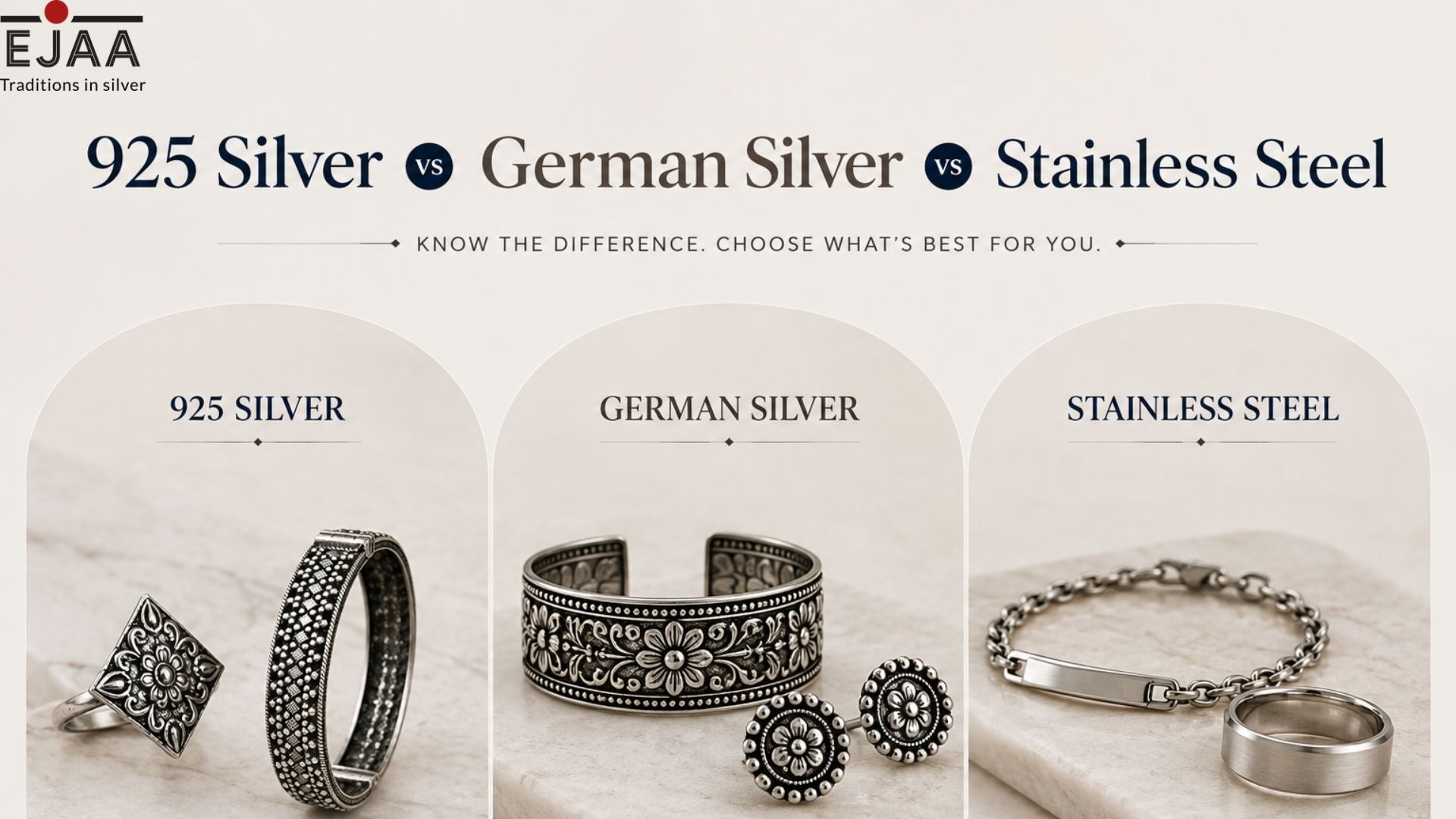
925 Silver vs German Silver vs Stainless Steel: Which Is Better for Jewellery?

925 sterling silver is the better choice if you want real silver content, resale value, and long-term durability. German silver and stainless steel are cheaper alternatives that look similar but contain no actual silver, making them better suited for everyday, low-maintenance pieces rather than investment jewellery.
All three metals can look nearly identical on a store shelf, which is exactly why so many buyers end up confused at the point of purchase. Below is a straightforward breakdown of what each metal actually is, how they compare, and which one makes sense for different kinds of buyers.
What Is 925 Silver?
The meaning of 925 silver is straightforward: it's an alloy of 92.5% pure silver and 7.5% other metals (usually copper), added for strength. Pure silver on its own is too soft for daily wear.

- Also called 925 sterling silver
- Carries genuine resale and scrap value
- Can be verified through BIS hallmark silver jewellery certification in India
- Slightly tarnishes over time but polishes back easily
What Is German Silver?
Despite the name, German silver is an alloy of copper, zinc, and nickel it contains no silver at all. It's valued for its silver-like shine at a fraction of the cost.
- Common in German silver jewellery, pooja items, and gift pieces
- No resale value since there's no actual silver content
- Can tarnish faster and may cause skin reactions for those sensitive to nickel
- Best suited for occasional or costume jewellery, not daily wear
What Is Stainless Steel Jewellery?
Stainless steel jewelry has grown popular for its low maintenance and affordability.
- Highly scratch- and tarnish-resistant
- Doesn't contain silver, so it carries no resale value
- Hypoallergenic in most cases, though quality varies by grade
- Ideal for gym wear, travel, or daily-use pieces you don't want to worry about
925 Silver vs German Silver vs Stainless Steel
|
Factor |
925 Silver |
German Silver |
Stainless Steel |
|
Actual silver content |
Yes (92.5%) |
None |
None |
|
Resale value |
Yes |
No |
No |
|
Tarnish resistance |
Moderate |
Low |
High |
|
Price |
Higher |
Low |
Lowest |
|
Best for |
Heirloom & daily wear |
Occasional wear |
Low-maintenance daily wear |
Choose the Right Type of Silver for Your Jewellery
If long-term value and authenticity matter, 925 silver remains the standard choice; it's why most silver jewellery brands and top silver brands in India manufacture primarily in 925 sterling silver rather than alternatives. German silver and stainless steel are reasonable choices only when the goal is short-term style over lasting value.

Final Thoughts
Choosing between these three metals comes down to what you actually want from your jewellery investment: value, everyday convenience, or occasional styling. At Ejaa, every piece is handcrafted in genuine 925 sterling silver by artisans in Uttarakhand, so you're not choosing between authenticity and design; you get both, backed by real silver content rather than a look-alike alloy.
FAQs
Is stainless steel or 925 silver better for jewelry?
925 silver is better for value and heirloom wear since it contains real silver; stainless steel is better for low-maintenance, everyday durability.
Is German silver the same as 925 silver?
No. German silver is a copper-zinc-nickel alloy with no silver content, while 925 silver is 92.5% genuine silver.
What are the disadvantages of German silver?
It tarnishes faster than sterling silver, has no resale value, and can cause skin irritation for those sensitive to nickel.
Does German silver have resale value?
No, because they contain no actual silver, German silver items are generally not accepted for resale or exchange.
What are the disadvantages of stainless steel jewelry?
It cannot be resized easily, has no resale value, and lacks the traditional, handcrafted finish associated with sterling silver.
How can I check if my silver jewellery is genuine?
Look for the BIS hallmark on silver, which confirms the piece meets the 925 purity standard in India.
Which type of silver is best for jewellery?
For daily wear with long-term value, 925 sterling silver is considered the best choice among these three options.