




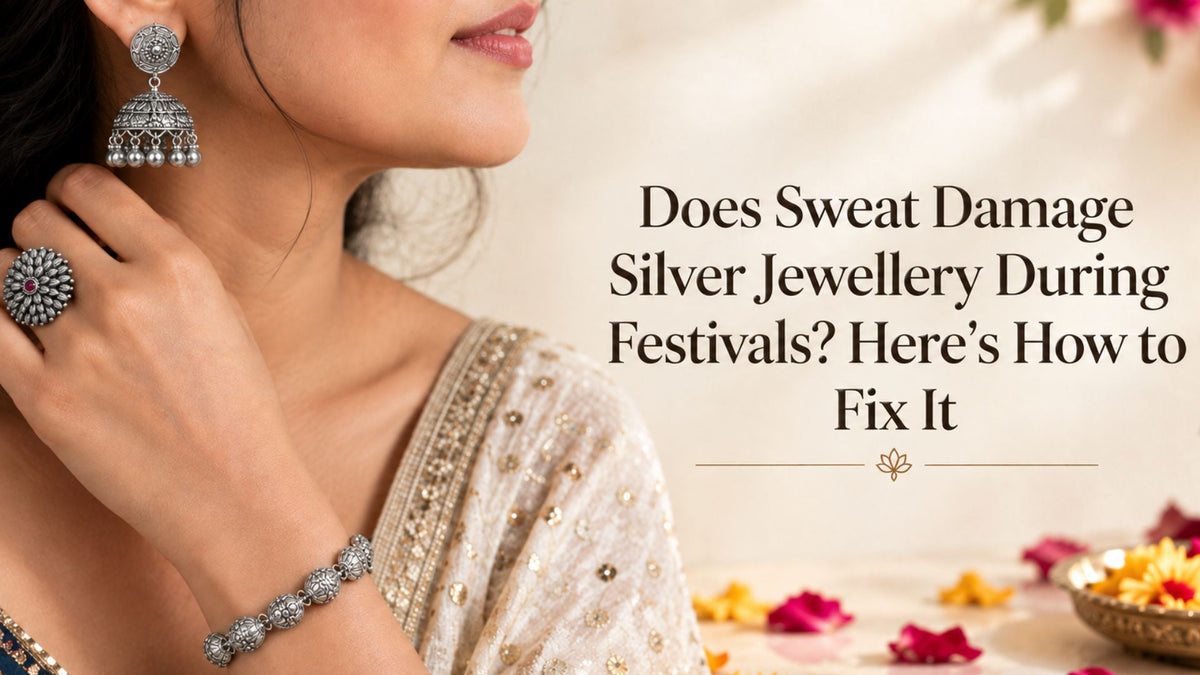
Does Sweat Damage Silver Jewellery During Festivals? Here's How to Fix It

Sweat doesn't permanently damage silver jewellery; it causes tarnish, a surface-level darkening that's completely reversible. What happens is a chemical reaction: the salt, acidity, and sulfur compounds in sweat react with the copper alloyed into 925 sterling silver, and that reaction speeds up during festivals, when you wear jewellery for hours in heat, humidity, and constant movement. The good news is that tarnished silver isn't damaged silver, and a few minutes of cleaning usually brings the shine right back.
Why Sweat Can Tarnish Silver Faster in Festivals
925 sterling silver contains 92.5% silver and is alloyed with other metals, including copper, to make it stronger and more suitable for jewellery. Sweat, moisture, and other substances on the skin can react with these metals and cause a darker surface layer called tarnish.
During festivals, jewellery often stays exposed to these conditions for much longer:
-
Long hours of dancing: Garba and Dandiya involve continuous movement and sweating, increasing contact between sweat and jewellery.
-
Heat and humidity: Warm, crowded spaces can increase moisture and make tarnishing appear faster.
-
Perfume and ittar: Fragrances applied near jewellery can add more chemical exposure to the metal.
-
Mehendi: Fresh mehendi and its surrounding products can come into contact with jewellery and contribute to surface discolouration.
-
Layered jewellery: Wearing several pieces together can trap sweat and moisture against the skin.
Signs It's Tarnish, Not Real Damage
Silver doesn't rust the way iron does, so "silver rust" is really just tarnish. Here's what to look for:
-
A dull grey, yellow, or black surface film; this is tarnish
-
A greenish tint on skin, not the jewellery, usually copper reacting with skin, not a sign of fake silver
-
No pitting, cracking, or texture change; if the shape and detailing are intact, it's cosmetic

How to Fix It After a Festival
-
Wipe with a soft, dry cloth immediately after taking it off, before tarnish sets in
-
For light tarnish, clean silver at home with lukewarm water and a drop of mild soap, then dry fully
-
For stubborn tarnish, a soft baking soda paste works well; rinse and dry thoroughly afterwards
-
Avoid tissues or rough cloths, which can scratch the surface while you clean
Preventing It Before the Next One
-
Put jewellery on last, after perfume, mehendi, and makeup are done
-
Choose oxidised silver for festival wear; the darker finish naturally hides tarnish better than polished silver
-
Keep a soft pouch handy to wipe and store pieces between events, not just at the end of the night
-
For daily wear in between festivals, a few common mistakes are worth checking too
Final Thoughts
Festival celebrations mean longer wear times and greater exposure to moisture and fragrances, but that doesn't mean you have to avoid silver jewellery. A little awareness and timely care can help keep your pieces looking beautiful throughout the festive season.
Ejaa's 925 sterling silver jewellery comes in both oxidised and polished finishes, so you can choose pieces that suit your style and how you plan to wear them. For festival days filled with dancing, celebrations, and long hours of wear, simple care after use can go a long way in keeping your jewellery looking its best.
Frequently Asked Questions
Does sweat permanently damage silver jewellery?
No. Sweat causes tarnish, a surface reaction that wipes or cleans off it doesn't corrode or weaken the metal underneath.
Why does my ring turn my finger green after dancing all night?
This is usually copper in the alloy reacting with sweat and skin acidity, not a sign the silver is fake. It's more common in hot, sweaty conditions like festival dancing.
How do I clean tarnished silver at home?
Lukewarm water with a little mild soap handles light tarnish; a soft baking soda paste works for heavier tarnish. Rinse and dry completely before storing.
Is oxidised silver more sweat-resistant than polished silver?
Not more resistant exactly, but oxidised silver's darker finish hides tarnish visually better than bright polished silver, which shows dullness more obviously.
Should I remove silver jewellery before garba or dandiya?
You don't have to, but expect more tarnish afterwards given the hours of movement and sweat. A quick wipe-down right after helps prevent it from setting in.
Can silver jewellery rust like iron?
No, rusting is specific to iron. What looks like "silver rust" is tarnish, a different reaction entirely, and it's reversible with basic cleaning.