




Ejaa's Complete Pahadi Silver Jewellery Collection: Every Type Explained

Pahadi silver jewellery from Uttarakhand includes core pieces: Jhumki earrings, Pahuchi bracelets, the Kumaoni Nath nose ring, Guluband and Matarmala neckpieces, Maangtika, silver Mangalsutra, rings, and the Kada bangle, each rooted in centuries-old Kumaoni and Garhwali craftsmanship. Every piece carries its own cultural meaning, from bridal Maangtikas to everyday Janjeer chains, and is traditionally made in 92.5 sterling silver or 999 fine silver.
This guide breaks down what each piece is called, what it means, and how to wear it whether you're buying your first piece or building a full Pahadi silver collection.
Why Pahadi Silver Jewellery Is in a League of Its Own
Pahadi silver jewellery comes from the hill regions of Uttarakhand, specifically Kumaon and Garhwal. These aren't just aesthetically different styles. They carry cultural weight. Each motif, each form, was once tied to a ritual, a season, or a rite of passage.
What makes Ejaa's take on this tradition distinct is the reimagining, not a replica of the old, but a conversation between the ancestral and the contemporary. Lightweight, adjustable, genderless, and built for real life.
The Complete Types of Pahadi Silver Jewellery Explained
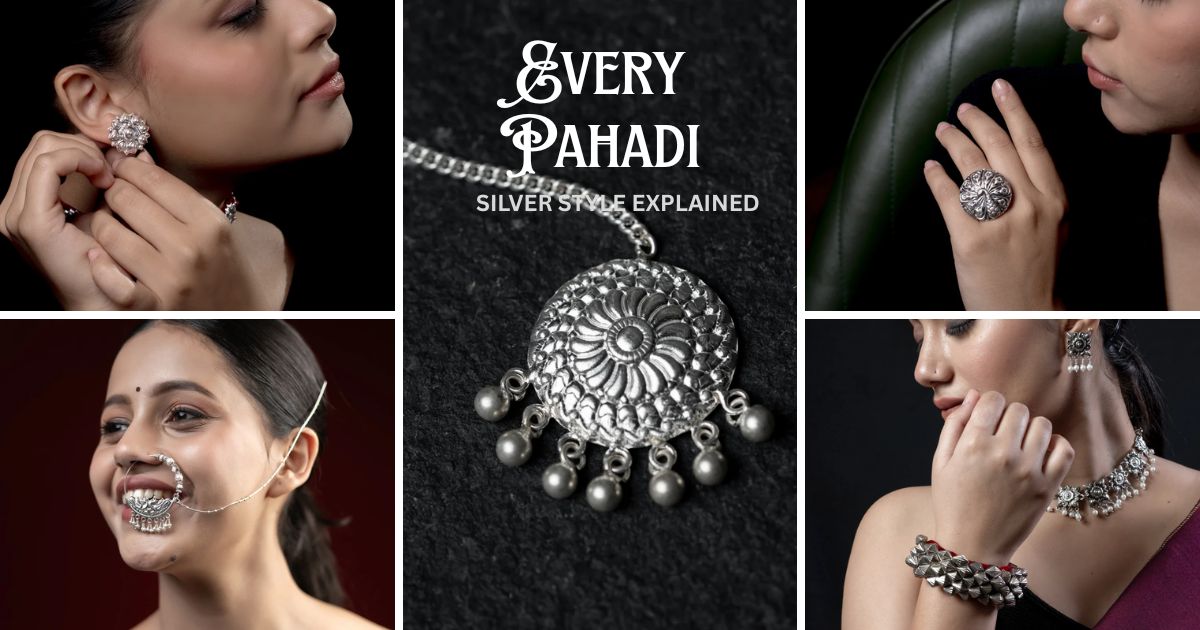
1. Earrings
Earrings are the most versatile entry point into Pahadi silver. In the traditional Kumaoni wardrobe, they ranged from small everyday hoops to elaborate chandelier-style drops worn at weddings and festivals.
At Ejaa, you'll find:
• Jhumki: the classic bell-drop form, reinvented with fine Pahadi detailing
• Studs & Small Hoops: for everyday, barely-there elegance
• Statement Drops: bold, occasion-worthy pieces that do the talking
Pro tip: Ejaa's jhumkis are adjustable and lightweight, designed so you can actually wear them for more than an hour without your ears giving up on you. For outfit pairings, see how to style silver jhumka earrings.
2. Pahuchi Bracelet
Ask anyone from Uttarakhand, and they'll recognise a Pahuchi immediately. It's a traditional silver bracelet usually worn in pairs with a bold, textured surface and a distinctly mountain character.
Ejaa's Pahuchi collection spans from the Phool Pahuchi (floral motifs) to the Shank Pahuchi and the minimalist Deodar Pahuchi, each with its own story. These aren't fashion accessories. They're heirlooms made wearable.
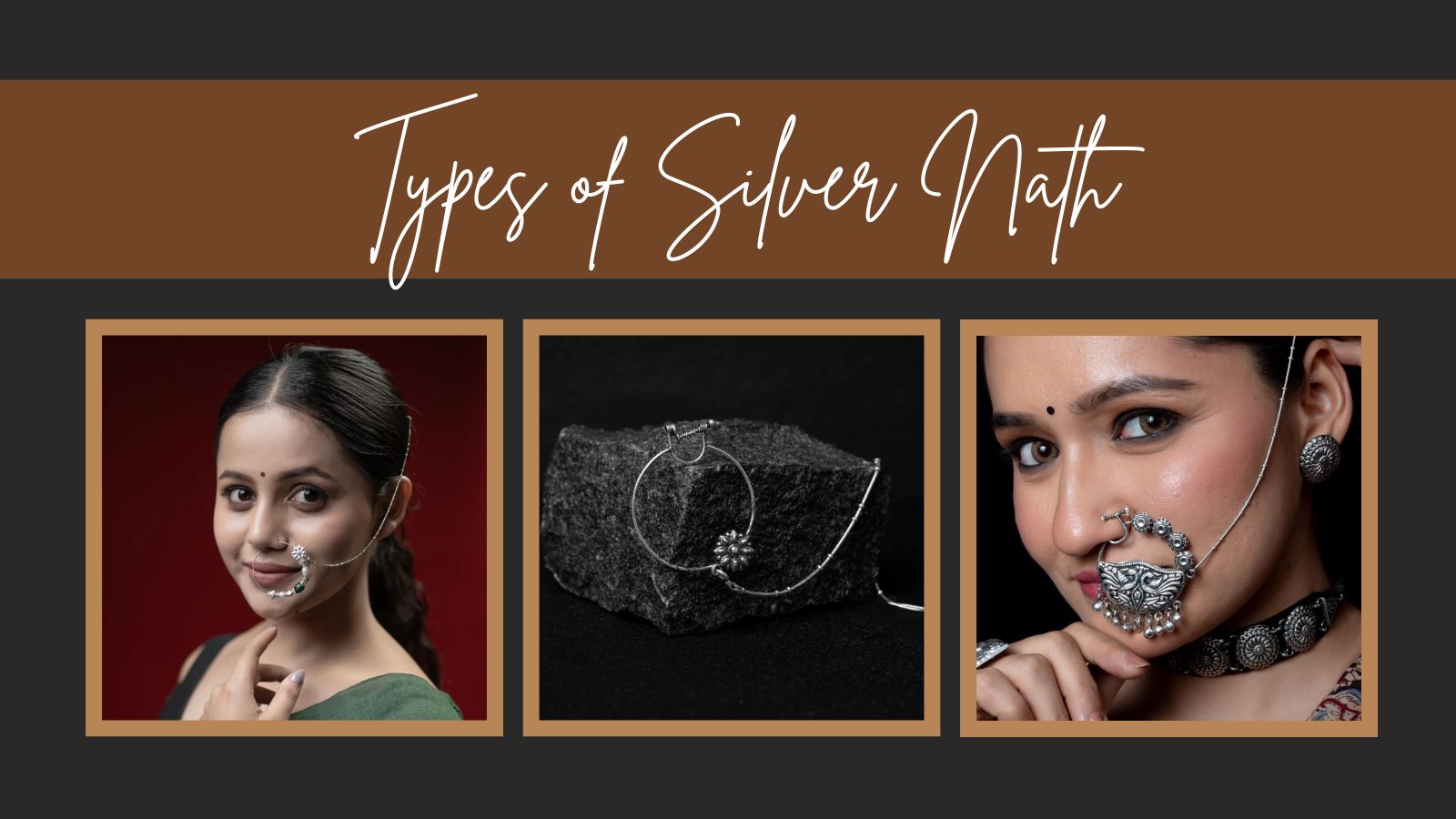
3. Nath: The Kumaoni Nose Ring
The Kumaoni Nath is one of the most recognisable pieces in Pahadi jewellery culture. Traditionally, it was large, ornate, and worn at weddings as a symbol of prosperity and marital status.
Ejaa has reimagined the Nath for how people actually live today. The modern Kumaoni Nath in the collection retains the original hoop form and intricate detailing but comes in sleeker, lighter versions wearable for fusion looks, daily wear, and festive occasions alike. A silver version, or chandi ki nath, keeps the same bridal silhouette in a lighter, more affordable form. Explore the types of silver Nath.
4. Neckpieces
Pahadi neckpieces are some of the most culturally layered pieces in the collection. Here's what you'll find at Ejaa:
Silver Choker Necklace: A close-fitting guluband necklace, traditionally worn at the base of the neck. Bold, structured, undeniable.
Hasuli Necklace: Hasuli is a rigid, crescent-shaped silver collar and one of the oldest hill neckpieces, often layered with Champakali jewellery, a necklace of bud-shaped silver pieces inspired by the champa flower.
Matarmala: A longer, beaded silver necklace with a rhythmic, repetitive form. More fluid than the Guluband, equally striking.
Silver Chain: Popular ladies' silver chain designs range from fine box and rope chains to the heavier Pahadi Janjeer.
Sikka Haar: A coin necklace in which each chandi ka sikka (silver coin) is strung along a chain, a piece that traditionally doubled as family wealth.
Each of these has roots in the way Pahadi women have adorned themselves for generations; Ejaa just makes them easily accessible and wearable.

5. Maangtika
Few pieces of jewellery carry as much ceremonial meaning as the Maangtika, the head ornament that sits along the parting of the hair. In Pahadi culture, it was (and remains) a staple of bridal and festive dressing.
Ejaa's Maangtika designs honour that tradition with fine silver detailing and a form that feels timeless. Not just for brides, they're made for anyone who wants to wear something with cultural depth.
6. Mangalsutra
Ejaa's silver Mangalsutra is one of the most quietly powerful pieces in the collection. In many hill communities, silver was the preferred metal over gold, purer, cooler, and more in tune with the mountain environment.
The Ejaa Mangalsutra brings that same sensibility: understated, meaningful, and made to be worn every single day. Compare the best silver Mangalsutra designs for daily wear.
7. Rings & Kada
The Ejaa ring collection is a study in restraint, each piece shaped by Pahadi motifs without trying too hard to announce itself. Stack them. Wear one. Gifting one works too. Try these silver ring stacking combinations.
The Kada, a thick silver bangle, is genderless by design. It's one of those pieces that feels equally at home on any wrist, any occasion. Heavy enough to feel real, light enough to forget you're wearing it. See the best silver Kada designs for everyday wear.
|
Collection |
Best For |
Style |
|
Buyers who want authentic, archival Pahadi designs |
Traditional, closest to original Kumaoni forms |
|
|
Everyday wear, first-time Pahadi silver buyers |
Modern, wearable, understated |
|
|
Weddings, festivals, occasion dressing |
Bold, ornate, attention-grabbing |
|
|
Daily comfort, sensitive ears/skin, all-day wear |
Minimal, ultra-lightweight |

How to Check Silver Purity Before You Buy
Pahadi pieces are sold in two main purities, so it helps to know what the stamp on your jewellery means:
- 925 sterling silver: 92.5% silver and 7.5% alloy, usually copper. It's hard enough to hold fine Pahadi detailing, which is why most jewellery is made in it.
- 999 fine silver: 99.9% pure silver. It's very soft, so it's mostly used for coins, idols and simple, heavier forms. Know the Difference between 925 vs 999 silver.
- BIS hallmark: A BIS hallmark on silver shows the BIS logo and the purity grade, such as 925 or 999, and newer pieces also carry a six-digit HUID code.
Not Sure Where to Start?
Here's a simple way to think about it:
• If you're new to Pahadi silver → start with a Jhumki or a ring from Ejaa Pride.
• If you want something meaningful for a gift → a Pahuchi pair or a Mangalsutra is hard to beat.
• If you're dressing for a wedding or big occasion → Maangtika + Guluband + statement earrings.
• If you just want one forever piece → the Kada. Every time.
And if you need help choosing, Ejaa offers video call assistance so you can see each piece up close before you decide.
Final Thought
Pahadi silver jewellery isn't just about aesthetics. It's about knowing where something comes from, the hands that made it, the culture it carries, the mountains it reflects.
Ejaa exists to make sure that the story doesn't get lost. Every piece in this collection is a small act of preservation and a very wearable one at that.
FAQs
Q1. What is Pahadi jewellery made of?
Pahadi jewellery is made from silver, usually 92.5 sterling silver or 999 fine silver. At Ejaa, every piece is crafted in certified silver, built to last and gets more beautiful with age.
Q2. What is a Pahuchi, and why is it significant?
A Pahuchi is a traditional silver bracelet from Uttarakhand, worn in pairs during festivals and weddings. Ejaa has reimagined it for modern wear with the same original motifs, but lighter and adjustable.
Q3. Is Pahadi silver jewellery only for women?
No, and this is something Ejaa is quite intentional about. The collection is genderless by design. Pieces like the Kada, chains, and rings are made to be worn by anyone. The traditional Pahadi aesthetic has always had an earthy, universal quality to it. Ejaa simply makes that explicit.
Q4. How is Kumaoni jewellery different from other Indian silver jewellery?
Kumaoni jewellery uses motifs from mountain nature and spirituality unique to the hills. Pieces like the Pahuchi, Guluband, and Matarmala are found nowhere else. Ejaa works from 200-year-old moulds, keeping the designs as authentic as possible.
Q5. How do I care for Pahadi silver jewellery?
Keep your silver dry and away from perfumes or chemicals. Wipe it gently with a soft cloth after wearing. Don't over-polish oxidised pieces; the dark finish is intentional. With simple care, Pahadi silver only gets better with time.
Q7. What is included in a traditional Pahadi bridal set?
A Pahadi bridal set usually combines the Nath, Maangtika, Guluband, Pahuchi and a Champakali or Hasuli necklace. Many brides also add a Matarmala for layering.