




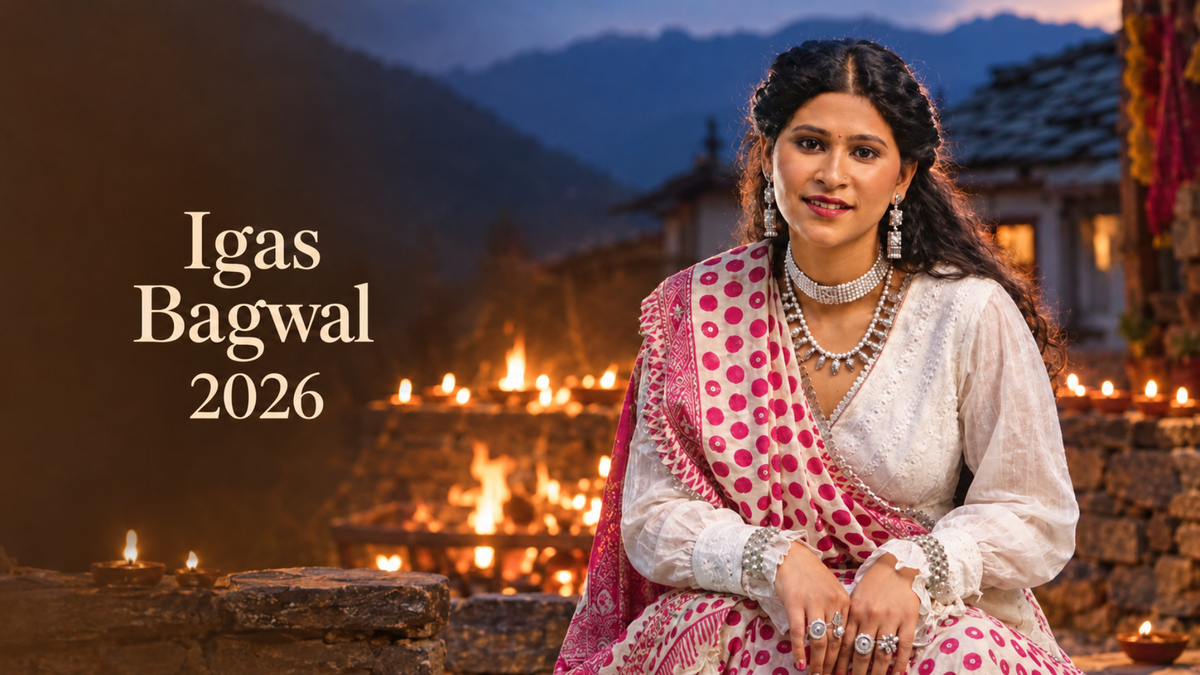
Igas Bagwal: Uttarakhand’s Budhi Diwali and Its Traditional Silver Jewellery

Igas Bagwal is a folk festival of Uttarakhand, popularly called Budhi Diwali, celebrated on Kartik Shukla Ekadashi, eleven days after the main Diwali. In 2026, Igas Bagwal falls on Friday, 20 November. Igas Bagwal in Uttarakhand is observed mainly in Garhwal villages and parts of Kumaon, closing the hills' Diwali season. Local tradition says news of Lord Rama's return reached the mountains eleven days late, so people lit the lamps later. Today, the festival is also celebrated in towns and cities as a proud marker of Pahadi identity.
When Is Igas Bagwal in 2026?
The expected date is Friday, 20 November 2026, which is Devutthana (Prabodhini) Ekadashi.
- The festival follows the Hindu lunar calendar, so the date shifts every year.
- Village almanacks can differ by a day.
- Celebrations usually peak in the evening, when lamps are lit and bhailo begins.
- Check local announcements or Uttarakhandi community groups for celebration timings.
The Traditions Behind Igas Bagwal
As a folk festival of Uttarakhand, Igas carries stories passed down orally for generations. Besides the late news of Rama's return, a popular story links Igas to Madho Singh Bhandari, a Garhwali commander whose army is said to have returned from a campaign after Diwali had passed. Villages are believed to have held a second Diwali to welcome the soldiers home. Both tales are folklore, not documented history.
Key customs include:
- Bhailo: Bundles of resin-rich pine wood are lit and swung in circles after dark, symbolising light over darkness.
- Folk songs and dance: Villagers sing and dance in courtyards to the dhol and damau, often late into the night.
- Cattle worship: Cows and oxen are bathed, decorated, and fed special food as thanks for the year's fieldwork.
- Family gatherings: Hill dishes are shared with neighbours, and many families return to their native villages.
Traditional Silver Jewellery Women Wear on Igas Bagwal
For Igas Bagwal, many women in Garhwal dress in traditional attire and bring out their family jewellery. Here are the pieces commonly worn, or that you can wear, for the festival:
- Guluband: A choker of metal blocks set on a fabric band, worn by married women on festive days. A silver guluband instantly gives a festive outfit a Pahadi look.

- Hansuli: A rigid collar necklace that pairs well with a ghagra or saree. The silver hasuli necklace stands out beautifully in lamplight and around the bhailo fire.
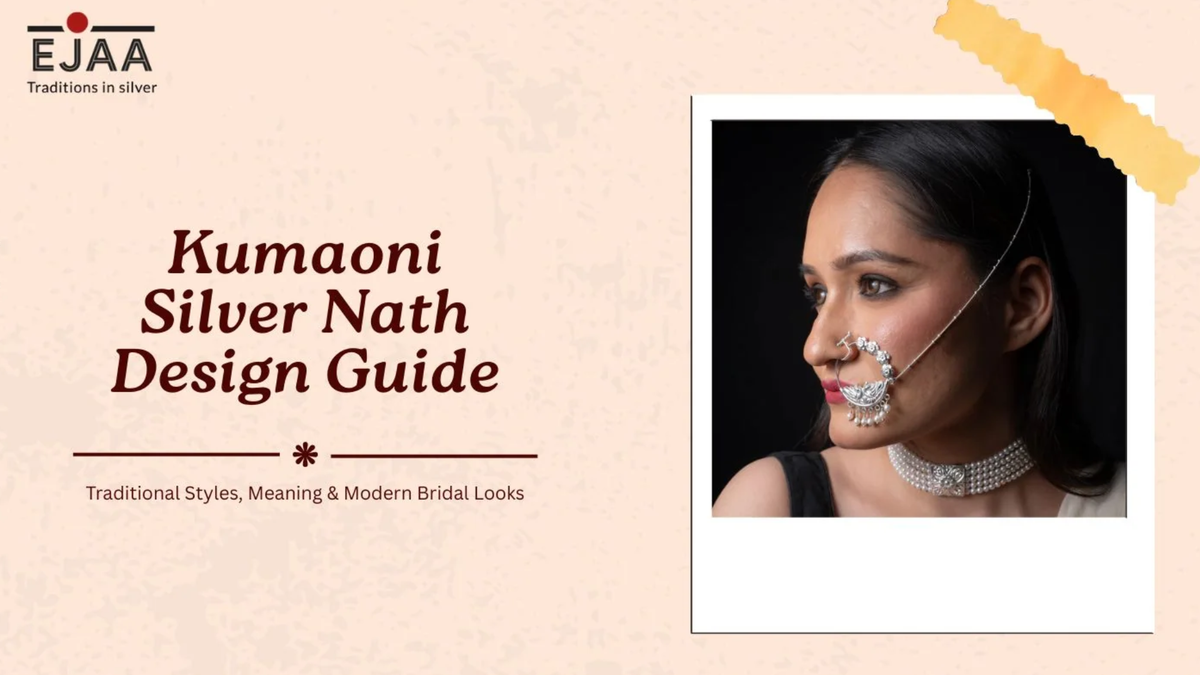
- Nath and bulaq: The large nose ring and smaller septum ornament, often worn by married women for festivals and family gatherings.
- Pahuchi (ponchi): A beaded wristband that completes the traditional look without feeling heavy.
- Dhagula: A heavy wrist ornament, ideal if you prefer a bold, traditional style.
The pieces worn vary from village to village, so choose what reflects your family's tradition. If you plan to dance through the evening, lighter pieces such as a pahuchi and studs are more comfortable.
Passing Pahadi Jewellery Traditions to the Next Generation
Many families keep a mother's or grandmother's Kumaoni nath or guluband for festivals, and each piece often carries a story of a wedding or a family elder. Igas is a good moment to:
- Share the story behind each heirloom piece.
- Teach children the local name of each ornament and what it signifies.
- Wear heritage-inspired silver Pahadi jewellery, such as a silver pahuchi bracelet, in daily life so traditional designs stay in use.

Celebrating Igas Bagwal Away from Uttarakhand
Families living in other cities or abroad keep Igas alive by:
- Lighting diyas and cooking hill food on the Ekadashi evening.
- Playing Garhwali folk songs and joining Uttarakhandi community events.
- Video calling relatives in the village to share the celebration.
- Telling children stories of their ancestral village.
For those who want to wear a piece of home on the day, Ejaa crafts traditional Garhwali and Kumaoni designs in 925 sterling silver from Haldwani.
Final Thoughts
Igas Bagwal keeps Uttarakhand's own festive rhythm alive, wherever families celebrate it. Ejaa, a Haldwani-based studio, handcrafts traditional pahdi silver jewellery in 925 sterling silver to carry that heritage forward.
FAQs
What is Igas Bagwal?
Igas Bagwal is Uttarakhand's Budhi Diwali, a folk festival celebrated on Kartik Shukla Ekadashi, eleven days after the main Diwali. It is marked with bhailo fire torches, folk dances, cattle worship and family gatherings.
When is Igas Bagwal in 2026?
Igas Bagwal falls on Friday, 20 November 2026, which is Devutthana Ekadashi. Since it follows the Hindu lunar calendar, local almanacks may differ by a day.
Why is Igas Bagwal celebrated after Diwali?
Folklore says news of Lord Rama's return to Ayodhya reached the hills eleven days late. Another popular tale links it to Madho Singh Bhandari's army returning home after Diwali had passed.
Is Igas Bagwal celebrated in Kumaon, Uttarakhand?
Igas Bagwal is centred in Garhwal, where it is the main festival of the Diwali season. Some villages in Kumaon also observe it as an old Diwali, though customs vary by region.
What jewellery can women wear for Igas Bagwal?
Women can wear traditional Pahadi silver pieces such as a guluband, hansuli, nath or pahuchi to complement their festive attire. Ejaa offers these heritage designs in 925 sterling silver, so you can choose one statement piece or style a complete traditional look.
Where can I buy traditional Garhwali jewellery online?
Ejaa, a Haldwani-based studio, offers handcrafted Garhwali and Kumaoni silver jewellery online. Its range includes guluband, hasuli, nath and pahuchi designs rooted in Pahadi tradition.
Is Ejaa's Pahadi jewellery made in Uttarakhand?
Yes, Ejaa's silver jewellery is handcrafted in Uttarakhand by local artisans using traditional techniques. Each piece is made in 92.5% sterling silver to keep the regional craft alive.