




Kumaoni Silver Nath Design Guide: Traditional Styles, Meaning & Modern Bridal Looks

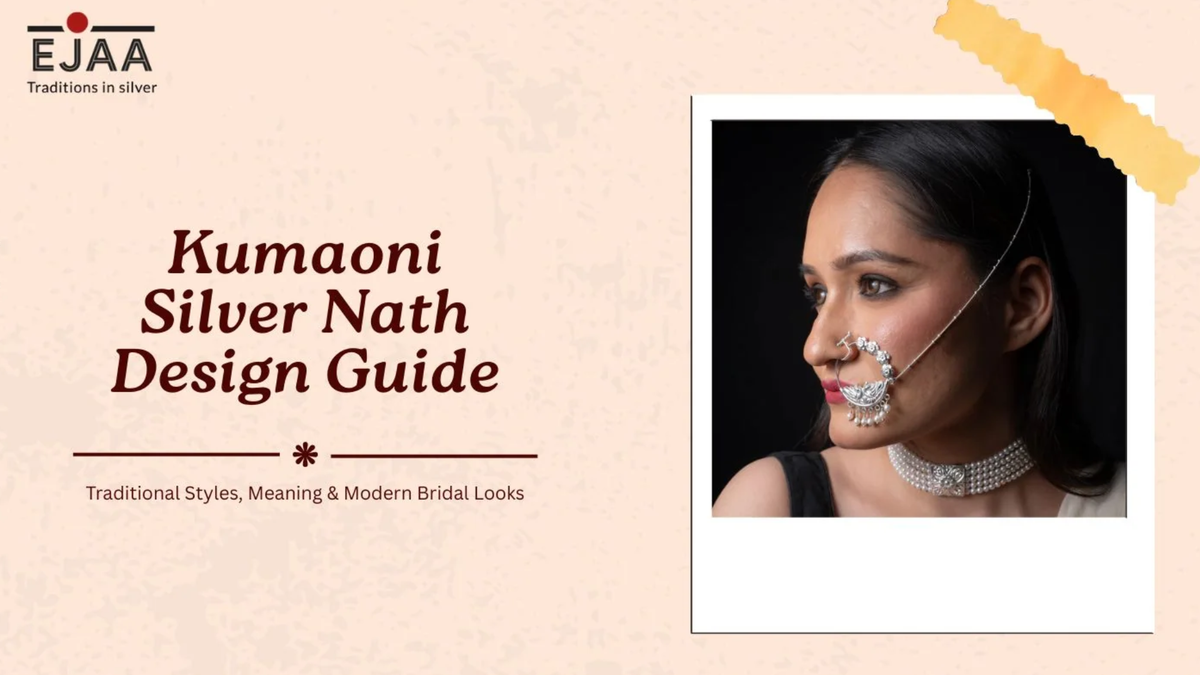
A Kumaoni nath is a large, circular nose ring from the Kumaon region of Uttarakhand, traditionally worn by brides on the left nostril and supported by a chain hooked into the hair. It was historically crafted in gold, and today the silver Kumaoni nath has become a popular choice for brides and women who want the same heritage look in a lighter, more affordable metal.
In this guide, we explore the meaning, design types, history, and modern styling ideas for the traditional silver Kumaoni nath.
The Pahadi Nose Ring Explained
The Kumaoni nath, called chandi ki nath when made in silver, is the traditional bridal nose ring of Kumaon.
- Design: A large circular hoop with handcrafted beads or pearls, and a chain that hooks into the hair.
- Meaning: It symbolises marriage and prosperity
- Tradition: The bride's maternal uncle (mama) gifts the nath, and it is often passed down as an heirloom.

History and Cultural Importance
The tradition of wearing a Pahadi nath goes back centuries in the Himalayan regions. In Uttarakhand, bridal jewellery is closely tied to local customs, and the nath is considered one of a bride's most sacred ornaments.
Historically:
- The nath's size and the number of pearls often reflected the family's status.
- Brides wore elaborate nath designs through the wedding rituals.
- Traditional motifs showcased the skill of local artisans.
Many old Kumaoni nath designs still in family collections are heavy gold pieces. The modern silver versions carry forward the same circular silhouette in a lighter form. This revival of regional jewellery has also renewed interest in authentic Kumaoni bridal jewellery.
Kumaoni vs Garhwali Nath
Both regions of Uttarakhand have their own bridal nose rings, and the difference between the Garhwali and Kumaoni nath is one of the most common questions buyers ask.
|
Feature |
Kumaoni Nath |
Garhwali (Tehri) Nath |
|
Region |
Kumaon (Almora, Nainital, Pithoragarh, Bageshwar) |
Garhwal, especially Tehri |
|
Shape |
Large, bold, round hoop |
Hoop with a heavily ornamented panel |
|
Ornamentation |
Cleaner circle with beads or pearls |
Dense detailing, pearls and coloured stones |
|
Overall look |
Bold and graphic |
Intricate and decorative |
|
Worn by |
Kumaoni brides |
Garhwali brides |
Simply put, the Kumaoni nath stands out for its size and clean circular form, while the Tehri nath is known for its rich ornamentation. Garhwali brides may also wear a pahadi bulak, a nose ornament that hangs from the centre of the nose rather than the side.
Popular Kumaoni Nath Designs
Modern jewellery lovers can choose from several nath types that blend heritage with contemporary fashion. Here is a quick look at the main silver nath designs and their typical prices.
|
Design Type |
Best For |
Typical Price (Silver) |
|
Traditional large nath |
Wedding ceremony |
₹6,000 to ₹7,000 |
|
Morni (peacock) nath |
Bridal and festive |
₹5,000 to ₹6,500 |
|
Minimal modern nath |
Festive and fusion wear |
₹3,000 to ₹5,000 |
|
Bulaq |
Garhwali and fusion looks |
₹8,000 to ₹9,000 |
Prices are indicative for 925 silver and vary with size, weight and detailing.
1. Traditional Large Kumaoni Nath

This is the classic bridal style: a bold circular hoop with handcrafted detailing and a silver nath chain that hooks into the hair. The Kumaoni Silver Nath and the Chandak Silver Kumaoni Nath follow this traditional silhouette.
2. Minimal Modern Pahadi Nath
Named for the peacock motif on its hoop, the morni nath works for both the wedding and the functions after it. The Morni Silver Kumaoni Nath and the Silver Kumaoni Mornika Nath are good examples.
3. Minimal Modern Pahadi Nath
The modern Kumaoni nath is a simple silver nath in a smaller, lighter form. It suits younger brides, festivals, and destination weddings without losing its Pahadi character.

4. Bulaq
The bulaq is worn through the septum and hangs over the upper lip. It is more common in Garhwali and Himachali traditions but is now popular with women pairing Pahadi jewellery with fusion outfits. For a deeper comparison of every style, see this guide to types of silver nath.
Modern Bridal Looks
A silver Kumaoni nath can anchor very different bridal looks, from a full Pahadi ensemble to a minimal modern wedding.
- The traditional Pahadi bride: Pair a large Kumaoni nath with the yellow pichora, a red ghagra, and a silver guluband for the classic look worn at Kumaoni weddings.
- The lehenga bride: A bold bridal nath complements red or velvet lehengas and works as the statement piece in place of a heavy necklace.
- The saree bride: A morni nath adds a graceful, traditional touch to Banarasi silk or handloom bridal sarees.
- For haldi, mehendi and reception: Switch to a simple silver nath for daytime functions. This Pahadi bridal jewellery guide covers what to wear at each ceremony.
How to Choose the Right One
- Face shape: Larger designs suit oval and longer faces, while smaller circular ones work well for round faces.
- Occasion: Heavy traditional designs suit the wedding ceremony. A lightweight silver nath for women is better for festivals, haldi, and mehendi.
- Fit: Most naths are worn through a left nostril piercing. Clip-on versions suit lighter designs for anyone without one.
- Comfort: Look for a secure chain that carries the weight, smooth inner edges, and hallmarked 925 sterling silver.
Final Thoughts
The Kumaoni nath is more than jewellery. It reflects heritage, craftsmanship, and a bridal tradition that still connects generations across the hills of Uttarakhand. Whether you choose a bold traditional hoop for your wedding or a minimal piece for festive wear, it adds instant cultural character to any look.
Ejaa's silver naths are handcrafted in Haldwani by a family that has worked with Pahadi jewellery since 1985, bringing traditional Kumaoni designs to today's brides in hallmarked.
FAQs
What is the significance of a Kumaoni nath?
The Kumaoni nath symbolises marriage, prosperity and cultural identity, and is traditionally gifted to the bride by her maternal uncle.
What is the difference between the Garhwali and Kumaoni nath?
The Kumaoni nath is a large, bold circular hoop with cleaner detailing, while the Garhwali (Tehri) nath is known for its dense ornamentation with pearls and coloured stones.
Is a Kumaoni nath made of gold or silver?
Traditional Kumaoni naths were made in gold, but silver versions like those at Ejaa offer the same heritage design in a lighter, more affordable 925 silver.
What is the price of a silver Kumaoni nath?
A silver Kumaoni nath usually costs between ₹3,000 and ₹9,000, depending on size, weight and detailing. At Ejaa, handcrafted silver naths fall within this range.
Can a silver nath be worn without a nose piercing?
Yes, clip-on and press-fit naths can be worn without a piercing, though they work best with lighter, minimal designs.
Is a silver nath suitable for a modern bride?
Yes, a silver nath suits modern brides who want a traditional look in a lighter piece. Ejaa’s handcrafted silver Kumaoni naths are designed to pair with both bridal lehengas and fusion outfits.