




Oxidized vs. Sterling Silver Jhumka Earrings: Which Should You Choose?

Confused between oxidized and sterling silver jhumka earrings? You're not alone. Many jewelry enthusiasts struggle with this choice. Both types look absolutely stunning but differ significantly in composition, care, and longevity. Your choice depends on lifestyle, budget, maintenance preference, and how often you wear jewelry. This guide will help you make an informed decision.
What Are Silver Jhumka Earrings?
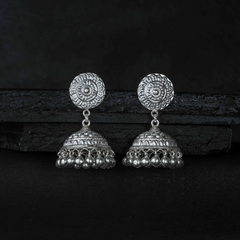
Jhumkas are traditional bell-shaped pendant earrings that originated from Indian culture. They feature ornamental designs that create a beautiful tinkling sound when you move or dance. The name comes from the Hindi word "jhumkana," meaning to swing. Silver jhumkas work perfectly with traditional sarees and contemporary Indian wear. They also pair beautifully with modern outfits. The craftsmanship is remarkable; each piece requires skilled hands, precision tools, and meticulous attention to detail. Artisans spend hours perfecting design and finishing work.
Sterling Silver Jhumka Earrings
Sterling silver jhumki contains 92.5% pure silver mixed with 7.5% other metals, usually copper. This precise composition creates a metal that's both durable and beautiful. The copper component strengthens the silver while maintaining its lustrous quality.
Advantages:
-
Bright, shiny appearance that catches light beautifully
-
Hypoallergenic and safe for sensitive skin and metal allergies
-
Lasts 20+ years with proper care
-
Can be polished repeatedly without damage
-
Versatile with traditional and modern outfits
-
Retains value over time as an investment
Disadvantages:
-
More expensive than oxidized silver
-
Requires monthly polishing with a soft cloth
-
Needs proper storage to prevent tarnishing
-
Can develop tarnish quickly in humid environments
Best For: Daily wear, sensitive skin, long-term investment, versatile styling.
Oxidized Silver Jhumka Earrings
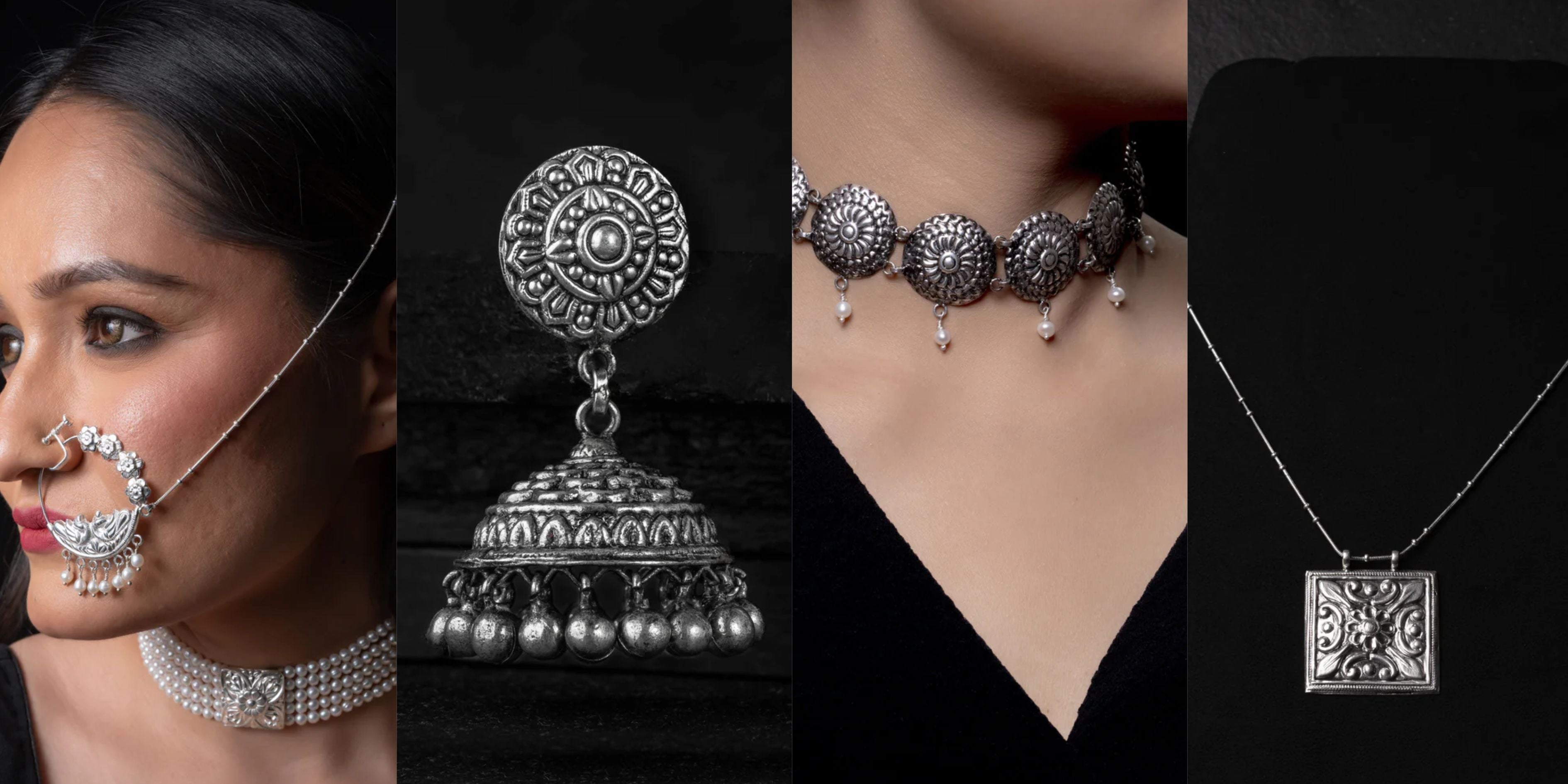
Oxidized silver is sterling silver treated with special chemical solutions to create a dark, antique-looking finish. The rich gray or black appearance beautifully highlights intricate designs and detailed carving work. This process darkens the silver while maintaining its purity and structural integrity.
Advantages:
-
More affordable than sterling silver
-
Dark finish is perfect for ethnic and festive looks
-
Develops natural patina over time, adding character
-
Requires less maintenance than polished silver
-
Unique, authentic aesthetic reminiscent of heritage jewelry
-
Highlights complex designs beautifully
Disadvantages:
-
Lasts 5-10 years before coating gradually fades
-
Needs gentle cleaning with no harsh chemicals
-
Develops patina that continuously changes
-
Re-oxidation is needed eventually to restore darkness
Best For: Special occasions, ethnic wear, budget-conscious buyers, heritage lovers.

Quick Comparison
|
Factor |
Sterling Silver |
Oxidized Silver |
|
Appearance |
Bright, shiny |
Dark, antique |
|
Price |
₹2,000-₹8,000 |
₹800-₹3,000 |
|
Durability |
20+ years |
5-10 years |
|
Maintenance |
Monthly polishing |
Gentle cleaning |
|
Best For |
Daily wear |
Occasional wear |
|
Skin Safe |
Highly hypoallergenic |
Generally safe |
Durability & Longevity
Sterling Silver: Lasts 20+ years with basic care. Many people pass sterling silver jhumkas earrings to future generations as heirlooms. These pieces can be polished repeatedly to restore shine. With proper storage, sterling silver becomes more valuable over time.
Oxidized Silver: Lasts 5-10 years before coating gradually fades. However, the underlying sterling silver remains intact. You can have oxidized jhumkas re-oxidized affordably to restore their original beauty. This makes them semi-permanent rather than disposable.
Storage: Keep both in dry, airtight containers. Store with silica gel packets to absorb humidity. Avoid direct sunlight for extended periods.
Maintenance & Care
Sterling Silver:
-
Polish monthly with soft, lint-free silver cloth using gentle motions
-
Store in airtight containers to minimize air and moisture exposure
-
Remove before bathing, swimming, or exercising
-
Use a silver cleaning solution for heavily tarnished pieces
-
Keep away from perfume and harsh chemicals
Oxidized Silver:
-
Use a soft-bristle brush with mild soap and lukewarm water
-
Avoid harsh chemicals and abrasive scrubbers
-
Dry completely after cleaning to prevent water marks
-
Apply protective varnish annually to preserve the finish
-
Store away from humidity and moisture
Both Types:
-
Handle with clean, dry hands to minimize oils
-
Avoid direct sunlight for extended periods
-
Keep away from extreme temperature changes
Price & Budget
Sterling Silver: ₹2,000-₹4,000 (basic), ₹4,000-₹6,000 (mid-range), ₹6,000-₹8,000+ (premium)
Oxidized Silver: ₹800-₹1,500 (basic), ₹1,500-₹2,500 (mid-range), ₹2,500-₹3,500 (premium)
Oxidized silver offers excellent value for occasional wear. Sterling silver offers better long-term value with its 20+ year lifespan. Per-wear cost becomes affordable across years of daily use.

Which Should You Choose?
Choose Sterling Silver if: You wear jewelry daily, prefer low-maintenance shine, want long-lasting quality, have sensitive skin, or value versatility.
Choose Oxidized Silver If: You wear jhumkas occasionally, love antique aesthetics, have a limited budget, appreciate ethnic designs, or want unique patina character.
FAQ
Q1: What's the difference between oxidized and sterling silver jhumkas?
A: Sterling silver (92.5% pure) is bright, shiny, and lasts 20+ years. Oxidized silver is darkened sterling silver that lasts 5-10 years but has an antique, ethnic look.
Q2: Which is better for sensitive skin?
A: Sterling silver is better; it's 92.5% pure and hypoallergenic. Oxidized silver is safe too, but may cause reactions in extremely sensitive individuals.
Q3: How long do they last?
A: Sterling silver lasts 20+ years with monthly polishing. Oxidized silver lasts 5-10 years before the coating fades and needs re-oxidation.
Q4: How do I care for them?
A: Sterling silver: Polish monthly with a soft cloth. Oxidized silver: Clean gently with mild soap and water, avoiding harsh chemicals.
Q5: Which should I buy for daily wear?
A: Sterling silver is best for daily wear; it's durable and works with any outfit. Oxidized silver is perfect for special occasions and festive events.
Conclusion
Both oxidized and sterling silver jhumkas are beautiful choices. Neither is objectively "better"; it depends on your lifestyle and preferences.
Choose sterling silver for daily wear and long-term investment. Choose oxidized silver for special occasions and budget-friendly elegance.
At Ejaa, we offer premium quality in both varieties. Our craftspeople use traditional Pahadi techniques passed through generations. Every jhumka is created with care, precision, and attention to detail.
Your silver jhumkas will become treasured pieces. They'll complement your style and accompany you through countless special moments. Whether sterling or oxidized, you're investing in timeless beauty and authentic craftsmanship.
Shop Ejaa's exclusive silver jhumka collection today.