




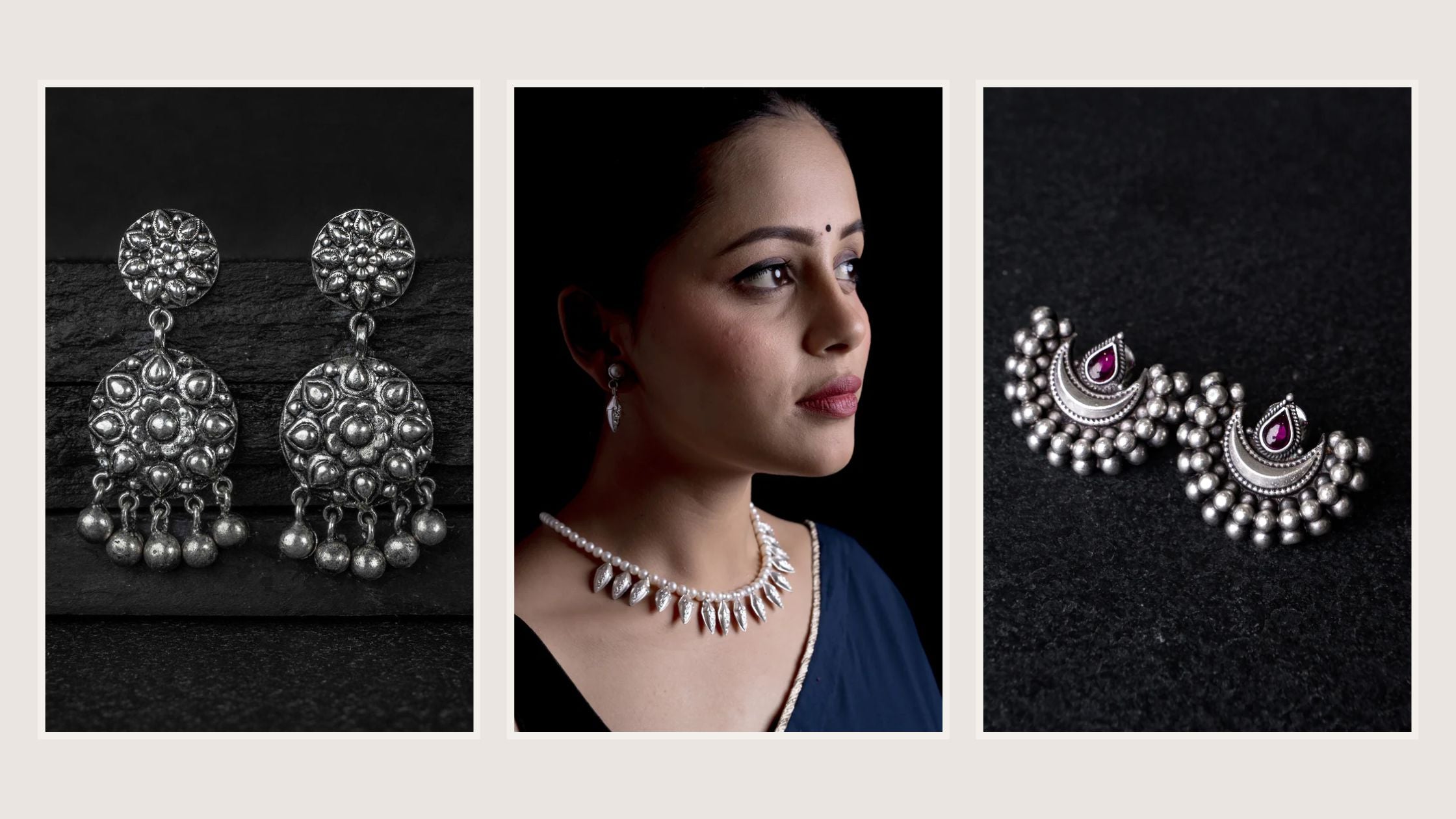
Silver Earring Styles Explained: Jhumki, Chandbali, Stud and Hoop, Which Suits You?

There’s a moment most of us know well. You’re getting ready, you have a beautiful outfit on, and then you open your earring box and stare blankly. Too many options. Not enough clarity.
Silver earring styles in India are incredibly diverse. And when you add the richness of Pahadi jewellery traditions into the mix, the choices become even more layered and more meaningful.
This guide breaks it all down. Jhumki vs chandbali, studs vs hoops, oxidized vs polished, we’ll walk you through each style, what it’s best suited for, and how to find your match.
Why Silver? A Quick Word Before We Begin
Silver has always held a special place in the mountains of Uttarakhand. In Kumaoni and Garhwali traditions, silver wasn’t just an accessory; it was worn close to the body for its cooling properties, its purity, and its timeless beauty.
At Ejaa, every earring is handcrafted in 92.5 hallmark silver, lightweight, adjustable, and built to last a lifetime.
Now, let’s talk about styles.
1. Jhumki The One That Never Needs an Introduction
If there’s one earring that feels quintessentially Indian, it’s the jhumki.
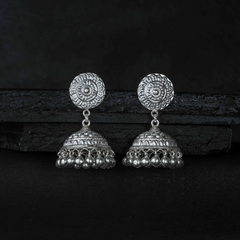
A jhumki (or jhumka) is characterized by its bell-shaped drop, a rounded dome at the top, often with a dangling base. In Pahadi jewellery, jhumkis carry deep cultural weight. They’re worn at weddings, festivals, pujas, and passed down through generations.
What makes Pahadi jhumkis different?
• Heavier, more intricate metalwork with traditional motifs
• Oxidized finishes that highlight the craft
• Often paired with traditional outfits, pichoras, lehengas, or border sarees
• Designed to move, the gentle swing is part of the beauty
Best for: Festive occasions, weddings, cultural events, ethnic wear. If you want a silver earring that says something, a jhumki says it best.
Face shape tip: Jhumkis elongate the face, making them especially flattering on round or heart-shaped faces.
2. Chandbali Drama, but Make It Graceful
The chandbali takes its name from chand, the moon. And the shape is exactly that: a crescent or half-moon silhouette, often fanning outward.
Chandbalis are bolder and more statement-forward than jhumkis. They frame the face rather than hang below it, which creates a completely different effect.
In the Pahadi tradition, crescent motifs hold significance; the moon is a recurring symbol in Kumaoni culture, linked to silver’s own lunar quality.
What to expect from a chandbali:
• Wide, curving form that frames the jaw and cheekbones
• Usually heavier than studs, but lighter than you’d expect in silver
• Available in both oxidized and polished finishes
• Makes a simple outfit look instantly dressed up
Best for: Parties, celebrations, date nights, fusion wear. Pair a chandbali with a plain kurti or even a western dress and watch the whole look shift.
Face shape tip: Chandbalis suit oval and long faces beautifully, they add width and balance.
3. Stud Earrings Understated, But Never Boring
Studs often get underestimated. People think minimalist means forgettable. But a well-designed silver stud is anything but.
At Ejaa, stud earrings like the Champakali Silver Stud and the Chauki Silver Studs draw directly from traditional Pahadi design motifs, the champakali flower, geometric chaukhat patterns reimagined into compact, everyday forms.
Why silver studs work so well:
• Comfortable for all-day wear, you forget you’re wearing them
• Versatile across every outfit, every occasion
• Work beautifully in multiple piercings
• Travel-friendly and low-maintenance
Best for: Daily wear, office, casual outings, layering with other earrings. The stud is your workhorse, reliable, refined, always right.
Face shape tip: Studs are genuinely flattering on every face shape. If you’re building a jewellery collection from scratch, start here.

4. Hoop Earrings The Shape That Comes Back Every Decade (And Stays)
Hoops are cyclical in fashion, but in Pahadi jewellery, circular forms have always been meaningful, representing continuity, wholeness, and the cycles of nature.
Ejaa’s hoop earrings, like the Tikuli Silver Hoops and the Guda Silver Hoops aren’t your basic fashion hoops. They carry the signature of traditional craft: clean forms, solid silver, and a weight that feels intentional rather than cheap.
The appeal of silver hoops:
• Instantly elevate a casual look
• Come in varied sizes, small huggies to wide statement hoops
• Work across traditional and contemporary outfits
• Age beautifully over time
Best for: Everyday chic, casual ethnic wear, western outfits, street style. A medium hoop with jeans and a cotton kurta? Always the answer.
Face shape tip: Smaller hoops complement round faces; larger hoops add drama to angular or square faces.
Jhumki vs Chandbali: The Most Common Question, Answered
People ask this all the time. Here’s the clearest way to think about it:
|
|
Jhumki |
Chandbali |
|
Shape |
Bell / dome drop |
Crescent / moon arch |
|
Feel |
Traditional, warm, cultural |
Dramatic, bold, statement |
|
Movement |
Swings and sways |
Frames the face |
|
Best with |
Lehenga, saree, salwar |
Fusion, party wear, anarkali |
|
Occasion |
Festivals, weddings |
Celebrations, evenings out |
Honestly? If you love both, own both. They serve completely different moods.
How to Choose: A Simple Guide
Still not sure which style is for you? Ask yourself these three questions:
1. What’s the occasion?
• Everyday → Stud or small hoop
• Festival/wedding → Jhumki
• Party/celebration → Chandbali or statement hoop
2. What’s your outfit?
• Heavy embroidery or traditional wear → Keep earrings bold (jhumki, chandbali)
• Plain or minimal outfit → Let your earrings do the work (statement hoop or chandbali)
• Casual → Stud or small hoop, always
3. How long have you been wearing them?
• All day, every day → Stud or lightweight hoop
• A few hours for an event → Jhumki, chandbali, or danglers
A Note on Oxidized vs Polished Silver
You’ll notice Ejaa earrings come in both finishes and it’s worth understanding the difference.
Oxidized silver has a darker, antique appearance. It highlights the intricate details of the design and feels more rooted in traditional Pahadi aesthetics. It pairs beautifully with earthy tones, handloom fabrics, and traditional outfits.
Polished silver is brighter, shinier, and more contemporary. It catches light in a way that works brilliantly with modern and fusion looks.
Neither is better; they're simply different moods.

Build Your Silver Earring Collection
If you’re starting fresh, here’s a simple way to think about building:
• One everyday stud — for the days when you want to feel put-together without thinking about it
• One medium hoop — your casual-to-smart upgrade
• One jhumki — for every occasion that calls for silver and heritage
• One chandbali or statement piece — for the nights you want to be noticed
These four cover virtually every occasion and outfit in your wardrobe.
Frequently Asked Questions
Q1. Which silver earring style is best for everyday wear in India?
For daily wear, studs and small hoops are the best choice. They’re lightweight, comfortable for long hours, and go with virtually any outfit from office formals to casual kurtas. At Ejaa, silver studs like the Champakali and Chauki designs are crafted to be worn every single day without discomfort.
Q2. What is the difference between a jhumki and a chandbali?
A jhumki has a bell-shaped dome that swings and sways as you move. It's rooted in traditional Indian and Pahadi culture. A chandbali is crescent or moon-shaped, framing the face from the sides. Jhumkis are warmer and more festive; chandbalis are bolder and more dramatic. Both are statement pieces; they just make different kinds of statements.
Q3. Are Pahadi silver earrings heavy to wear?
Traditional Pahadi jewellery was indeed heavier as it was made to last generations. But Ejaa’s earrings are specifically designed to be lightweight and wearable for modern lifestyles. The “Ejaa Weightless” collection in particular focuses on earrings that carry the look of traditional craft without the weight. You get the heritage without the discomfort.
Q4. Can silver earrings be worn with both ethnic and Western outfits?
Absolutely. Silver’s versatility is one of its greatest strengths. Studs and hoops pair effortlessly with western wear jeans, dresses, blazers. Jhumkis and chandbalis shine with ethnic and fusion wear. All Ejaa pieces are designed to be genderless and trans-seasonal meaning they adapt to you, not the other way around.
Q5. How do I take care of my silver earrings?
Silver is easy to care for with a little attention. Store your earrings in a dry place, away from water, perfumes, and chemicals. After wearing, gently wipe them with a soft cloth to maintain their shine. Oxidized silver pieces may darken further over time that patina is part of their character, not a flaw. For polished silver, a silver polishing cloth every few weeks keeps it gleaming.
Find Your Style at Ejaa
Every earring in Ejaa’s collection is handcrafted in pure 92.5 silver, drawing from 200-year-old Pahadi moulds and reimagined for the way you live today. Lightweight, genderless, adjustable designed not just to be worn, but to be remembered.
Browse Ejaa’s full silver earring collection
Looking for more guidance on Pahadi jewellery styles? Explore the Ejaa Praja blog for stories on Kumaoni craft, cultural history, and jewellery care.