




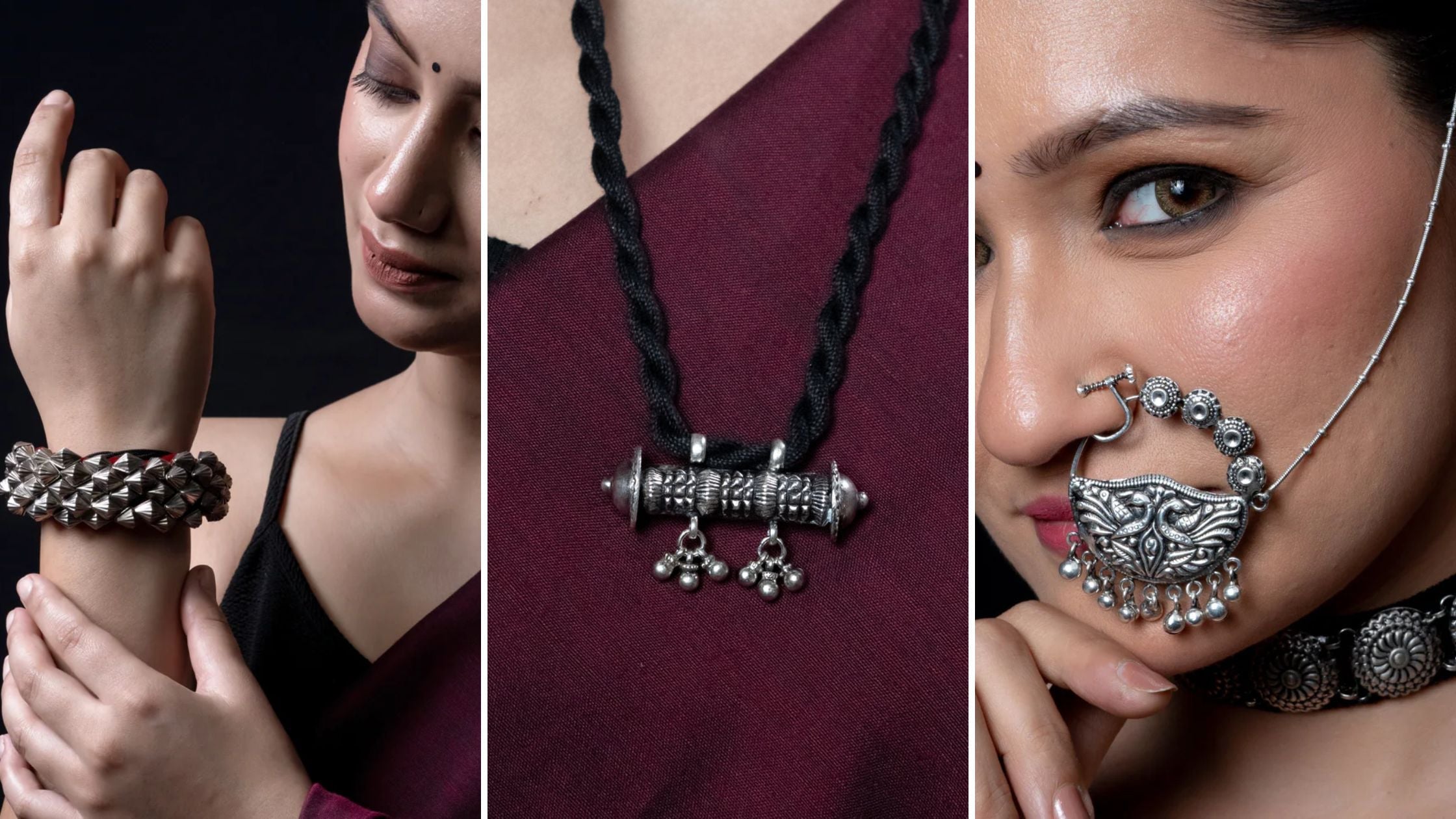
The Complete Guide to Pahadi Silver Jewellery and Kumaoni Culture

There's something about Pahadi silver jewellery that stops you in your tracks. Maybe it's the weight of history in each piece. Maybe it's the way the silver catches light, cool, moon-like, unmistakably mountain-born. Or maybe it's because you can feel, even through a photograph, that this wasn't made by a machine.
This is your complete guide to Pahadi silver jewellery in 2026: what it is, where it comes from, what each piece means, and why it's having a very well-deserved moment right now.
What Is Pahadi Silver Jewellery?
Pahadi jewellery refers to the traditional adornments of the mountain communities of Uttarakhand, primarily from the Kumaon and Garhwal regions. "Pahadi" simply means "of the mountains," and that geography is everything.
The hills shaped what people wore. Silver, abundant and spiritually significant, became the metal of choice over gold. It was practical, beautiful, and carried meaning that went far deeper than fashion.
Pahadi jewellery wasn't a decoration. It was an identity worn during rituals, passed down through generations, and tied deeply to the social and spiritual fabric of mountain life.
A Brief History: Where It All Began
The roots of this tradition stretch back several centuries. Kumaoni jewellery: a complete guide. Conversations always start here, because without the history, you can't fully appreciate what you're wearing.
Uttarakhand's silver jewellery tradition was shaped by the region's unique position at the crossroads of Himalayan trade routes. Artisans absorbed influences from Tibet, Nepal, and the plains of North India, blending them into a distinct aesthetic that was wholly their own.
Key historical markers:
• Craftsmen used moulds passed down across generations, some over 200 years old
• Mountain motifs: Designs drawn from nature:
• Pahuchi: Conch shells
• Jau: Wheat grains
• Florals, paisleys, and spiritual symbols carved into every surface
The Pahadi jewellery history we see in archives and in family heirlooms tells a story of communities where a woman's jewellery was her biography.

Iconic Pieces from the Kumaoni Jewellery Tradition
If you're new to this world, here are the pieces you need to know. Each has a name, a story, and a place in the larger picture of Pahadi culture.
Hasuli The Statement Collar
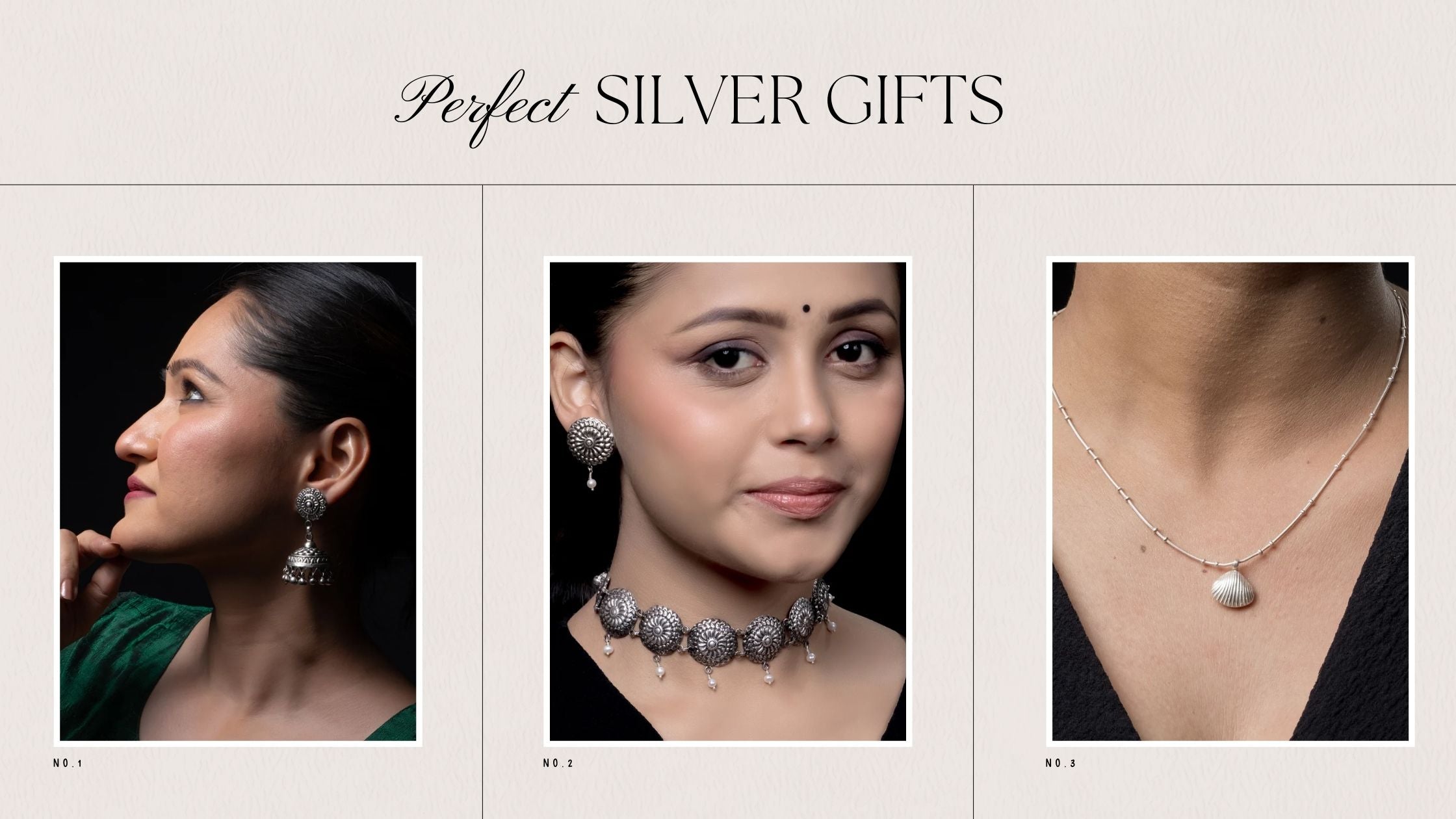
Arguably the most iconic piece in the Pahadi jewellery canon. The Hasuli is a rigid collar choker worn close to the throat, usually engraved with spiritual motifs. Bold. Ancient. Absolutely unforgettable.
In Kumaoni tradition, the Hasuli was often gifted at weddings. It represented protection and prosperity. Today, it remains a statement piece for those who want jewellery that carries actual weight literally and culturally.
Pahuchi The Arm Cuff
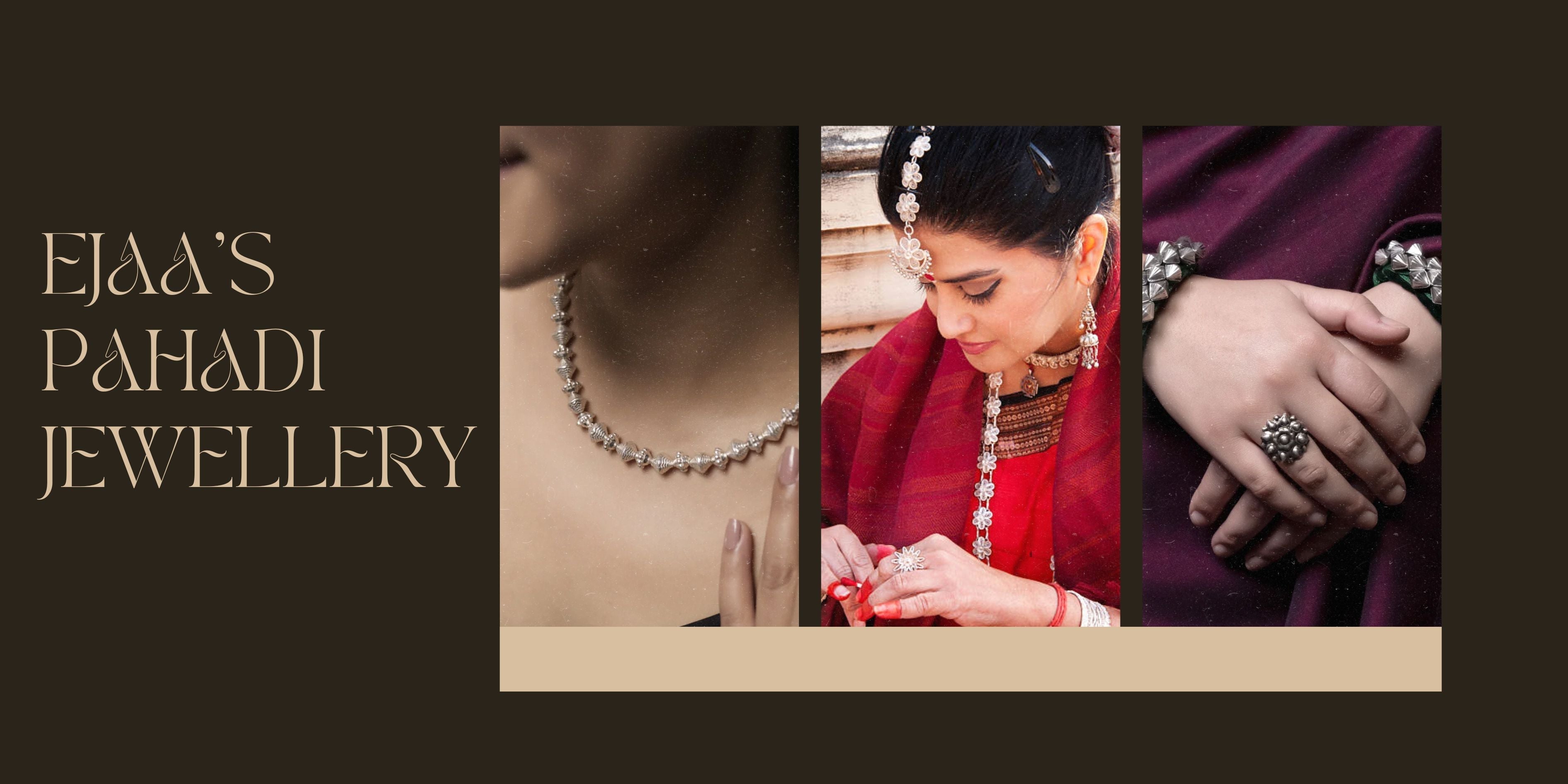
The Pahuchi is a tiered bracelet traditionally made with conch shell beads or floral patterns in pure silver. Fastened with a handwoven thread belt, it wraps around the arm with effortless grace.
What makes it remarkable is its versatility. It works just as well with a handloom saree as it does with a linen kurta or even a white cotton shirt.
Matarmala The Bead Necklace
"Matar" means peas or beads, and the Matarmala is a layered silver bead necklace inspired by the shapes of nature: wheat grains, peas, and shells. Light enough for daily wear, striking enough for celebrations.
It layers beautifully with other pieces from the tradition, making it a natural starting point for anyone building their first Pahadi jewellery collection.
The Cultural Significance Behind the Silver
Understanding Pahadi jewellery means understanding the culture it comes from. In Kumaoni communities, jewellery was never separate from daily life.
Silver was believed to carry protective and spiritual properties. Pieces weren't just worn for beauty, they were worn for meaning:
• At birth ceremonies, infants were gifted silver amulets
• Brides received elaborate silver sets as part of their srinagar (adornment)
• Silver was worn during harvests, festivals, and prayer
• Each motif, the lotus, the conch, and the geometric, carried a specific meaning
The women of the mountains were, in many ways, the keepers of this tradition. They wore the archive. When a piece was passed down, stories came with it.
That's not a metaphor. That's exactly how craft traditions survive.
What Makes Pahadi Silver Jewellery Different
In a market flooded with mass-produced silver, Pahadi jewellery stands apart in very specific ways. Here's what to look for when you're shopping for the real thing:
• Hallmarked authenticity: Pure 92.5 silver
• Handcrafted using indigenous techniques: slight irregularities are a feature, not a flaw
• Heritage moulds: Moulds with generational provenance
• Oxidised or non-oxidised finishes: both are traditional
• Lightweight and adjustable: built for real life, not just display cases
The difference between Pahadi jewellery and imitation is the difference between a story and a copy of one. Authentic pieces carry craft knowledge accumulated over centuries.
Pahadi Jewellery in 2026: Tradition Meets Modern Wardrobe
Here's what's shifted: Pahadi silver jewellery is no longer just for festive occasions. It's being worn and worn brilliantly as everyday jewellery.
The reasons are straightforward. Silver suits every skin tone. The designs are bold without being heavy. And in an era where conscious consumption actually matters to people, wearing a piece with genuine cultural heritage feels different from wearing something with none.
How people are styling it today:
• Hasuli with a minimal white kurta and straight-fit trousers
• Pahuchi stacked on the wrist alongside simpler silver cuffs
• Matarmala layered with contemporary chokers for a fusion look
• Single statement ring paired with otherwise understated outfits
The design language of Pahadi jewellery is also inherently genderless. These pieces don't belong to one gender; they never really did. And that resonates powerfully in 2026.
How to Care for Your Pahadi Silver Jewellery
Silver is relatively easy to care for, but it does need some attention to stay at its best.
• Keep it dry: Store in a
• dry, airtight pouch away from humidity
• Clean gently: Wipe with a
• soft cloth after wearing, especially before storing
• Avoid perfumes, hairsprays, and chemicals near your pieces
• Oxidised silver has a darker finish that some wearers choose to maintain, avoiding polishing it if you want to keep that antique look
With basic care, well-made Pahadi silver jewellery lasts for decades. That's exactly the point.

Why This Guide Matters and Why You Should Care
We're at a moment where the old ways of making things are being actively threatened by the cheaper, faster alternative. In that context, choosing pahadi jewellery isn't just an aesthetic decision.
It's a vote for the artisans who learned their craft from their parents. For the communities whose culture lives in these designs. For the idea that how something is made matters as much as how it looks.
The Pahadi silver jewellery guide you needed in 2026 isn't really about trends. It's about understanding what you're wearing well enough to wear it with intention.
And when you know the story behind a piece, the 200-year-old mould it was cast from, the mountain culture it represents, the woman whose hands shaped it, wearing it becomes something else entirely.
FAQs
1. What makes Pahadi silver jewellery different from regular silver jewellery?
Pahadi jewellery is handcrafted using ancestral moulds and centuries-old techniques. Every motif from lotus to conch carries cultural meaning. It's not just silver. It's a story shaped in metal.
2. Is Pahadi jewellery made from pure silver?
Authentic Pahadi jewellery is made from 92.5 sterling silver, the same global hallmark standard. Look for the hallmark stamp or buy from a trusted source. That's your guarantee of the real thing.
3. Can Pahadi silver jewellery be worn daily?
Absolutely. Most pieces, especially the Matarmala and Pahuchi, are lightweight enough for everyday wear. Just keep them away from moisture and chemicals, and they'll last for years.
4. How do I know if my Pahadi jewellery is authentic?
Check for 92.5 hallmarking and slight handcrafted irregularities; those small imperfections are proof of real artisan work. If it looks too perfect, it probably isn't genuine.
5. Is Pahadi jewellery only for women?
Not at all. The design language of Pahadi jewellery is inherently genderless, bold, symbolic, and wearable by anyone. Cuffs, rings, and statement necklaces from this tradition work beautifully across genders.
Explore Authentic Pahadi Silver Jewellery
At Ejaa, every piece is made in pure 92.5 silver using ancestral moulds and indigenous techniques. From the Hasuli to the Pahuchi, each design carries the full weight of Kumaoni heritage reimagined for the way you live today.
Explore the collection at ejaa.in