




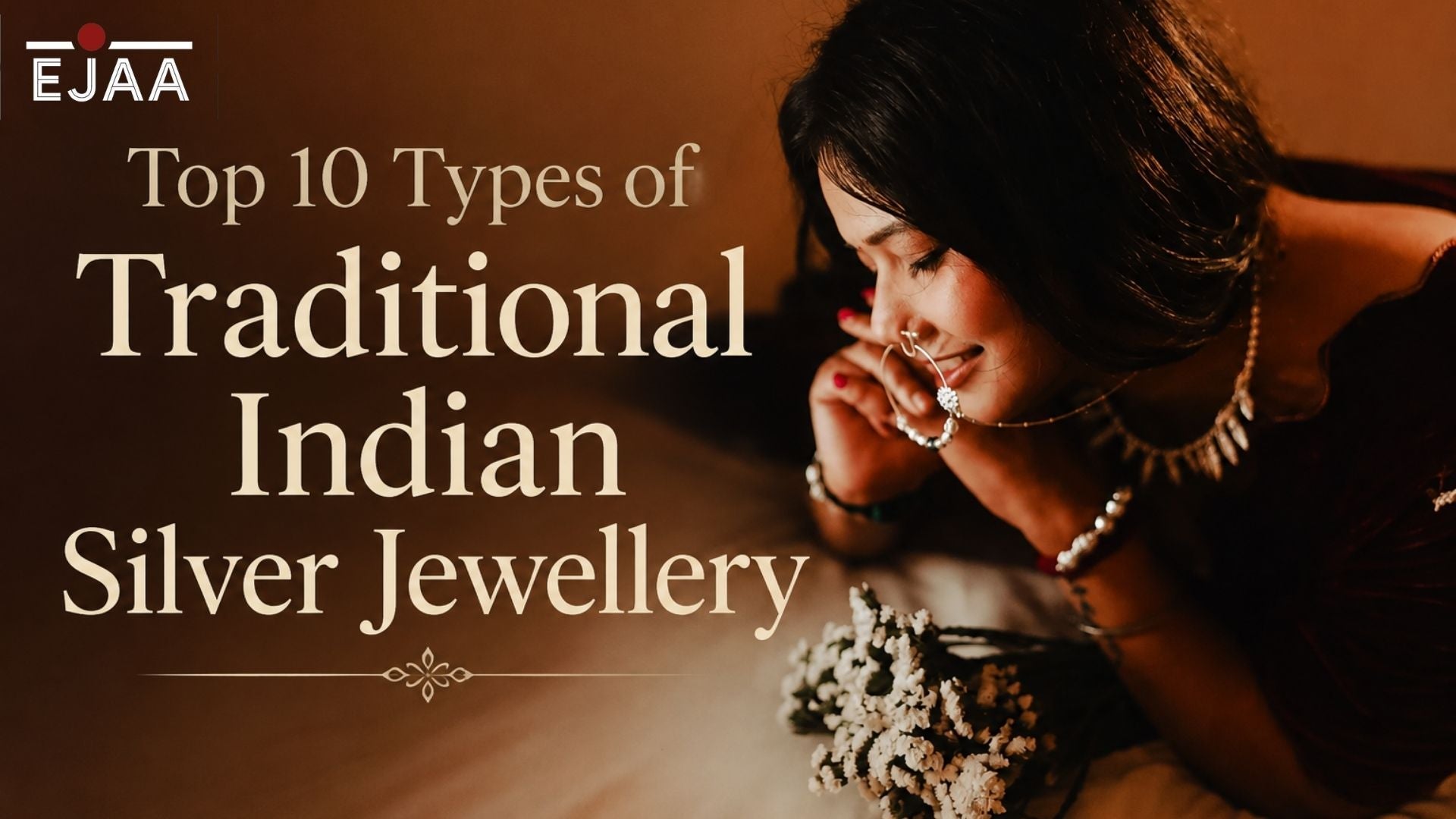
Top 10 Types of Traditional Indian Silver Jewellery

The top 10 types of traditional Indian silver jewellery include silver jhumkas, kadas, payal, guluband, hasuli necklaces, champakali haar, nath, pahuchi, maang tikka, and silver coin jewellery. Each style has its own design, cultural significance, and regional identity, with several closely associated with Pahadi, Kumaoni, and Uttarakhand jewellery traditions. From everyday earrings and bracelets to distinctive traditional neckpieces and bridal ornaments, these silver jewellery styles continue to be worn and reinterpreted today.
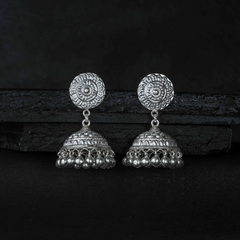
1. Silver Jhumkas
Dome-shaped earrings with a dangling silhouette, silver jhumkas for women are one of the most recognisable styles in Indian jewellery. They remain a go-to choice whether the occasion calls for something festive or effortlessly everyday.
-
One of the most widely searched styles under silver jhumka earrings
-
Often finished with tiny bells or beads for gentle movement
-
Lightweight versions work well for everyday, non-festive wear
2. Silver Kada
A thick, rigid bracelet known for its structured, sculptural form rather than a flexible chain design. Unlike delicate bangles, a silver kada is meant to make a visible statement on the wrist and works equally well alone or stacked with other silver pieces.

-
Often carved with floral or geometric detailing
-
Traditionally worn as a single statement piece, or stacked in pairs
-
Common across tribal and folk jewellery traditions
3. Payal (Anklets)
Chain-link or loop-style anklets that carry cultural weight well beyond their decorative appeal. In many households, payal are among the first pieces of jewellery worn regularly, often passed down or gifted during significant life events.
-
Holds marital and cultural significance in Indian communities
-
Worn daily in many households, not just for weddings or festivals
-
Frequently fitted with small ghungroos
4. Guluband (Silver Choker)
A fitted neckpiece that sits close to the throat, often finished with engraved or repoussé detailing. The guluband has seen a strong resurgence in recent years, moving from purely traditional settings into everyday and fusion styling.
-
One of the highest-demand styles in silver jewellery
-
Frequently layered with a longer necklace
-
Works with both ethnic and modern wear
5. Hasuli Necklace
A rigid, curved neckpiece rooted in Pahadi and Kumaoni silver jewellery traditions from Uttarakhand. Unlike most necklaces, it holds its shape rather than draping, giving it a distinct, almost architectural presence.
-
Distinct from flexible, chain-style necklaces
-
Worn close to the collarbone as a statement piece
-
Valued for its structured, sculptural silhouette
6. Toe Rings (Bichhiya)
Traditional silver toe rings, commonly known as bichhiya, are worn on the toes and hold strong cultural significance in many Indian communities.
-
Traditionally associated with marriage and married women
-
Often crafted with simple, traditional silver detailing
-
Available in both classic and contemporary designs
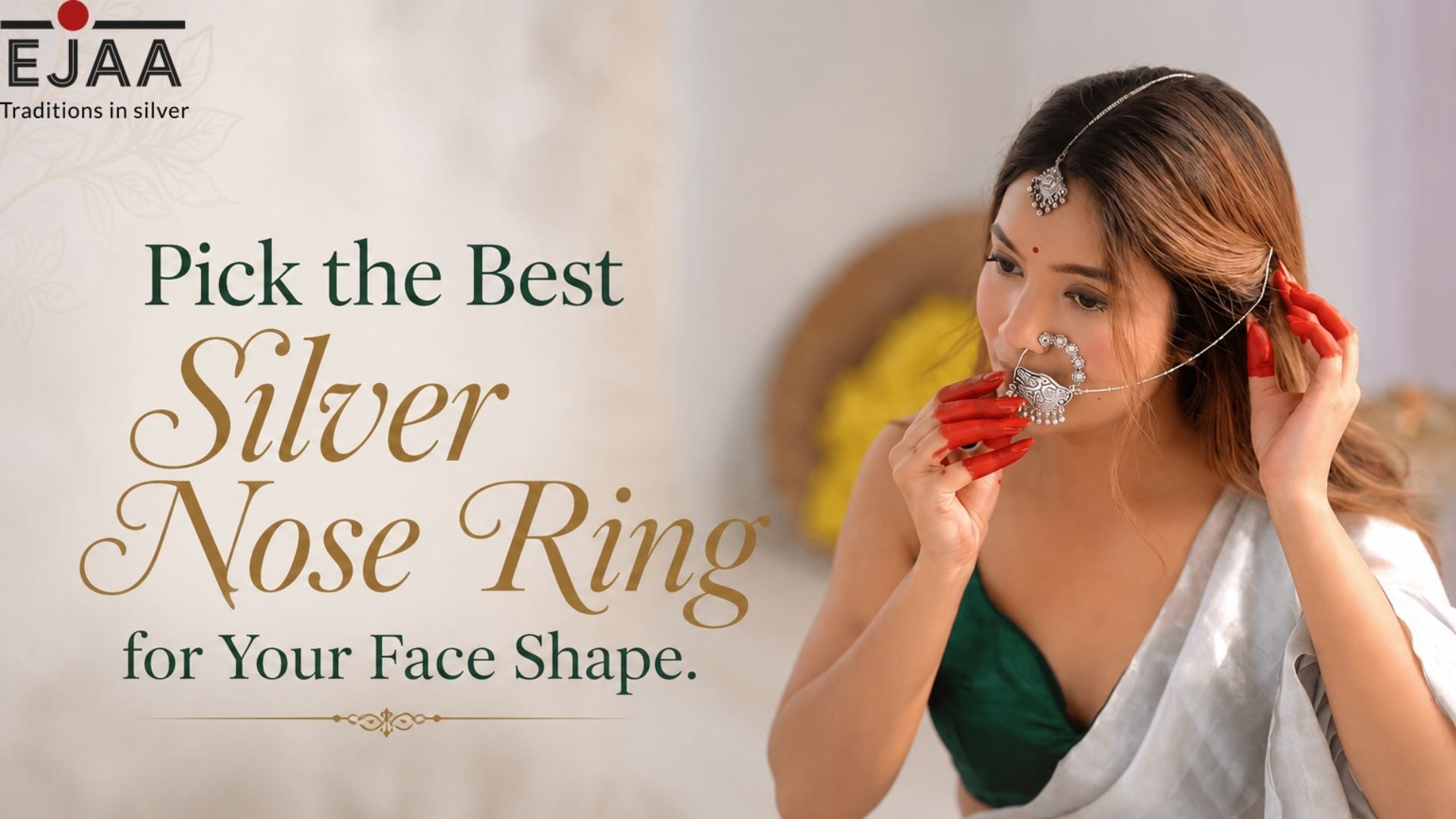
7. Silver Nath
A traditional nose ring that ranges from simple hoops to detailed filigree designs. Across India, the nath carries deep cultural symbolism, often tied to marital status or festive tradition, though its styling has grown more flexible in recent years.

-
Regional variations, including the Kumaoni nath, carry distinct identities
-
Worn primarily during weddings and festive occasions
-
Often paired with a matching earring or maang tikka set
8. Pahuchi
A woven or beaded arm bracelet, worn slightly above the wrist rather than at it. It sits in a category of its own, blending metalwork with handwoven textile elements. It's less commonly seen outside its home region; it tends to stand out as a distinctive choice.
-
Rooted specifically in Pahadi jewellery traditions
-
Usually fastened with a handwoven thread rather than a metal clasp
-
Less common outside the region, making it a distinctive pick
9. Silver Maang Tikka
A forehead ornament that sits along the hair parting. Traditionally associated with bridal wear, the maang tikka has gradually found its way into everyday festive styling as well, drawing attention to the face.
-
Common in bridal and festive Pahadi jewellery sets
-
Adds symmetry when paired with matching earrings
-
Traditionally worn for weddings, though styling has become more versatile
10. Silver Coin Jewellery
Necklaces or pendants shaped around coin motifs, often carrying symbolic or religious meaning. Coin jewellery holds a unique place in Indian gifting culture, frequently exchanged during festivals, poojas, or as tokens of blessing.
-
Frequently chosen for ceremonial or spiritual gifting occasions
-
Engravings often reflect regional or devotional significance
-
Bridges traditional design with everyday, modern styling
Final Thoughts
Traditional Indian silver jewellery has lasted this long because it was built for daily life, not just display. Ejaa's collection, handcrafted by artisans in Uttarakhand using Pahadi and Kumaoni techniques, covers many of these forms, including jhumkas, kadas, guluband, hasuli, champakali haar, nath, pahuchi, and coin jewellery, each made in genuine silver rather than mass-produced alloy.
FAQs
What are the main types of traditional Indian jewellery?
Traditional Indian jewellery encompasses several forms, including earrings (jhumkas), bangles (kadas), anklets (payal), chokers (guluband), and neckpieces (hasuli), each associated with a specific regional craft.
Is silver jewellery considered traditional in India?
Yes, silver has been used in Indian jewellery for centuries, particularly in hill, tribal, and folk traditions, where it's valued for its craftsmanship and everyday wearability.
What makes Pahadi jewellery different from other Indian styles?
Pahadi Jewellery Style, rooted in Uttarakhand, is known for oxidised silver finishes and motifs tied to hill and folk traditions, unlike the gold-heavy or filigree-based styles found elsewhere in India.
Can traditional Indian silver jewellery be worn with modern outfits?
Yes, pieces like jhumkas, chokers, and kadas pair well with both ethnic wear and contemporary outfits, making them versatile beyond festive occasions.
Which traditional Indian jewellery type is best for daily wear?
Lightweight Silver jhumkas, thin chokers, and Silver kadas are generally the most practical for everyday wear compared to heavier bridal or festive pieces.
How do I style multiple traditional jewellery pieces together?
A common approach is layering a guluband with a longer necklace like hasuli or champakali haar, then keeping other pieces minimal to avoid overloading the look.
Are Pahadi and Kumaoni jewellery styles trending?
Yes, hill and folk silver jewellery styles have seen renewed interest as more people move toward handcrafted, regionally rooted pieces over mass-produced accessories.