




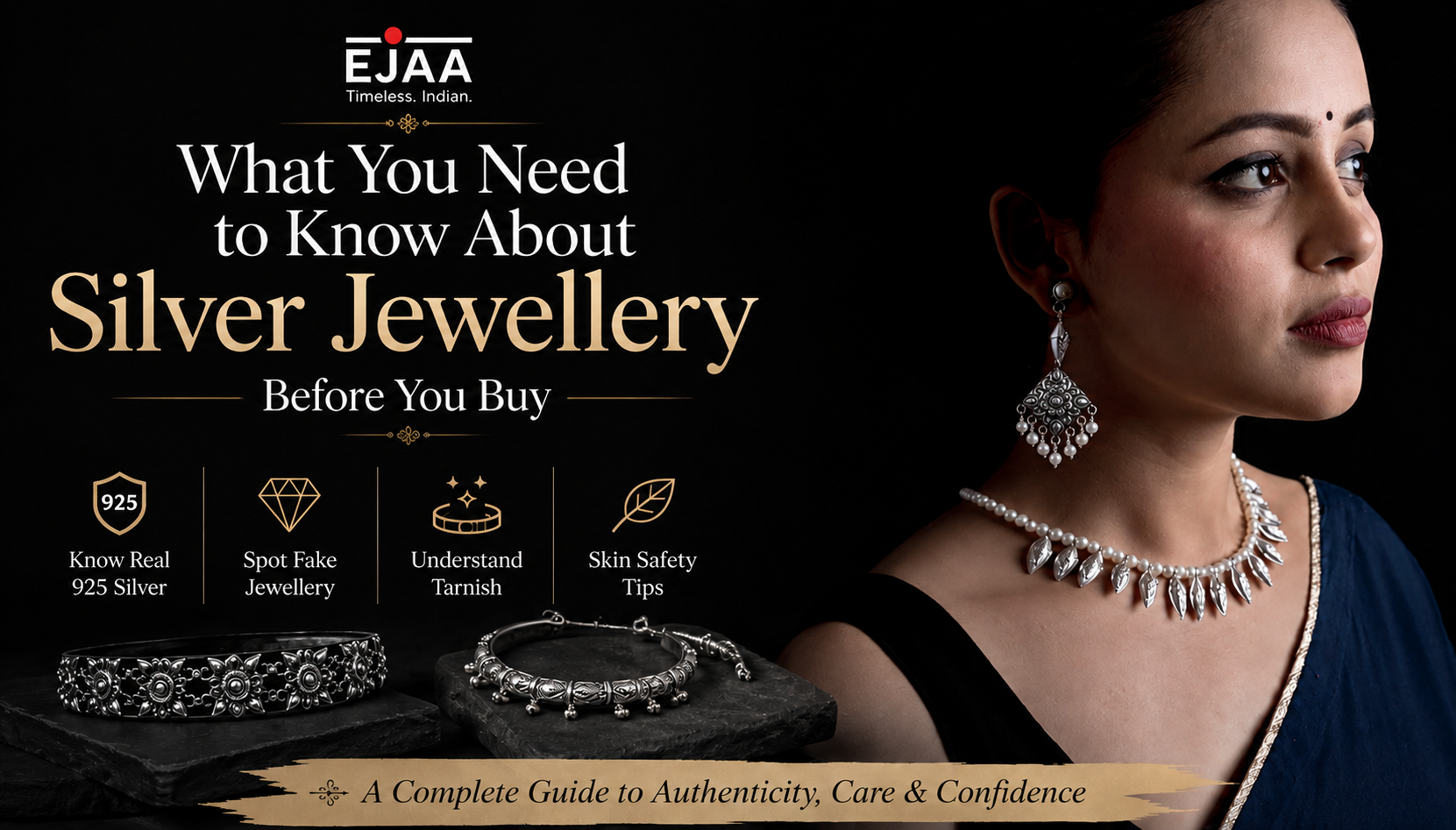
What You Need to Know About Silver Jewellery Before You Buy

Real silver jewellery carries a 925 hallmark, feels slightly heavier than plated pieces, and naturally tarnishes over time, while fake or plated silver usually skips the stamp, feels lighter, and doesn't oxidise the same way. Silver also reacts with air and skin oils, which is why it turns black or leaves a greenish mark on some people. Here's a complete, up-to-date guide to checking authenticity, understanding sterling silver, preventing tarnish, and knowing if silver jewellery is safe for your skin before you spend your money.
What Is 925 Sterling Silver?
925 sterling silver means the piece is 92.5% pure silver, alloyed with 7.5% other metals (usually copper) for strength. Pure silver on its own is too soft for everyday jewellery, so this alloy mix is the global standard for durability without compromising shine.
Sterling silver is the benchmark used by reputable jewellers, including handcrafted silver brands, because it balances purity, strength, and long-term wearability.
How to Tell if Silver Jewellery Is Real or Fake
A few quick checks can save you from a bad purchase:
- Look for the hallmark: Genuine silver is stamped 925 or 92.5
- Check the weight: Real silver feels denser than plated or alloy lookalikes.
- Do a magnet test: Silver is not magnetic if it sticks strongly to a magnet, it's likely fake.
- Try the ice test. Real silver conducts temperature fast, so ice melts noticeably quicker on it.
- Watch for tarnish: Genuine silver darkens slightly over time; plated metal usually just chips or peels instead.
- Smell test: Real silver has almost no odour; base metals often smell metallic or sour.
No single test is 100% conclusive on its own; combining two or three for a reliable result.
Sterling Silver vs Silver-Plated Jewellery
Sterling silver and silver-plated jewellery may look similar, but they're built very differently. Here is the difference between sterling silver and silver-plated jewellery:
|
Feature |
Sterling Silver (925) |
Silver-Plated Jewellery |
|
Composition |
92.5% silver + 7.5% alloy |
Base metal + thin silver coating |
|
Durability |
Long-lasting, years of wear |
Coating wears off over time |
|
Tarnish |
Tarnishes but can be cleaned |
Coating peels, exposing base metal |
|
Price |
Higher |
Lower |
|
Skin safety |
Generally safe |
Can cause reactions once coating fades |

Why Does Silver Jewellery Turn Black?
Silver turning black doesn't mean it's fake; it's actually a sign that a piece is likely real, pure silver reacting naturally.
How to Clean Tarnished Silver Jewellery?
- Wipe with a soft, dry cloth after every wear.
- Use a mild silver-polishing cloth for deeper shine.
- Soak briefly in lukewarm water with mild soap, then dry fully.
- Store in an airtight pouch or box away from direct sunlight and moisture.
Regular, gentle care keeps silver looking new for years.
Will Silver Jewellery Irritate Your Skin?
Pure sterling silver rarely irritates. Most reactions come from the alloy metals (like nickel or copper) mixed in, or from lower-quality plated jewellery rather than the silver itself.
Is Sterling Silver Safe for Sensitive Skin?
Yes, in most cases. High-purity 92.5 sterling silver is considered one of the safer metals for sensitive skin because it contains minimal nickel. To reduce irritation risk:
- Choose certified hallmark 925 silver over unmarked pieces
- Keep jewellery dry and clean
- Remove pieces before swimming, showering, or applying perfume
Handcrafted silver jewellery made with genuine 92.5 purity, the kind used in traditional Pahadi silver designs, is generally gentler on skin than mixed-metal fashion jewellery, since it avoids the cheaper alloys that trigger most reactions.
Ready to invest in silver jewellery that's built to last? Explore Ejaa's handcrafted 92.5 hallmark silver jewellery rooted in 200-year-old Pahadi craftsmanship, made for everyday wear.
FAQs
1. Why does silver turn black when I wear it?
It reacts with sulphur compounds in air, sweat, and skincare products, forming a thin black layer called tarnish.
2. If silver turns black, is it fake?
No, tarnishing is actually a sign of genuine silver reacting naturally. Fake or plated pieces are more likely to chip or discolour unevenly instead.
3. How do I clean silver jewellery that has turned black?
Wipe with a soft polishing cloth, or soak briefly in mild soapy water and dry thoroughly. Avoid abrasive scrubs.
4. Is 925 silver considered pure?
It's 92.5% pure silver alloyed with other metals for strength. It's the industry standard for "pure" wearable silver.
5. How can I tell if silver jewellery is real at home?
Check the 925 hallmark, test the weight, try a magnet test, and look for gradual, natural tarnishing.
6. Can sterling silver jewellery cause skin irritation?
Sterling silver is generally hypoallergenic, but some people may experience irritation due to the small amount of other metals (usually copper or sometimes nickel) used in the alloy.
7. What is the difference between sterling silver and silver-plated jewellery?
Sterling silver is 92.5% pure silver, while silver-plated jewellery has a thin layer of silver over a base metal. Sterling silver is more durable, valuable, and longer-lasting.