




How to Tell if Silver Jewellery Is Real: 7 Simple Tests You Can Do at Home

You can tell if silver jewellery is real by checking for a BIS hallmark with its purity grade, then confirming it at home with simple checks like the magnet, ice cube and white cloth tests.
Silver jewellery is part of Indian culture and everyday style, from a delicate anklet to a handcrafted pahadi necklace. But the market is also full of fake silver that looks just like the real thing. That makes it important to know how to tell if silver is real or fake at home, so you can spot imitations before you spend money on a piece.
In this blog, we share simple ways to identify real silver at home and spot fake jewellery.
What Counts as Real Silver in Jewellery
Real silver used in jewellery usually comes in two forms:
- Fine silver, which is 99.9 per cent pure. It is soft and not ideal for regular wear.
- Sterling silver, which is 92.5 per cent silver mixed with 7.5 per cent other metals like copper. This is the most common and durable form used in jewellery.
Other BIS grades include 800, 835, 958, 970 and 999. The 800 grade (80 per cent silver) is common in payal and anklets, so a lower number still means real silver, just at a lower purity.
Understanding the 925 Hallmark
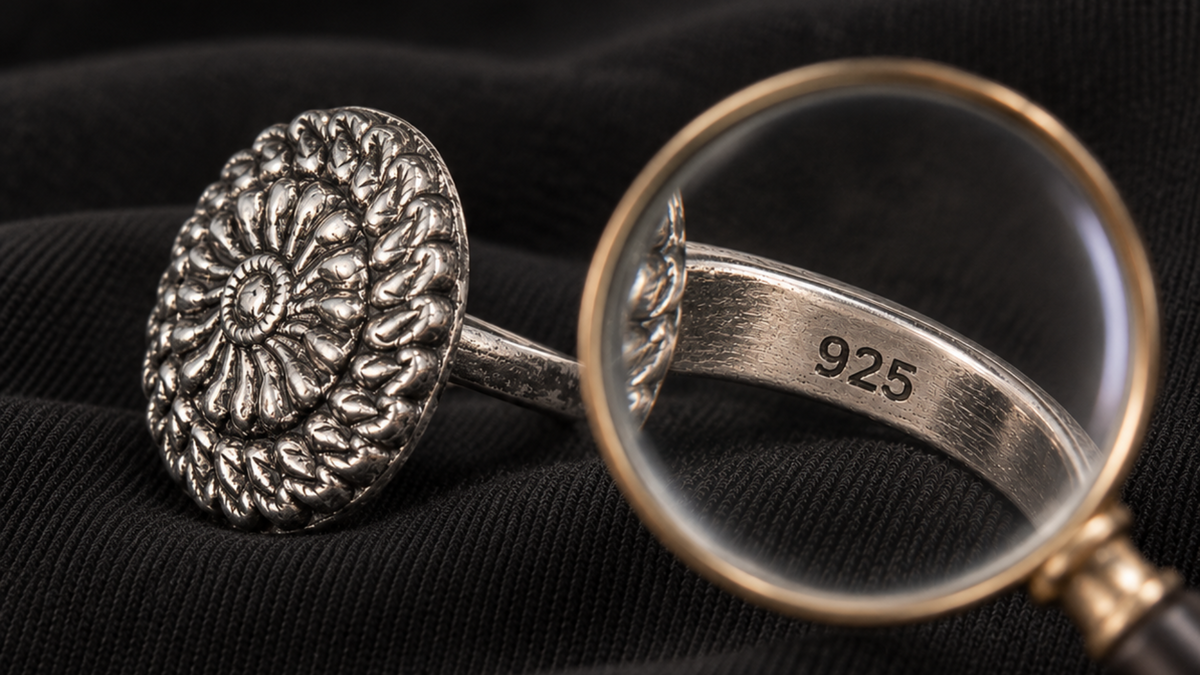
Genuine sterling silver is stamped with a "925" mark. This stamp means the jewellery contains 92.5 per cent pure silver. You can usually find it on the inner side of rings, necklace clasps, or bangles. In India, a BIS hallmark on silver carries the BIS logo with the word SILVER along with the purity grade, such as 925.
What Is Fake Silver Jewellery?
Fake silver is jewellery that looks like silver but does not actually contain real silver in significant amounts. It is usually made from cheaper metals like nickel, stainless steel, or brass and then coated with a thin layer of silver polish.
Common Types of Fake Silver in the Indian Market
- Silver-plated jewellery where only the top layer is silver and the inside is another metal.
- German silver, which sounds fancy but contains no real silver. It is usually made of nickel, zinc, and other cheap alloys.
- Steel or brass with silver polish that fades quickly and causes skin reactions.
These imitations can look attractive when new, but often discolour, cause irritation, or lose shine over time.
How to Tell Real Silver from Fake at Home
Here are seven easy tests you can do at home to check if your silver is real or fake.
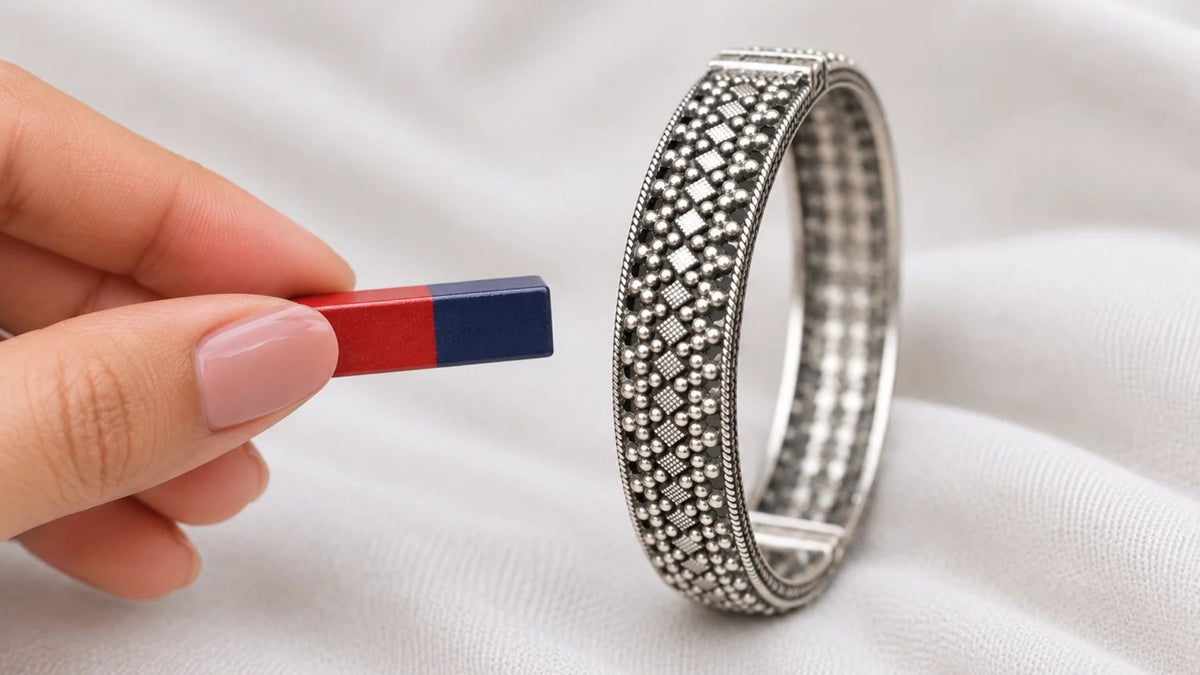
1. Magnet Test
Silver is not magnetic. If the jewellery sticks to a magnet, it is not real silver. Passing this test does not prove a piece is silver, though, because brass, copper and aluminium are also non-magnetic.
2. Hallmark Check
Look closely for the 925 or BIS stamp. If there is no mark, be cautious, but remember that silver hallmarking in India is still voluntary, so some genuine handcrafted pieces are sold without one. Also watch for blurry or shallow engravings, one of the common red flags of a fake 925 hallmark.
3. Rub Test
Rub the item gently with your fingers. If a black mark appears, it could be real silver, as silver reacts with sulphur in the air and on skin, forming a dark tarnish layer. Fake silver usually leaves no mark or gives off a different colour.
4. Ice Cube Test
Place an ice cube on the jewellery. Real silver conducts heat quickly, so the ice will melt faster on silver than on other metals.
5. Smell Test
Real silver has no smell. If you notice a strong metallic or chemical smell, it is likely fake.
6. White Cloth Test
Rub the jewellery with a soft white cloth. If it turns black, that is tarnish rubbing off, which is a common sign of real silver.
7. Sound Test
Tap the jewellery lightly. Real silver produces a soft, bell-like sound. Fake metals give off a dull or tinny sound works best on solid pieces like bangles or coins.
Real vs Fake Silver at a Glance
|
Check |
Real silver |
Fake or plated silver |
|
Magnet |
No pull |
Often sticks (nickel, steel) |
|
Hallmark |
BIS logo, the word SILVER and purity grade |
Missing, blurry or only "925" |
|
White cloth |
Leaves grey or black marks |
Clean cloth, or a yellow or green tint |
|
Ice cube |
Melts quickly |
Melts slowly |
|
Over time |
Tarnishes but polishes back |
Coating peels, base metal shows |
Tips for Buying Real Silver Jewellery in India
To avoid buying fake silver, follow these simple tips:
- Always buy from a trusted seller or a certified silver jewellery brand.
- Ask for a purity certificate and check for the 925 stamp or BIS hallmark.
- Avoid deals that look too good to be true. Real silver has value, and deep discounts often mean the item is not genuine.
- Keep your bill or invoice safe. It can help if you need to exchange or verify the jewellery later.
- For payal and a silver chain for women, check the clasp for a stamp, and remember that 800 is a genuine purity grade for anklets.

Why Real Silver is Always Worth It
There are many reasons why choosing real silver is better in the long run:
- Skin-friendly and safe for daily wear. Fake metals can cause allergies or rashes.
- Durable and long-lasting when cared for properly.
- Can be polished and restored easily even after years.
- Holds resale value, unlike fake jewellery.
- Holds cultural and auspicious value in many Indian households, especially for weddings and festivals.
Investing in real silver means you are buying quality, tradition, and peace of mind.
Final Thoughts
Knowing how to identify real silver from fake is an important skill for every jewellery lover. With just a little knowledge and attention, you can shop with confidence and avoid being tricked. Whether you are buying for tradition, style, or gifting, make sure your silver is as real as your love for it.
Explore handcrafted and hallmarked silver jewellery collections at Ejaa, where every piece is made with authenticity and heart.
FAQs
Does real silver stick to a magnet?
No, real silver is not magnetic, so jewellery that sticks to a magnet is not solid silver. Brass and copper don't stick either, so a piece that passes still needs a hallmark check.
Does real silver turn black over time?
Yes, real silver tarnishes and darkens as it reacts with sulphur in the air and on skin. The tarnish polishes off easily, while plated jewellery peels and shows a different metal underneath.
Can fake silver have a 925 stamp?
Yes, a 925 stamp can be engraved on any metal, so it is not proof of purity on its own. Ejaa's silver jewellery is hallmarked, so the purity mark on each piece is backed by certification.
How can I check if my silver payal is real at home?
Look for a purity stamp near the clasp, then try the magnet and white cloth tests. Many genuine silver payals are made in 800 purity, which is still real silver.
Is German silver real silver?
No, German silver contains no silver at all and is an alloy of copper, nickel and zinc. Ejaa works only in real silver, never in German silver or plated metal.
Where can I buy real silver jewellery online in India?
Buy from brands that state the purity grade, sell hallmarked pieces and give a proper invoice. Ejaa offers handcrafted, hallmarked Pahadi and Kumaoni silver jewellery, from hansuli and pahuchi to everyday chains and rings.