




History of Garhwali Silver Jewellery: Origins, Traditional Designs & Cultural Significance

Garhwali silver jewellery originated in the Garhwal region of Uttarakhand and has been handcrafted for centuries using traditional techniques such as repoussé and filigree. Known for designs like the Nath, Hansuli, Pahunchi, and Kandora, these ornaments reflect the region's cultural heritage, rituals, and mountain lifestyle.
This article explores the history, traditional designs, and cultural significance of Garhwali silver jewellery.
Where It All Began: Silver in the Hills of Garhwal
Garhwal, nestled in the western Himalayas of Uttarakhand, has been home to one of India's most distinct jewellery traditions for well over 500 years. Unlike the jewellery of the plains, the history of Garhwali silver jewellery didn't evolve in royal courts or merchant bazaars. It grew in mountain villages, shaped by the land, the climate, and the rhythms of Pahadi life.
Silver was the metal of choice, not because gold wasn't valued, but because silver felt closer to the mountains themselves. Cool to the touch, moon-bright in appearance, and deeply practical in the harsh Himalayan winters, silver suited the Garhwali way of life perfectly.
For the people of Garhwal, wearing silver wasn't about showing wealth. It was about belonging to your family, your village, your lineage.
The Cultural Roots Behind Every Design
Jewellery as Identity
In traditional Garhwali society, jewellery served as a living identity card. The type of piece a woman wore, the motifs on it, the weight of it all communicated her marital status, her community, even the specific valley she came from.
A married woman was expected to wear silver from head to toe. Specific pieces were non-negotiable for certain rituals and ceremonies. Removing them wasn't just a fashion choice; it carried deep social and spiritual meaning.
Nature, Mythology, and Craft
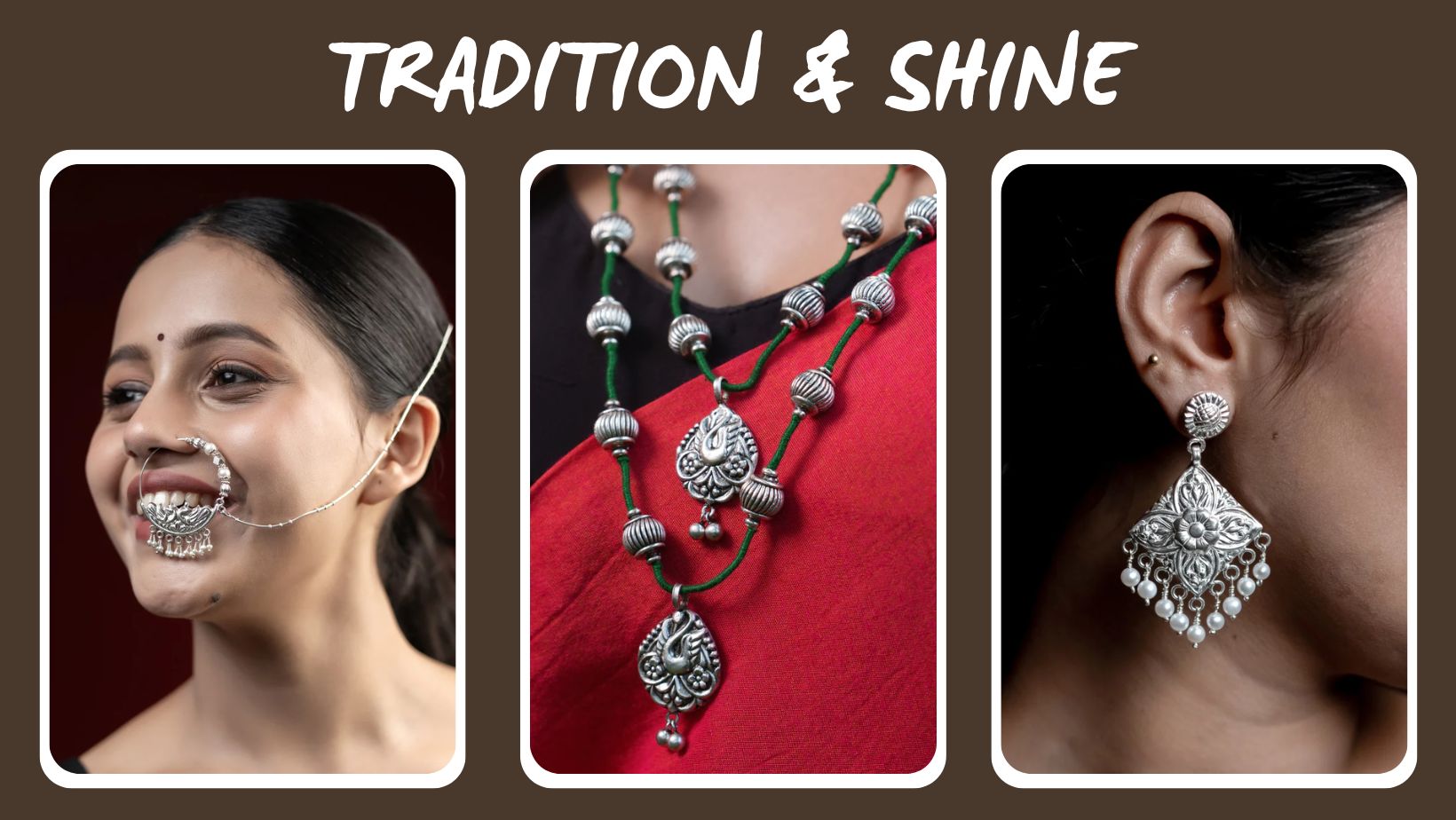
The design vocabulary of silver jewellery in Garhwal, Uttarakhand, is deeply rooted in two things: the natural world and Hindu mythology.
Look closely at traditional pieces, and you'll find:
-
Floral motifs: lotus blossoms, champa flowers, leaf patterns inspired by the forests and alpine meadows
-
Fauna imagery: peacocks, fish, elephants, and snakes, each carrying a symbolic meaning
-
Geometric patterns: spirals, interlocking triangles, diamond grids borrowed from textile and architectural traditions
-
Deity symbols: the trident (trishul), conch (shankh), and sun motifs connected to Shiva worship and the region's deep Shaivite roots
This wasn't a decorative accident. Every motif was chosen with intention, and artisan families passed down the meaning alongside the technique.

Traditional Garhwali Jewellery Designs: Piece by Piece
Understanding Garhwali jewellery designs traditionally means knowing the names because each piece has a story.
Nath (Nose Ring)
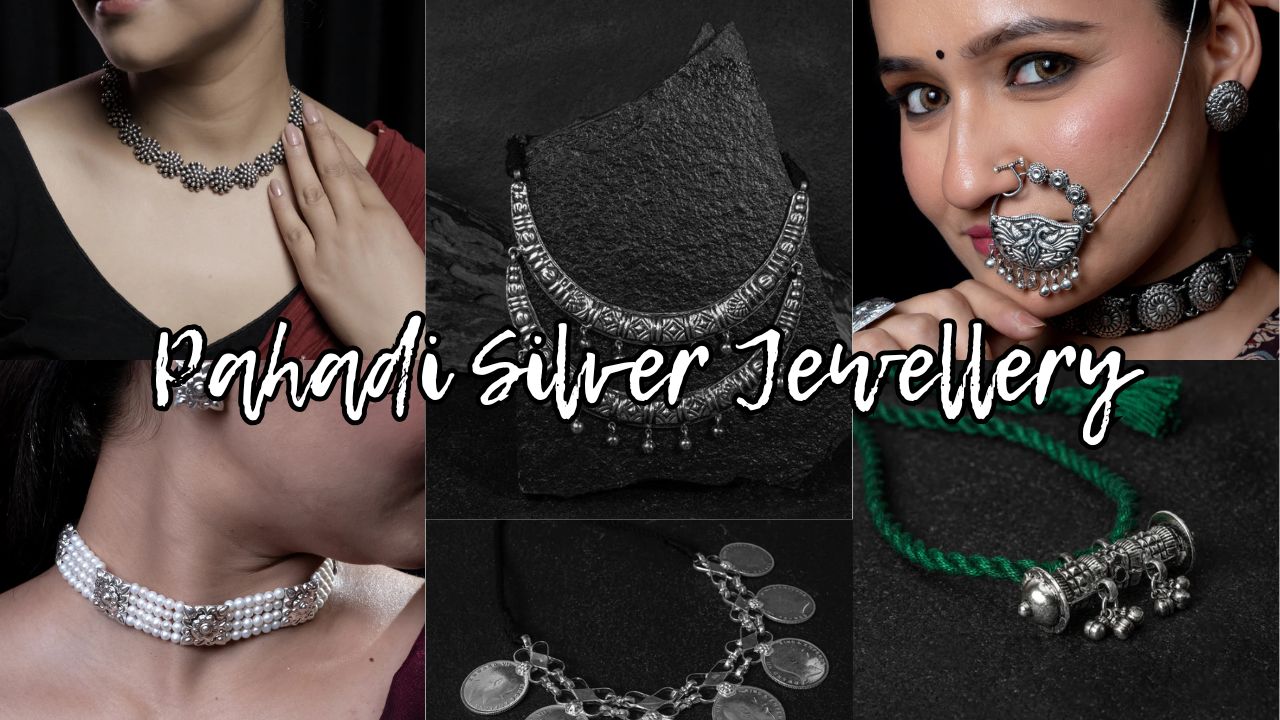
One of the most iconic pieces in Pahadi jewellery culture. The Garhwali nath is often large and elaborate, worn during festivals and weddings. Its size and design varied by region; a woman's Nath often hinted at her home district.
Hansuli (Neck Collar)
A rigid, crescent-shaped silver collar worn close to the neck. The hansuli is perhaps the most recognisable piece of Pahadi jewellery history Garhwal; it appears in folk songs, paintings, and old photographs as a symbol of Pahadi identity. Traditionally worn by both men and women.
Pahunchi and Kangan (Bracelets)
Heavy silver bangles worn in pairs or sets. The Pahunchi typically features engraved patterns and was a staple in a bride's trousseau. The thickness and weight were a mark of craftsmanship pride.
Bichhwa (Toe Rings)
Worn by married women as a symbol of matrimony, bichhwa in Garhwali tradition were often more ornate than their plain counterparts, featuring tiny floral carvings and twisted silver wire work.
Kandora (Waist Band)
A wide silver waist belt, often made of interlocking silver plates. The kandora was as much about protection and posture as it was about adornment and in cold mountain winters, it added a layer of warmth as well.
The Craftsmen Behind the Craft
The artisans who created Garhwali silver jewellery belonged to specific communities primarily the Sunar (goldsmith) families who lived in the hills for generations. These weren't seasonal craftsmen. Jewellery-making was their entire world, passed from father to son, mother to daughter-in-law, in an unbroken line.
Their tools were simple by today's standards: a small forge, hammers, chisels, wax moulds, and extraordinary skill. The technique known as repoussé (hammering from the reverse to create raised designs) was widely used. So was filigree work, twisting fine silver wire into intricate lace-like patterns that required both patience and precision.
Many of the moulds used in traditional workshops were 100, even 200 years old. The same design could exist across generations because the mould and the knowledge of how to use it were carefully preserved.

How Garhwali Silver Jewellery Changed Over Time
The Colonial Period and After
Like much of India's craft heritage, Garhwali jewellery went through significant disruption in the colonial era. Cheaper mass-manufactured jewellery from the plains began to penetrate mountain markets. Younger artisans were pulled toward other livelihoods. Some techniques started to fade.
Post-Independence, efforts to revive Uttarakhand's craft traditions helped preserve some of this knowledge. Government craft bodies, local NGOs, and individual artisan families kept the flame alive but barely.
The Modern Revival
The real shift came in the 2000s and accelerated sharply through the 2010s-2020s. A new generation of designers and brands began looking back at their roots not to replicate the past, but to translate it for contemporary sensibilities.
This revival was driven by a growing market hunger for pieces that had cultural meaning, not just aesthetic polish. People weren't just buying silver jewellery. They were buying identity, story, and rootedness in an increasingly displaced world.
Traditional moulds were retrieved from archives. Old craftsmen were sought out. And Garhwali silver jewellery with its mountain-born motifs and handcrafted honesty found itself at the centre of a heritage craft renaissance.
FAQs:
Q1. What makes Garhwali silver jewellery unique?
It uses mountain-specific motifs, flora, fauna, and deity symbols crafted through techniques like repoussé and filigree, passed down through generations of hill artisans.
Q2. Which are the most iconic Garhwali jewellery pieces?
Hansuli (neck collar), nath (nose ring), kandora (waist belt), Pahunchi (bracelets), and bichhwa (toe rings) are each tied to rituals and community identity.
Q3. Why is silver used in Garhwali jewellery, not gold?
Silver suited the mountain lifestyle practical, affordable, and cool-toned like the Himalayas. Traditional pieces are crafted in 92.5 pure silver.
Q4. Is handmade Garhwali jewellery still available today?
Yes. Craft revivalists and brands are actively working with traditional artisans, some still using 100+ year old original moulds.
Q5. Can Pahadi jewellery be worn daily?
Absolutely. Modern adaptations are lighter and adjustable same heritage motifs, made for everyday wear.
Why Garhwali Silver Jewellery Still Matters Today
The history of Garhwali silver jewellery isn't just a chapter in a book about craft. It's a living, breathing tradition that continues to evolve.
Every time someone chooses a handcrafted piece over a factory-made one, they are choosing to keep an artisan's skill alive. Every time a designer goes back to a 200-year-old mould and reimagines it for today, a story gets a new chapter.
Silver jewellery from Garhwal, Uttarakhand, carries something that mass production can never match: the fingerprints of the person who made it, the memory of the culture it came from, and the weight of the mountains it was born in.
Wearing it is, in the truest sense, wearing history.