




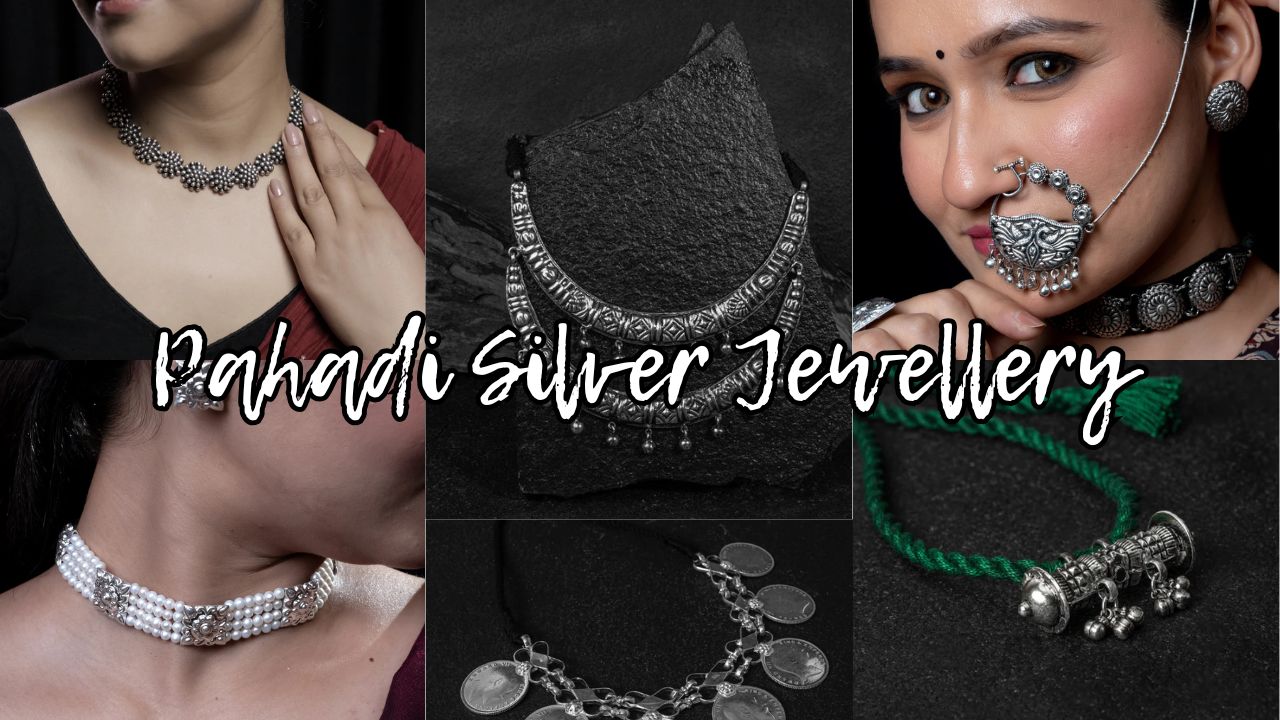
How Pahadi Jewellery is Made: The Silver Crafting Process Step by Step

There is something quietly extraordinary about Pahadi jewellery. Every ring, every necklace, every kada carries within it hours of patient handwork skills passed down through generations in the hills of Uttarakhand, Himachal Pradesh, and the Kumaon region.
If you have ever held a piece and wondered, " How was this actually made? This guide is for you. We are breaking down the Pahadi silver jewellery making process, step by step, so you understand not just the craft but the care that goes into every piece.
What Makes Pahadi Silver Jewellery Different
Before we get into the process, it is worth understanding what sets this jewellery apart. Pahadi silver jewellery is not factory-made. It is not cast in moulds in bulk. It is at its best entirely handmade, one piece at a time.
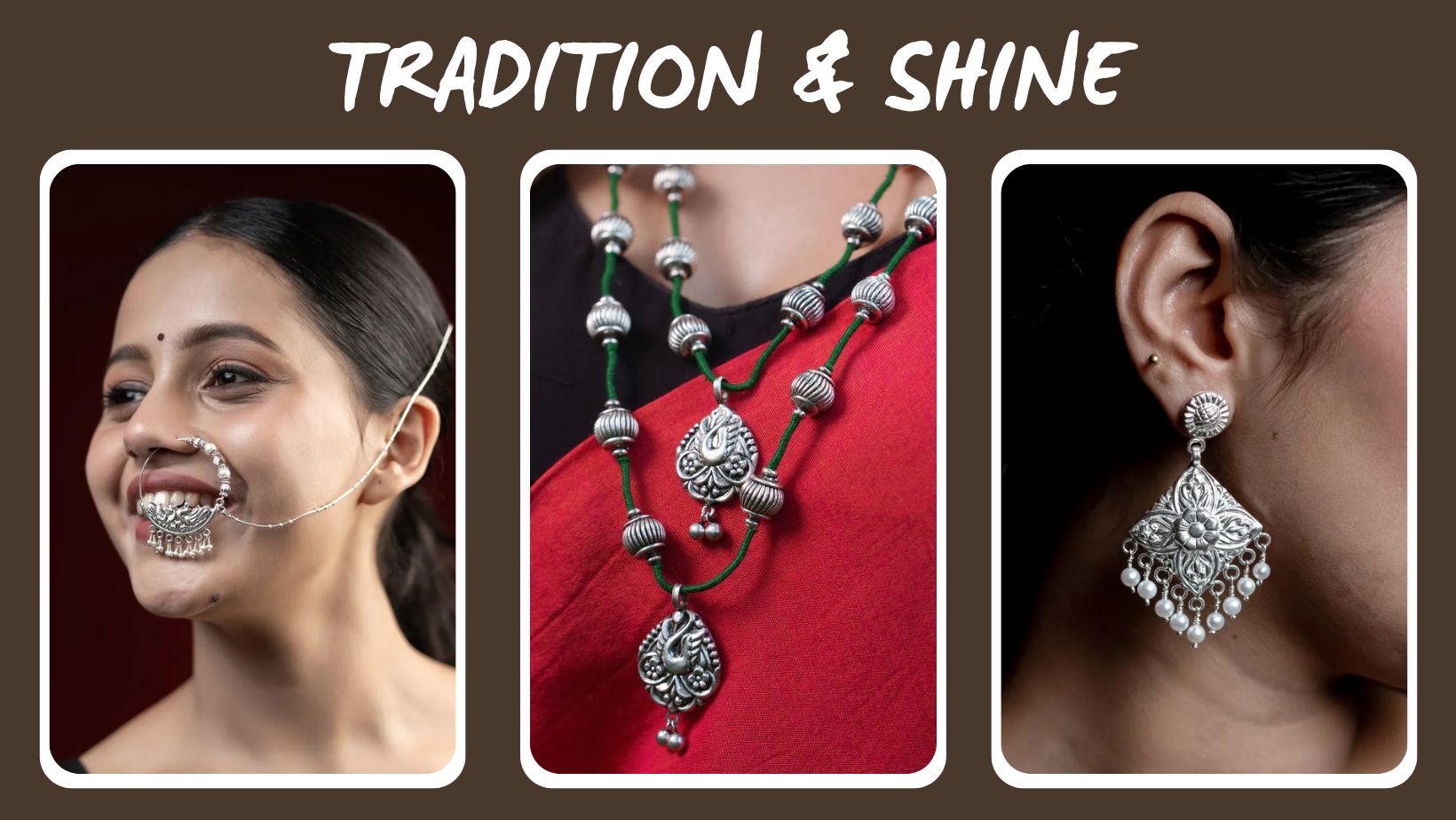
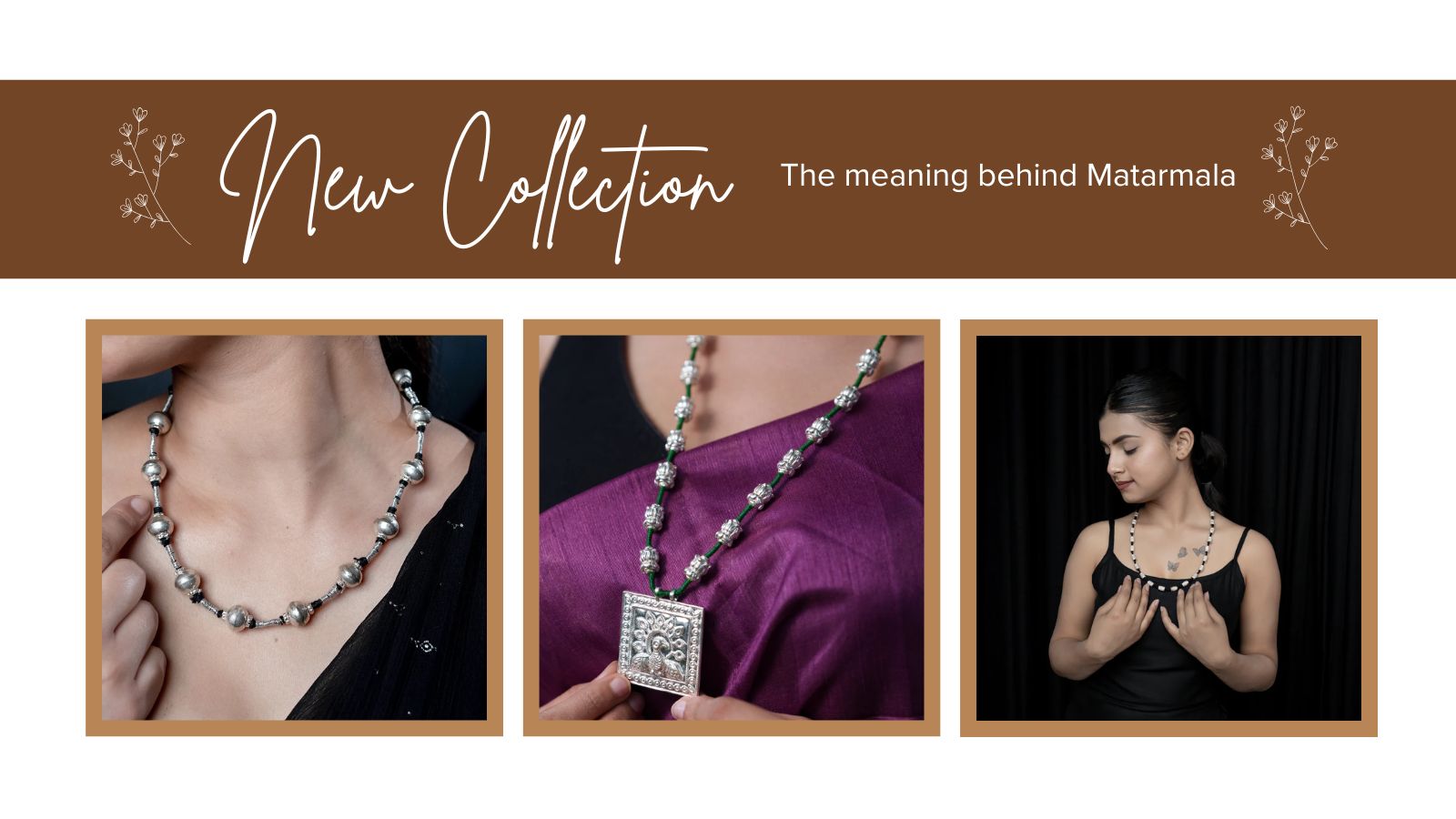
This is what gives it its characteristic character: slight imperfections that are not flaws, but proof of human hands. Designs that carry regional symbolism: the lotus, the peacock, the mountain etched by craftsmen who have spent decades perfecting their eye.
The silver used is typically 92.5% sterling silver, the same international standard as hallmarked silver worldwide. But in the hands of a Pahadi karigar, it becomes something much more personal.
How Pahadi Jewellery is Made: The Step-by-Step Process
Step 1: Sourcing and Melting the Silver
The process begins long before any tool touches metal. The artisan sources silver usually in bar or coin form and checks its purity. Once ready, the silver is placed in a clay crucible and melted in a small coal or gas furnace, reaching temperatures over 960°C.
The molten silver is then poured into a cast to form basic ingots or sheets. These raw sheets are the blank canvas for everything that follows.
Step 2: Rolling and Shaping the Metal
Once cooled, the silver sheets are passed through a rolling mill to achieve an even, consistent thickness. This is where the base of rings, bangles, pendants, and earrings begins to take shape.
For wire-based designs, think fine chains or filigree work; the silver is drawn through progressively smaller holes in a drawplate until the wire reaches the desired gauge. This step requires steady hands and patience. Rush it, and the wire snaps.
Step 3: Cutting and Filing the Base Form
Using jeweller's saws, shears, and files, the artisan cuts the silver sheet into the required shape. This is where the basic silhouette of the piece emerges: a rough ring blank, the body of a pendant, or the framework of an earring.
Precision matters here. Any asymmetry in the base will show up in the final piece. Experienced karigars work from memory or hand-drawn templates, cutting with a confidence that comes only from years of practice.

Step 4: Engraving and Design Work
This is the heart of how silver jewellery is crafted in Uttarakhand, the engraving stage. Using a small chisel-like tool called a burin, the artisan etches patterns directly onto the silver surface by hand.
Common pahadi motifs include:
• Paisleys and floral scrollwork
• Geometric patterns: inspired by temple architecture
• Mountain and river motifs are deeply rooted in Kumaoni identity
• Animal and bird symbols: like peacocks and fish
Some pieces also incorporate repousse, a technique where the design is hammered from the reverse side to create a raised, three-dimensional effect on the front. This is especially common in larger statement pieces like hasuli necklaces and payal (anklets).
Step 5: Soldering and Assembly
Most Pahadi jewellery pieces are made up of multiple components: the main body, clasps, loops, decorative droplets, and connecting links. Each component is made separately and then joined using silver solder.
The artisan uses a small blowpipe or gas torch to apply precise heat, melting the solder exactly where the join needs to be. Done well, the solder is invisible. Done poorly, it shows as a dark seam. This is a skill that truly separates master craftsmen from beginners.
Step 6: Polishing and Finishing
Once the piece is assembled, it goes through a series of finishing steps. First, any rough edges are smoothed out using progressively finer sandpapers and polishing wheels. Then, the piece is cleaned in an acid bath (usually dilute sulphuric acid) to remove oxidation from soldering. This process is called pickling.
The final polish is done by hand, using a soft cloth or rotary polisher with jeweller's rouge. This is what gives Pahadi silver its characteristic warm, lustrous glow, not blinding and industrial, but soft and alive.
Step 7: Oxidising for Contrast (Optional)
Many traditional Pahadi pieces are intentionally oxidized in a process where a chemical solution darkens the recessed areas of the engraving, making the raised design pop visually.
This is what gives older-style Pahadi jewellery its distinctive antique look. The contrast between dark valleys and bright ridges is what makes the intricate engraving legible and beautiful from even a short distance.

Why This Process Matters
Understanding the handmade silver jewellery process in India changes how you experience wearing it. When you put on a Pahadi piece, you are wearing the patience of Step 4's engraving, the precision of Step 5's solder, the warmth of Step 6's hand-polish.
These are not products. They are made objects, and there is a real difference.
At Ejaa, every piece in our collection comes directly from artisans in the Pahadi belt who still follow this full process. No shortcuts. No mass production. Just craft, done properly.
The Pahadi Silver Jewellery Making Process: Quick Recap
1. Melt and pour: silver is sourced, melted, and cast into sheets or ingots
2. Roll and draw: sheets are rolled thin; wire is drawn to gauge
3. Cut and file: the base form is cut and refined
4. Engrave and design: traditional motifs are hand-etched
5. Solder and assemble: components are joined with silver solder
6. Polish and finish: the piece is cleaned and buffed to a warm glow
7. Oxidise (if needed): recessed areas are darkened for design contrast
Frequently Asked Questions
What type of silver is used in Pahadi jewellery?
Authentic Pahadi jewellery uses 92.5% sterling silver, durable, hallmark-grade, and soft enough for fine hand-engraving.
How long does it take to make one Pahadi silver jewellery piece?
It depends on the complexity of the piece. A simple ring or pair of studs might take 2–4 hours. A heavily engraved Hasuli necklace or a detailed multi-component payal can take several days or even a week of concentrated work. This is exactly why handmade Pahadi jewellery cannot and should not be priced like mass-produced pieces.
Is Pahadi jewellery making still practised traditionally?
Yes, but it is a craft under quite a lot of pressure. Artisans across Uttarakhand and Kumaon still follow the full traditional process by hand, but younger generations are slowly stepping away. When you buy directly from brands like Ejaa that source from these karigars, you are doing a small part in keeping this alive.
What makes Pahadi jewellery different from other Indian silver jewellery?
Most Indian jewellery leans on stones, enamel, or gold to make a statement. Pahadi jewellery does not. It is just hand-engraved silver, the motifs, the oxidized finish, the craftsmanship. Nothing extra, nothing borrowed. The metal does all the talking.
How should I care for my Pahadi silver jewellery?
Store it in an airtight pouch, away from perfume and moisture that slows tarnishing. For cleaning, a soft cloth does the job daily. For deeper cleaning, baking soda paste or mild silver polish works well. And if your piece has an oxidized finish, go easy on the dark recessed areas; contrast is intentional, not dirt.
Final Words
Pahadi jewellery is not just about aesthetics, it is about continuity. Every artisan who sits down with a burin and a silver sheet is carrying forward a tradition that predates most of us by centuries.
When you choose handmade over mass-produced, you are not just buying jewellery. You are choosing to keep this craft alive, and that matters more than most people realize.
Explore our full collection of authentic Pahadi silver jewellery at ejaa.in. Each piece is made by hand, each one is a small piece of the hills.