





Article: Kumaoni vs Garhwali Jewellery: 5 Differences Most People Don’t Know
Kumaoni vs Garhwali Jewellery: 5 Differences Most People Don’t Know
 Kumaoni and Garhwali jewellery share most core pieces, such as the guluband, hasuli, pahuchi, and bulak, but they differ in five ways. These are the shape of the bridal nath, the local names for the same piece, a few signature pieces unique to each region, Jaunsari influence in Garhwal, and the outfit each set is styled with. The quickest way to tell them apart is the nose ring: a large round Kumaoni nath versus the moon-shaped, heavily decorated Tehri nath of Garhwal.
Quick Comparison
|
Feature |
Kumaon |
Garhwal |
|
Bridal nose ring |
Kumaoni nath, a large round hoop |
Tehri nath, moon-shaped with motifs |
|
Choker name |
Hasuli |
Hasuli, also called khagwali |
|
Signature piece |
Chareu (mangalsutra) |
Dhagule (silver bangles) |
|
Jaunsari influence |
No |
Yes, kaanphool and heavier silver |
|
Styled with |
Rangwali Pichhaura |
Ghagra, saree and shawl |
5 Differences Between the Two Styles
1. The Bridal Nath Has a Different Shape
The nath is the biggest visual clue.
- Kumaon: The Kumaoni nath is a large round gold hoop with a chain that loops up to the hair. Traditionally, the number of pearls on it reflected the family's status.
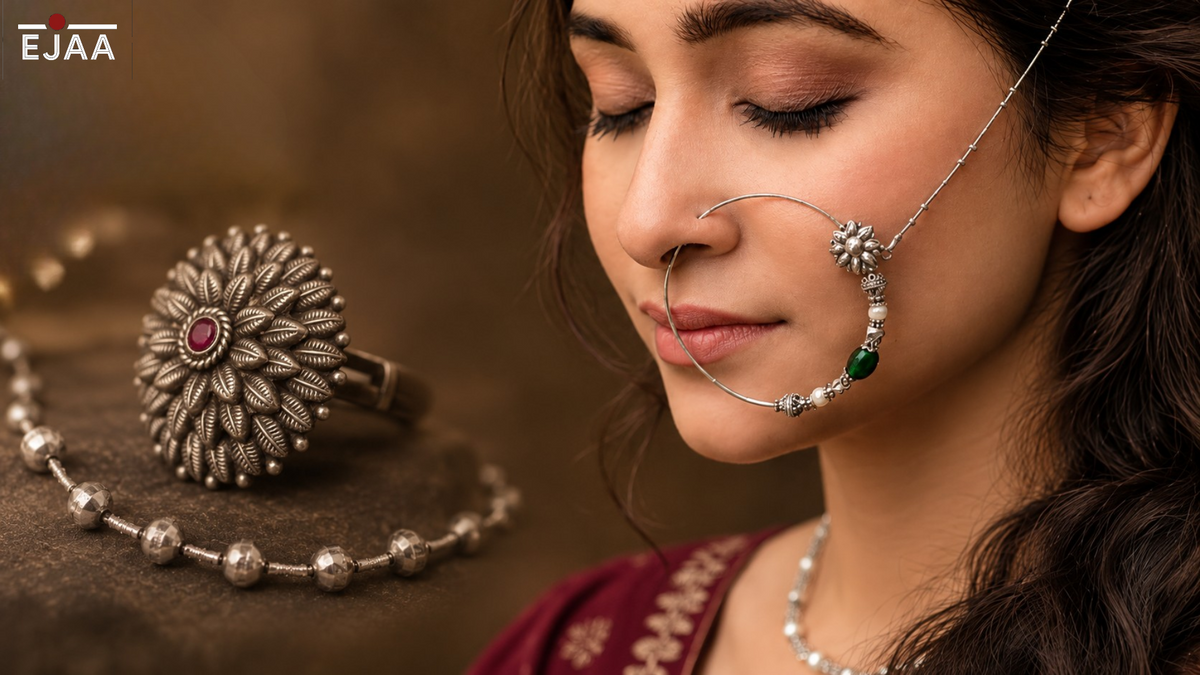
- Garhwal: The Tehri nath is moon-shaped and densely decorated with pearls, stones, and peacock or floral motifs. The bride's maternal uncle traditionally gives it to her.
Modern brides in both regions now pick smaller, lighter naths, and silver versions are popular for everyday wear. This guide to types of silver nath covers the main styles.

2. The Same Piece Has Different Names
Many pieces are identical, but their names change across the hills.
- The hasuli choker is also called hansuli, and in Garhwal it is known as khagwali.
- The guluband also goes by galobandh, galoband, or gulband.
- The pahuchi bracelet is called pauchi, pochi, or ponchi, and chandi ki pochi when it is made in silver.
Knowing these spellings helps when you search online for traditional Garhwali jewellery or a Kumaoni jewellery set.
3. Each Region Has Signature Pieces
A few pieces are tied more closely to one region.
- Kumaon: The chareu, a black-bead mangalsutra, is a key piece for a Kumaoni bride.
- Garhwal: Dhagule, thick silver bangles, are a classic part of Garhwali jewellery design.
4. Garhwal Includes Jaunsari Jewellery
The Jaunsar-Bawar area of Dehradun district falls within Garhwal and has its own style.
- Jaunsari women wear the kaanphool, a floral earring that covers most of the ear.
- Their sets use more silver and bolder, heavier forms than typical Kumaoni designs.
5. Each Set Is Styled With a Different Outfit
- Kumaon: Jewellery is styled around the rangwali pichhaura, a saffron-yellow drape with red motifs worn at weddings and pujas.
- Garhwal: Brides pair the Tehri nath with a ghagra or saree, so the nath stays the statement piece.
Final Thoughts
Whether you love the round Kumaoni nath or the ornate charm of Garhwali designs, Pahadi jewellery is meant to be worn and passed down. Ejaa, a Pahadi silver jewellery brand rooted in Uttarakhand, brings both traditions to you in handcrafted silver, from the hasuli and guluband to the pahuchi and Kumaoni nath. Find the piece that speaks to your roots and wear a little of the mountains with you every day.
FAQs
What is the difference between Kumaoni and Garhwali jewellery?
Both use similar pieces like the guluband, hasuli, and pahuchi, but Kumaon is known for the large round Kumaoni nath and Garhwal for the moon-shaped Tehri nath. Garhwal also includes Jaunsari pieces like the kaanphool.
What is a Tehri nath?
A Tehri nath is a large, moon-shaped gold nose ring from Garhwal, decorated with pearls, stones, and floral or peacock motifs. The bride's maternal uncle traditionally gives it to her.
Can Kumaoni and Garhwali jewellery be worn in silver?
Yes. The hasuli has traditionally been made in silver, and brands like Ejaa now make the nath, guluband and pahuchi in silver for everyday wear.
What jewellery does a Kumaoni bride wear?
A Kumaoni bride wears a Kumaoni nath, chareu, guluband and pahuchi, usually styled with a rangwali pichhaura.
What is the Garhwali name for hasuli?
In Garhwal, the hasuli is also called khagwali, and elsewhere it is known as hansuli. Ejaa's hasuli designs are handcrafted in silver in the traditional collar shape worn across both regions.
Is the guluband Kumaoni or Garhwali?
The guluband belongs to both regions and is worn by married women in Kumaon, Garhwal, Jaunsar and Bhotiya communities. Ejaa offers the guluband in silver for festivals and everyday wear.