




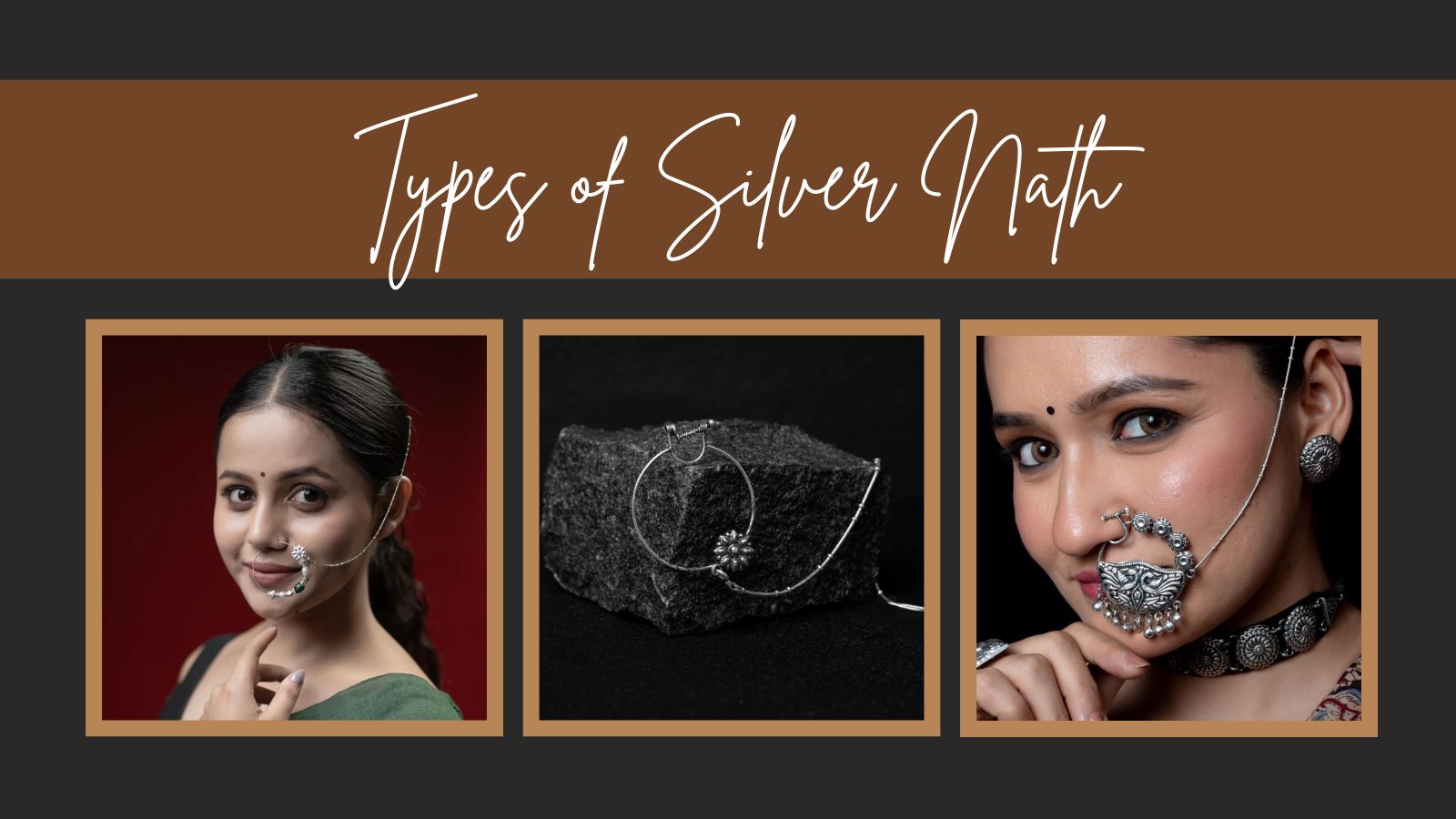
Types of Silver Nath: Kumaoni, Morni, Bajuband and More. A Complete Guide

There are five distinct types of silver Nath rooted in India's Pahadi jewellery tradition: the Kumaoni Nath, the Morni Nath, the Garhwali Nath, and the Nathni, plus the Bajuband, an armlet rather than a nose ring, completes the traditional bridal set when worn together with a nath.
If you've ever wondered which one is "the" Nath, the truth is there isn't just one there's a whole family of them, each tied to a region, a story, and a reason someone chose to wear it. This guide walks through every type, what sets it apart, and how to pick the right one for you.
What Makes a Nath 'Pahadi'?
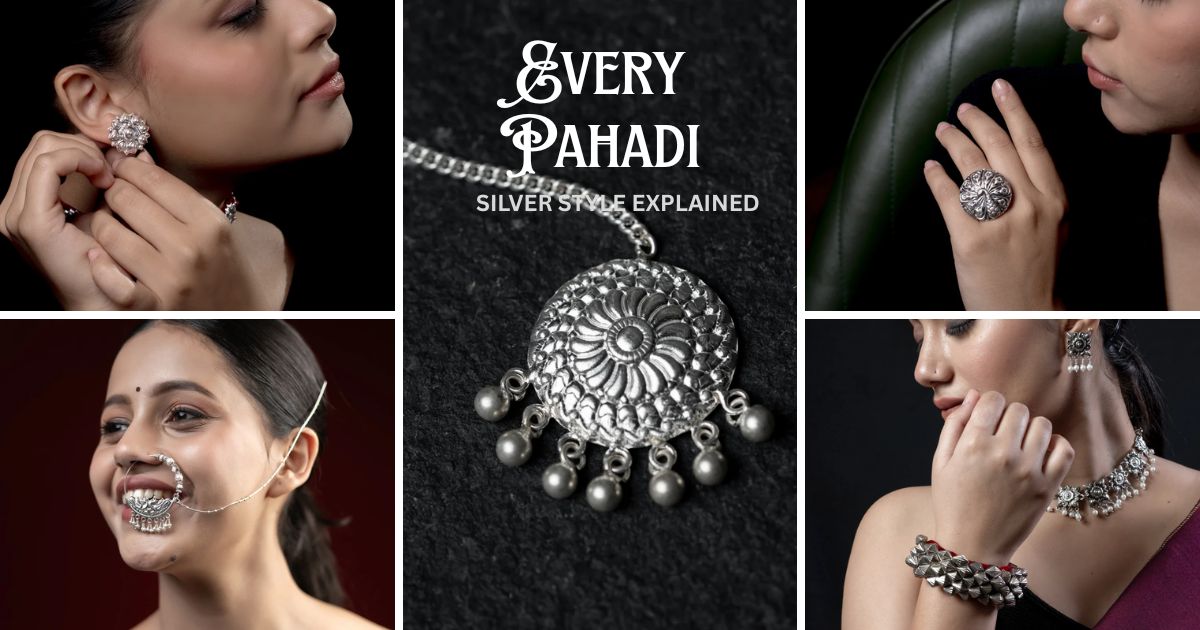
The word "pahadi" simply means "of the mountains." But in jewellery, it signals specific designs rooted in the folk traditions of Uttarakhand, Himachal Pradesh, and the Kumaon-Garhwal region.
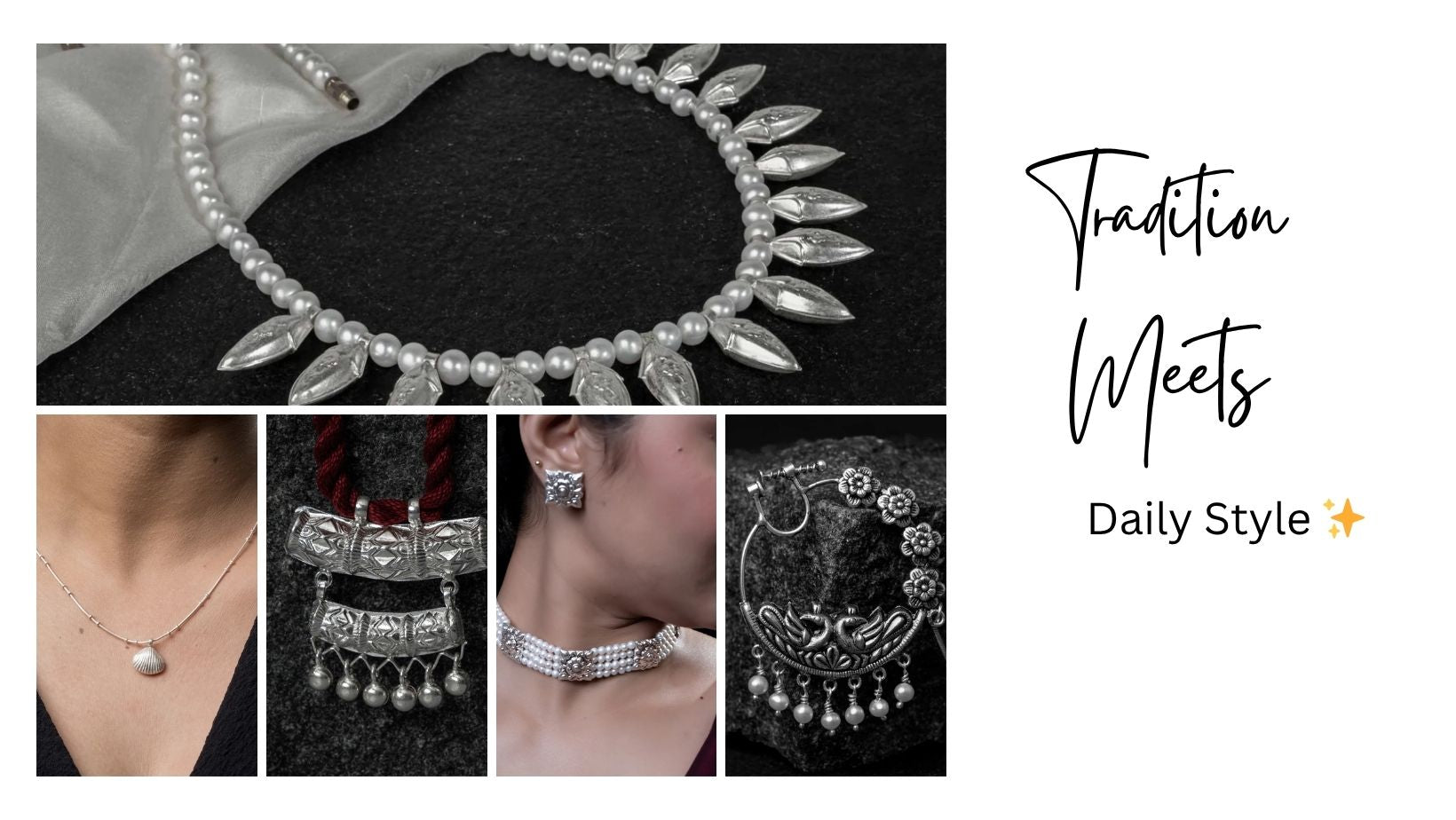
Pahadi silver Naths are typically heavier than urban styles, oxidized for that antique finish, and made by hand. The motifs, flowers, birds, and geometric patterns draw directly from hill culture and local mythology.
They are also, more often than not, made in pure silver, not plated, not alloyed. That's what makes them last.
Types of Silver Nath in India: A Region-by-Region Look
Let's get into the types. Each style below has distinct characteristics. Once you know them, you'll never mix them up again.
1. Kumaoni Nath The Heirloom Classic
The Kumaoni Nath is perhaps the most recognized style among Pahadi silver nose rings. It comes from the Kumaon region of Uttarakhand and is traditionally worn by women during weddings, festivals like Harela, and family rituals.
What sets it apart:
• Large, statement hoop often 4–7 cm in diameter
• Intricate floral and paisley motifs, often with hanging pearl or coral drops
• Oxidized finish that highlights the detailed silverwork
• Traditionally attached to hair or the ear with a chain for support
Modern Kumaoni nath designs like those at Ejaa preserve the original mould and motifs while making them lighter and more wearable for everyday use.
2. Morni Silver Nath The Peacock Tribute
"Morni" means peahen in Hindi, the female peacock. And this style of silver Nath lives up to the name. The Morni Nath features a peacock or peahen motif at the centre of the hoop, making it one of the most visually striking types in Pahadi jewellery.
Why it's loved:
• The peacock symbolizes beauty, grace, and good fortune in Indian culture
• Works beautifully as a bridal piece or for festive occasions
• Available in both oxidized and polished silver finishes
The Morni Nath is a favourite for wedding trousseaux in Uttarakhand, and increasingly, for women across India who want jewellery with a story.
3. Garhwali Nath The Bolder Cousin
From the Garhwal region of Uttarakhand, the Garhwali nath shares DNA with the Kumaoni but tends to be bolder, wider, and more geometric in design. Where Kumaoni naths lean floral, Garhwali styles often use stronger, more angular patterns.
If the Kumaoni nath is poetry, the Garhwali nath is prose, direct, confident, and unapologetic.

4. Nathni The Everyday Stud Nath
Not every nath needs to make a grand entrance. The nathni is a small, pin-style nose ring, a stud or tiny hoop that you can wear on a regular Tuesday. Simple, elegant, and rooted in the same craft tradition.
In silver, the nathni is particularly popular among younger women who want to nod to their cultural heritage without committing to a full statement piece.
5. Bajuband Not a Nath, But Often Confused
Quick clarification: a bajuband is an armlet worn on the upper arm, not a nose ring. But it shows up in searches for traditional silver jewellery so often that it deserves a mention here.
In pahadi weddings, the nath and bajuband are often worn together as part of a complete traditional set. So if you're putting together a bridal look or a festive ensemble, the two go hand in hand.
Ejaa offers silver bajubands as part of its Statements and Vintage collections, worth exploring if you're building out a full look.
How to Choose the Right Silver Nath for You
With so many types of silver nath in India to choose from, it helps to ask yourself a few questions before buying:
• What's the occasion? Weddings call for a Kumaoni or Morni Nath. Daily wear? Go for a nathni.
• Do you want oxidized or polished? Oxidized silver has a darker, antique feel. Polished is brighter and more formal.
• How much weight are you comfortable with? Bigger hoops are heavier; some come with chain support.
• Is it pure silver? Always check. Pure silver (92.5% sterling) will last decades; plated versions won't.
And if you're still unsure, Ejaa offers personalized video call consultations so you can see each piece up close before you buy.
Why Silver, Specifically?
In the pahadi tradition, silver isn't just a metal, it's a material with cultural weight. It's associated with the moon, with femininity, with purity. It's the metal that the hills chose, long before gold became aspirational.
Practically speaking, silver is also hypoallergenic, adjustable, and surprisingly durable when well-made. A good silver nath, cared for properly, will outlast trends. It'll outlast most things.
That's the quiet power of pahadi silver jewellery. It was never about fashion. It was always about meaning.
The Nath Is More Than an Accessory
Whether you're drawn to the grandeur of a Kumaoni bridal Nath or the simplicity of a silver Nathni, what you're really choosing is a piece of living tradition. These aren't mass-produced trinkets; they're objects with memory.
At Ejaa, every silver nath is crafted in pure silver, drawing on Kumaoni design heritage and made with artisans who've kept these traditions alive. If you're looking for a silver name that means something, this is where to start.

Frequently Asked Questions
What is the difference between a Kumaoni Nath and a Morni nath?
A Kumaoni Nath is a large hoop with floral and paisley detailing, traditional to the Kumaon region of Uttarakhand. A Morni Nath features a peacock or peahen motif at the centre; it's more sculptural and figurative. Both are statement pieces, but the Morni is more recognisable by its bird centrepiece.
Are Pahadi silver Naths suitable for everyday wear?
Larger hoop-style Naths (Kumaoni, Garhwali) are better suited for occasions they're weighty and elaborate. For everyday wear, a smaller nathni or a lightweight modern Kumaoni-inspired design works much better. Brands like Ejaa specifically design adjustable, lightweight versions for daily use.
How do I care for a silver Nath?
Store it in a dry place away from perfumes, water, and chemicals. After wearing, wipe it gently with a soft cloth. For oxidized silver, avoid aggressive polishing. It'll remove the darkened finish that gives the nath its antique depth.
Is a bajuband the same as a nath?
No, a bajuband is an armlet worn on the upper arm, while a nath is a nose ring. They're both part of traditional Pahadi jewellery sets and are often worn together, but they are distinct pieces.
What makes silver Naths from Uttarakhand different from other Indian nose rings?
Uttarakhand Naths, especially Kumaoni and Garhwali styles, are distinct for their large size, intricate hand-etched motifs, use of pure silver (not plated), and their deep cultural significance. Many designs are made from moulds that are over 200 years old. They carry a specificity of origin that mass-produced silver nose rings simply don't.