





Article: Uttarakhand’s Winter Festivals: Dates, Traditions and Pahadi Silver Jewellery
Uttarakhand’s Winter Festivals: Dates, Traditions and Pahadi Silver Jewellery

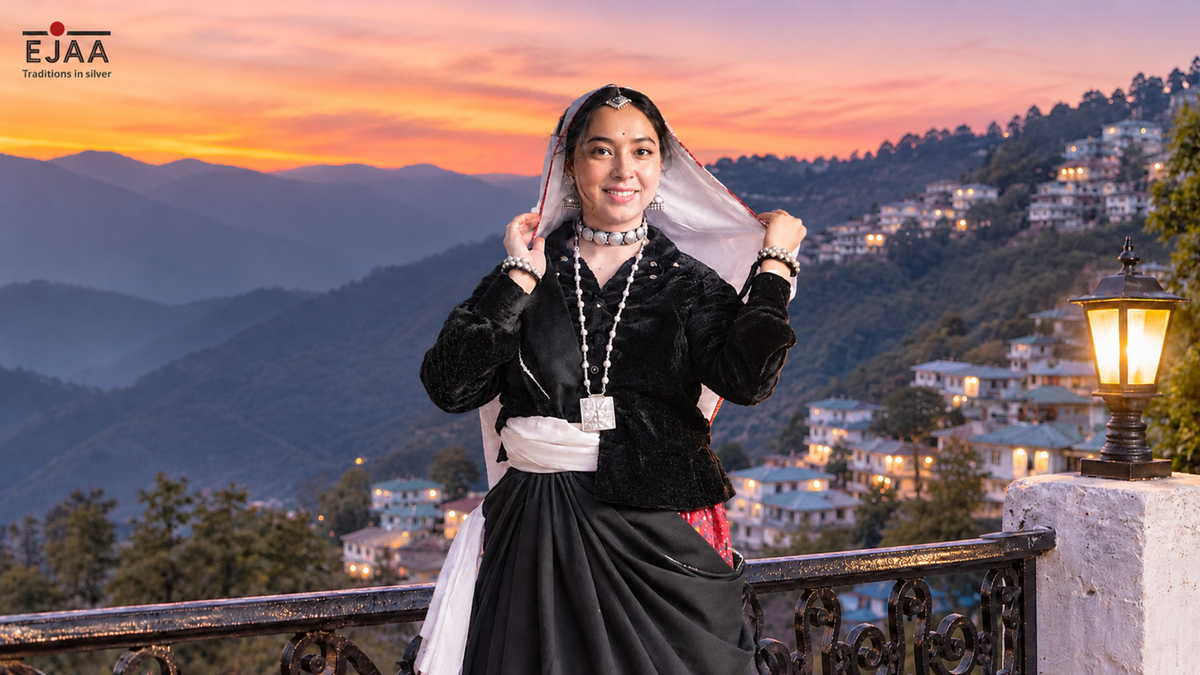
Uttarakhand’s main winter festivals are Igas Bagwal (20 November 2026), the Kasar Devi fair (24 November 2026), the Mussoorie and Nainital winter carnivals (late December), Uttarayani (14 January 2027) and Basant Panchami (11 February 2027). Each has its own traditions, from bhailo fire dances at Igas to ghughute garlands at Uttarayani. At these festivals, women traditionally wear Pahadi jewellery such as the nath, guluband, hasuli and pahuchi, saving their fullest sets for Igas and Uttarayani and lighter pieces for fairs and full sets for Basant Panchami.
Winter Festival Dates at a Glance
|
Festival |
Where |
Dates |
Traditionally worn |
|
Igas Bagwal |
Garhwal and parts of Kumaon |
20 Nov 2026 |
Nath, guluband, pahuchi, hasuli |
|
Kasar Devi Fair |
Almora |
24 Nov 2026 (Kartik Purnima) |
Pahuchi, fine chain |
|
Winterline Carnival |
Mussoorie |
Late December |
Guluband, silver choker, jhumkas |
|
Nainital Winter Carnival |
Nainital |
Late December |
Guluband, silver choker, jhumkas |
|
Uttarayani / Ghughutiya |
Kumaon, Bageshwar |
14 to 15 Jan 2027 |
Nath, pahuchi, matarmala |
|
Basant Panchami |
Statewide |
11 Feb 2027 |
Kumaoni nath, guluband, oxidised silver |
Festival by Festival
Igas Bagwal
Igas is called the “old Diwali” of the hills and falls 11 days after Diwali. After dark, villagers swing flaming bhailo torches made of pine and dance in the courtyards.
- The tradition: It is a family celebration, so married women bring out their suhaag pieces: the nath, guluband and pahuchi.
- Worn today: A hasuli necklace with a saree or ghagra looks festive and stays practical near an open fire. The story of Igas Bagwal explains why the hills celebrate Diwali later.
Kasar Devi Fair
This fair is held on Kartik Purnima at the Kasar Devi temple near Almora, a hilltop shrine dating to around the 2nd century CE.
- The tradition: It is a devotional fair with a walk uphill, so women wear lighter, everyday pieces rather than full sets.
- Worn today: A pahuchi silver bracelet and a fine chain go well with a suit or saree and a cardigan.
The Hill-Town Carnivals
The Mussoorie Winterline Carnival is named after the winterline in Mussoorie, a band of colour seen on the horizon at sunset. Together with the Nainital Winter Carnival, it brings folk music and Pahadi food to the hill towns in late December.
- Worn today: These carnivals are the place to wear traditional pieces in a modern way. A guluband or silver choker necklace over a high-neck sweater, with silver jhumka earrings, carries Kumaoni jewellery into everyday winter fashion.

Buy Now: Chauki Bel Guluband
Uttarayani and Ghughutiya
On Makar Sankranti, Bageshwar holds the Uttarayani Mela where the Saryu and Gomti rivers meet. In Kumaon, children wear garlands of ghughute, a sweet fried snack, and call out to the crows to share them.
- The tradition: Families gather for ritual baths and pujas, and married women wear the nath and pahuchi with a pichhaura.
- Worn today: A silver matar mala with a kurta set and a woollen shawl is a simple way to keep the tradition.
Basant Panchami
Basant Panchami welcomes spring with yellow clothes, Saraswati puja, and fresh barley sprouts offered at home. It is also considered an auspicious day for weddings and new beginnings.
- The tradition: A Pahadi bride and other married women often wear the full set, including the Kumaoni nath and guluband.
- Worn today: Oxidised silver against mustard yellow is an easy silver saree jewellery combination for a daytime puja.
Wearing Traditional Pieces With Winter Layers
- Chokers over high necks: The hasuli and guluband sit neatly over turtlenecks, so woollens never hide them.
- Long pieces over coats: The matarmala and longer chains look best over an open coat or cardigan.
- Earrings with caps: Tuck woollen caps behind the ears so jhumkas and a nath stay visible.
- Winter care: Damp mountain air speeds up tarnishing, so wipe each piece after wearing and store it in a dry pouch.
Jewellery That Belongs to the Hills
In Kumaon and Garhwal, festival jewellery is rarely bought for a single day. It is passed from mother to daughter and brought out every winter for Igas, Uttarayani and family pujas. Ejaa, a silver jewellery brand from Uttarakhand, crafts these heirloom forms, from the hasuli and guluband to the pahuchi and Kumaoni nath, so the next generation can wear them at every festival of the season.
FAQs
Which festivals are celebrated in Uttarakhand in winter?
The main winter festivals are Igas Bagwal, the Kasar Devi fair, the Mussoorie and Nainital winter carnivals, Uttarayani and Basant Panchami, running from November to February.
When is Igas Bagwal 2026?
Igas Bagwal 2026 falls on 20 November, 11 days after Diwali. Some local almanacks may differ by a day.
What jewellery do Pahadi women wear at festivals?
Married women traditionally wear the nath, guluband, pahuchi and hasuli. In Kumaon, they often pair these with a rangwali pichhaura.
Why do married women wear the guluband?
The guluband is a marker of marriage in Kumaon and Garhwal, worn as a choker of square blocks on a red band.
When is the Mussoorie Winterline Carnival 2026?
The carnival is usually held in the last week of December, and the 2025 edition ran from 24 to 30 December. The 2026 dates have not been announced yet.
Does winter weather affect silver jewellery?
Damp air can make silver tarnish faster, so wipe it after wearing and store it in a dry pouch.

,%20the%20Kasar%20Devi%20fair%20(24%20November%202026),%20the%20Mussoorie%20and%20Nainital%20winter%20carnivals%20(late%20December),%20Uttarayani%20(14%20January%20...)