




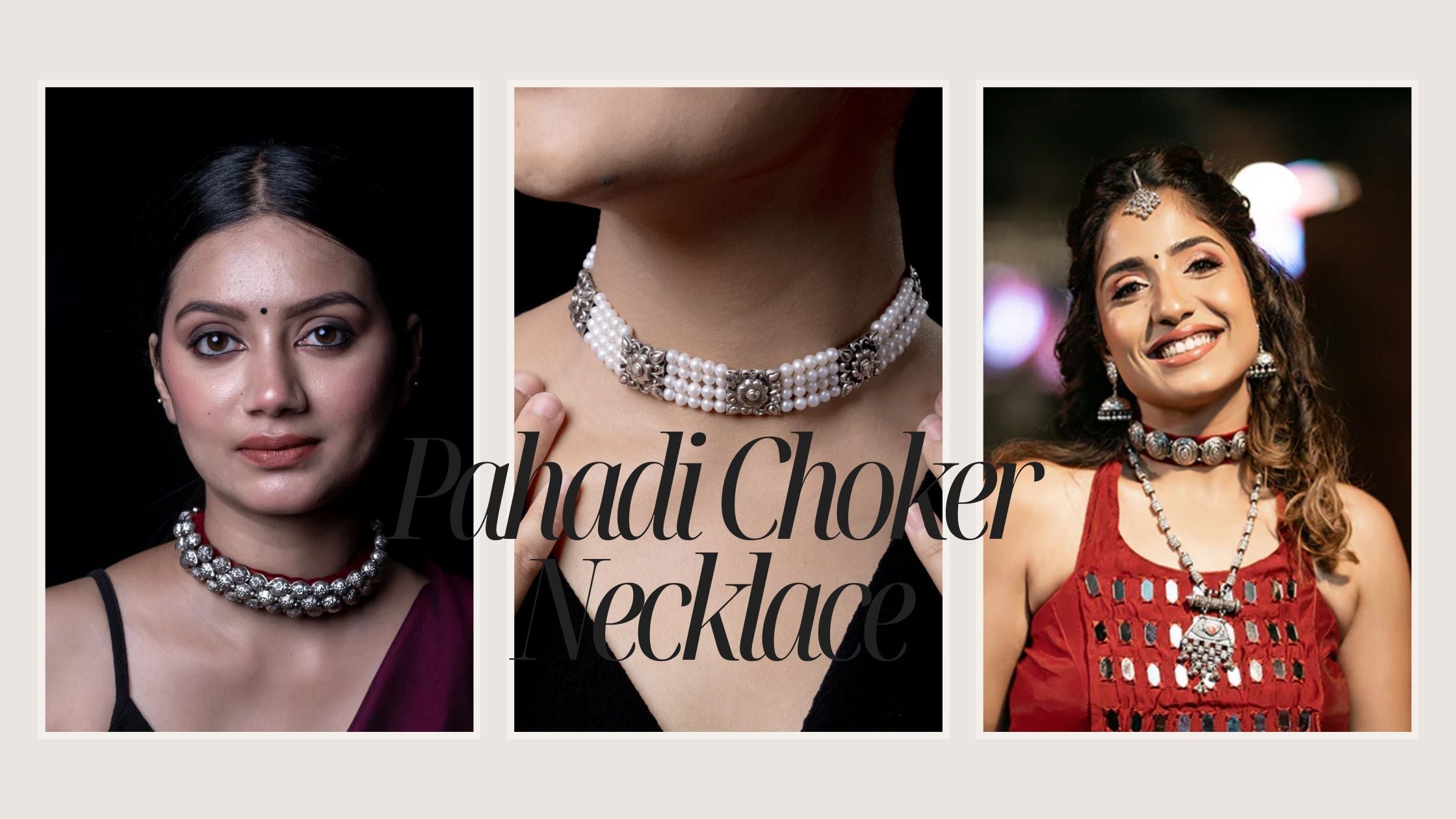
What is a Guluband? The Story Behind the Iconic Pahadi Choker Necklace

There's a piece of jewellery that sits close to the throat, almost like a whisper of identity. You see it on Pahadi brides draped in pichoras. You spot it in old photographs of Kumaoni women at festivals. You feel its weight the moment you put it on.
That piece is the Guluband, and it is so much more than a choker.
So, What Is a Guluband?
The word itself tells you everything. "Gala" means throat or neck in Hindi. "Bandh" means tied or bound. Put them together, and you have the jewellery that binds itself to your neck, to your culture, to your story.
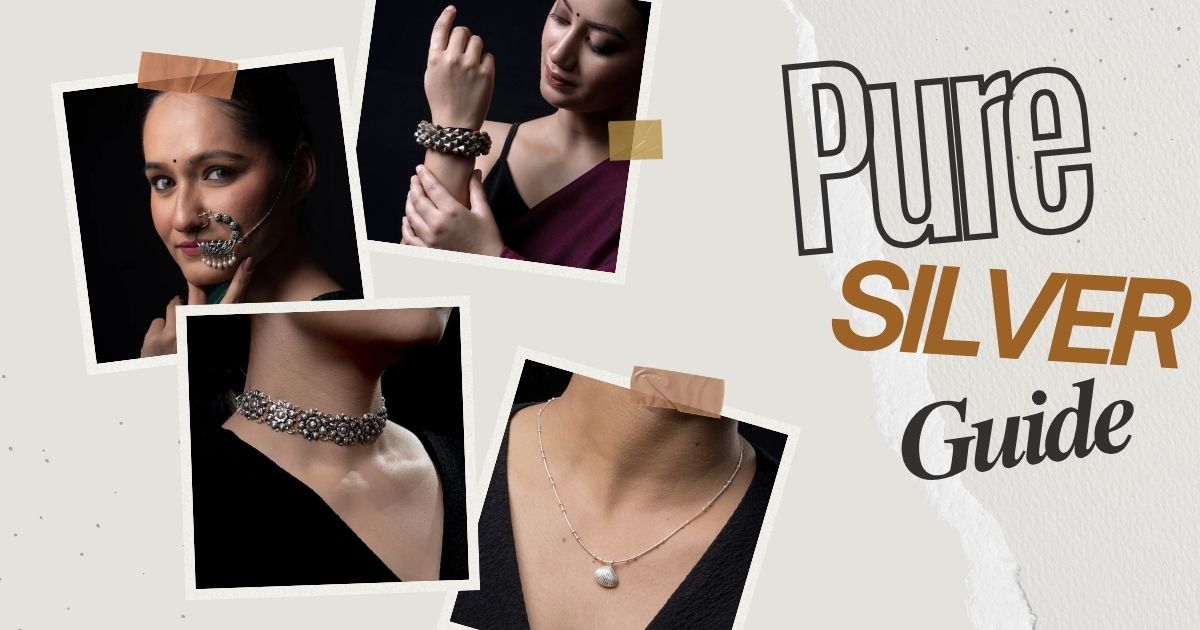
The Guluband is a traditional Pahadi choker necklace worn by women across Uttarakhand, particularly in the Kumaon and Garhwal regions. It sits snugly at the base of the throat, resting like a collar of identity.
Worn by Kumaoni, Garhwali, Bhotiya, and Jaunsari communities alike, the Guluband isn't reserved for any single occasion; it shows up at weddings, festivals, religious ceremonies, and every in-between celebration that the mountains have to offer.
What Does a Traditional Guluband Look Like?
The classic Guluband has a look you won't forget once you've seen it.
The base is typically a strip of rich fabric, most often deep red velvet, though dark blue and black are also traditional. This fabric belt is what gives the Guluband its softness against the skin.
The ornamentation sits on top of this fabric:
◆ Small square or rectangular gold plates called tikkis are arranged in a row
◆ These plates are etched with floral patterns, geometric designs, or sacred motifs
◆ They are joined together and stitched carefully onto the fabric base
◆ The whole piece is fastened at the back with a thread
The result? A jewellery piece that is simultaneously bold and intimate, the kind that commands attention without demanding it.
The Guluband Silver Necklace: A Modern Chapter
Traditionally, the Guluband was crafted in gold. Gold was the metal of celebration, of weddings, of status in Pahadi households.
But silver has always been the metal of the mountains, cooler, earthier, deeply connected to the moon and the landscape of the hills.
Today, the Guluband silver necklace is having its own cultural moment. As more people seek pieces that carry heritage but work in contemporary wardrobes, silver versions of the Guluband offer the best of both worlds. They're lighter on the body, more versatile across occasions, and honestly, the oxidized finish on silver brings out the intricate detailing in a way that gold sometimes doesn't.
At Ejaa, our silver pieces are crafted from 92.5 pure silver using moulds that are over 200 years old. Because the stories embedded in these designs deserve materials that last.

The Kumaoni Guluband: Why It's More Than Jewellery
Ask any woman from the Kumaon hills what her Guluband means to her. She won't just say "it's beautiful." She'll tell you it's her suhaag, her symbol of marital bliss. She'll tell you it belonged to her mother, and her mother's mother before that.
A Mark of Culture
The Guluband is one of the sholah shringar, the sixteen adornments that complete a woman in traditional Pahadi culture. It isn't optional ornamentation. It's cultural grammar. To be dressed for a ceremony in the hills without your Guluband is to leave a sentence unfinished.
A Symbol of the Mountain Woman
Pahadi women are known for their strength not just in the metaphorical sense, but literally. They carry loads, tend homes in extreme terrains, and hold families and communities together. The Guluband, sitting close to the throat like armour, has always felt like a quiet acknowledgement of that strength.
There's something incredibly moving about that.
A Bridge Between Generations
The tradition of Guluband moves through families the way stories do orally, personally, with all the emotion of a handoff. A grandmother's Guluband doesn't just get passed down; it gets worn to the next wedding, to the next festival, into the next chapter.
How Is a Guluband Different from a Hasuli?
People often mix up the two. Here's how to tell them apart:
Guluband vs Hasuli: Key Differences
Structure:
Guluband is flexible and fabric-based, while Hasuli is a rigid metal collar.
Comfort & Fit:
Guluband feels soft and comfortable on the skin, whereas Hasuli is stiff and offers a structured fit.
Origin:
Guluband mainly comes from the Kumaon region, while Hasuli is found across various Himalayan cultures.
Design Style:
Guluband features decorative plates on velvet or fabric, while Hasuli is a solid, curved metal piece (torque style).
Both are chokers. Both are iconic Pahadi silver necklaces. But the Guluband has a softness to it physically and emotionally that makes it uniquely intimate.
Wearing the Guluband Today
One of the most beautiful things about this piece is how well it travels across time.
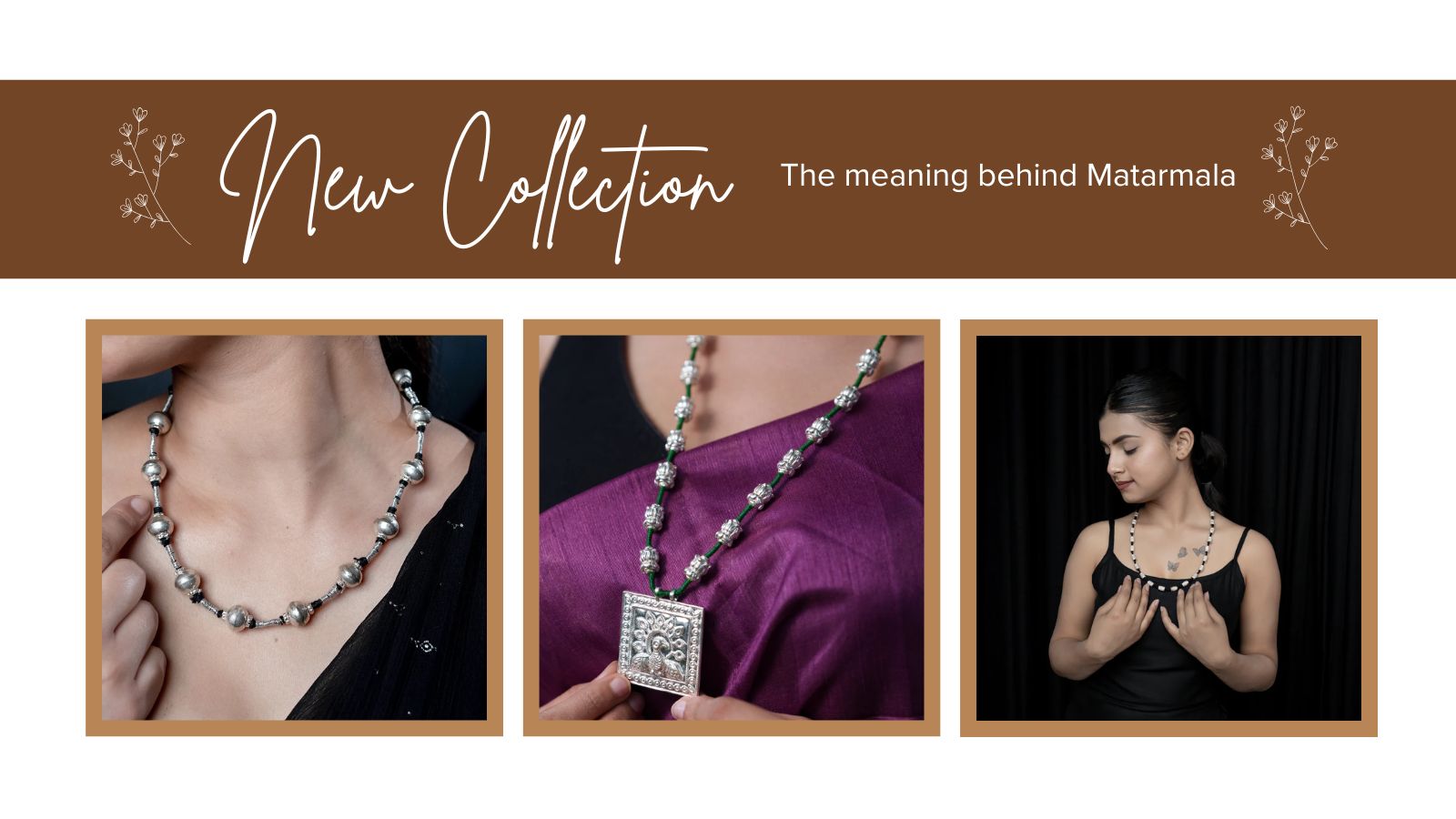
For traditional occasions: Pair your Guluband with a pichora, a ghagra, or a silk saree. Layer it with a matarmala or a Tilhairi for that full Pahadi bridal look.
For everyday wear, a Guluband silver necklace sits beautifully against a simple kurta or even a crisp white shirt. The contrast is striking. It doesn't need to be tried.
For modern styling: Mix it with contemporary silhouettes: a structured blazer, an Indo-Western co-ord, a flowy dress. The Guluband is not delicate. It holds its own.
Ejaa's Guluband Collection Designs Rooted in the Hills
At Ejaa, every Guluband is handcrafted in Haldwani, Uttarakhand, the heart of Kumaoni culture. Each piece carries a name that belongs to the mountains: rivers, birds, trees, and the quiet things the hills are made of.
Here's a glimpse of some of the designs from Ejaa's silver choker collection:
◆ Kosi Guluband: named after the Kosi river that runs through Kumaon; a classic, structured piece perfect for bridal wear
◆ Chandak Guluband: with bold, geometric tikkis that reflect the angular beauty of mountain architecture
◆ Chakra Guluband: featuring circular motifs echoing the sacred geometry of Pahadi art
◆ Morni Guluband: inspired by the peacock (morni), with intricate feather-like engravings
◆ Phool Guluband: delicate floral work that feels like wearing a garden
◆ Varg Guluband: a statement piece with layered boldness, for the woman who takes up space unapologetically
◆ Shank Guluband: the conch shell motif, sacred and serene
◆ Dhari Guluband: with stripe-like detailing that has an almost architectural quality
◆ Devphool Guluband: devotional and floral combined; often chosen for festive wear
Every single one of these is crafted by hand. No shortcuts. No mass production.

Why the Guluband Matters Right Now
Here's something worth saying plainly: traditional jewellery forms like the Guluband are disappearing from everyday life. Younger generations are understandably drawn to minimal, trending designs. The market is flooded with pieces that look the same everywhere.
But what's being lost in that trade is irreplaceable. The Guluband carries within it, in its stitching, its motifs, its fabric, the memory of a civilization that has existed in the Himalayan hills for centuries.
Wearing a Guluband isn't nostalgia. It's a choice. A choice to carry culture forward without putting it behind glass.
That's why at Ejaa, we don't just make jewellery. We retrieve stories from the mountains and make them wearable.
Frequently Asked Questions
1. What is a Guluband in Pahadi jewellery?
A Guluband is a traditional Pahadi choker necklace from Uttarakhand's Kumaon and Garhwal regions. The name comes from "gala" (throat) and "bandh" (bound). It features a velvet fabric base studded with engraved silver or gold tikkis worn at weddings, festivals, and cultural ceremonies.
2. What is the significance of the Kumaoni Guluband?
The Kumaoni Guluband is one of the sixteen bridal ornaments in the Pahadi tradition. It symbolizes suhaag (marital prosperity) and is a piece of living heritage, often passed down from mother to daughter across generations.
3. What is the difference between a Guluband and a Hasuli?
A Guluband is a flexible fabric-based garment with metal plates stitched on top, soft against the skin. A Hasuli is a rigid, crescent-shaped metal torque. The Guluband feels intimate and personal; the Hasuli is more sculptural and structured.
4. How should I style a Pahadi choker silver necklace?
It's versatile. Wear it with a pichora or silk saree for traditional occasions. Pair it with a plain kurta for everyday elegance. Or style it with a blazer or Indo-Western outfit for a modern look. Tie your hair up to let it take centre stage.
5. Are Ejaa's Gulubands made of pure silver?
Yes, all Ejaa Gulubands are crafted from 92.5% pure silver by artisans in Haldwani, Uttarakhand, using moulds over 200 years old. Every piece is handmade. Prices range from ₹7,000 to ₹18,000 with free shipping and 7-day returns.
The Takeaway
The Guluband is a traditional Pahadi choker necklace rooted in the hills of Uttarakhand, specifically in the jewellery culture of Kumaon and Garhwal. It is crafted on a fabric base, adorned with gold or silver plates, and worn close to the throat as a mark of identity, culture, and celebration. It is one of the oldest, most beloved pieces in Guluband Pahadi jewellery, and it is still, in every sense, alive.