




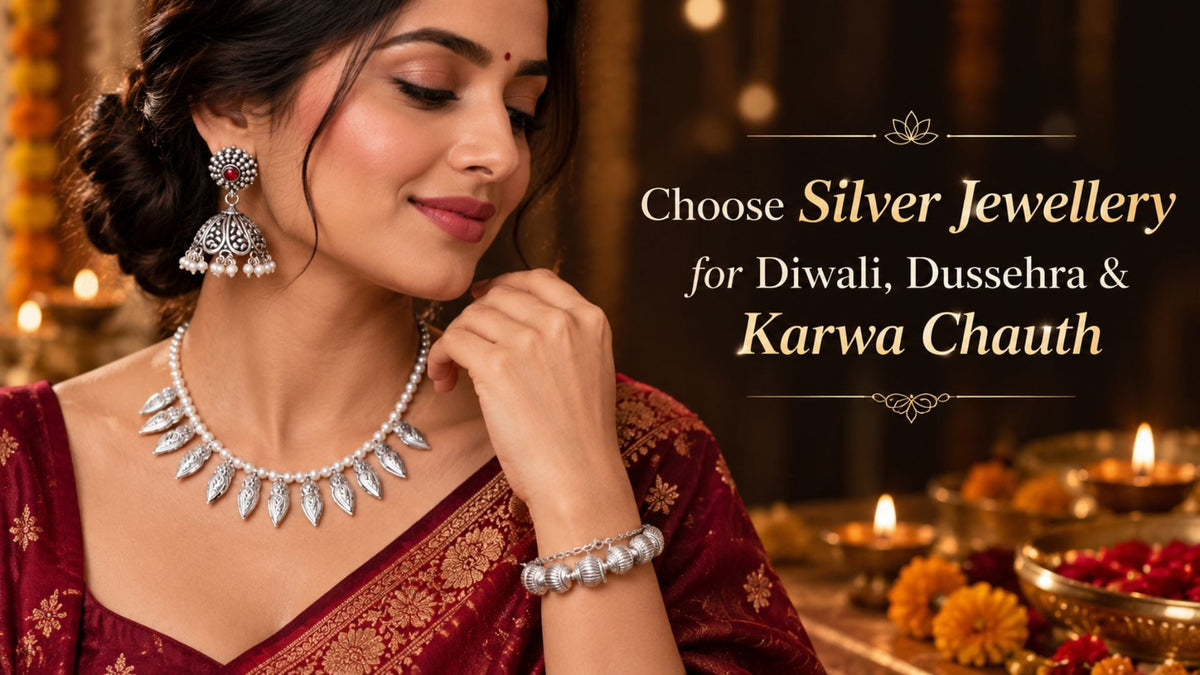
How to Choose Silver Jewellery for Festivals: Diwali, Dussehra & Karwa Chauth

To choose silver jewellery for festivals, match the piece to the occasion: lightweight jhumkas and bracelets for Dussehra, a silver mangalsutra, payal and bichhiya for Karwa Chauth, and one statement choker or hasuli for Diwali. Pick 92.5 sterling silver for strength and shine, and check for a BIS hallmark before you buy.
In 2026, Dussehra falls on 20 October, Karwa Chauth on 29 October, Dhanteras on 6 November, and Diwali on 8 November.
Dussehra: Light Pieces for Long Days
Dussehra means morning puja, Ravan Dahan crowds, and hours on your feet, so comfort beats weight.
-
Small silver jhumka earrings that sway without pulling the earlobe; if you love a heavier pair, an ear chain (sahara) hooked into your hair carries the weight
-
A slim kada or pahuchi bracelet, the easiest bracelet for saree sleeves
-
Lightweight silver Pieces that stay comfortable from puja to dinner
-
Oxidised finishes for a traditional look, since the difference between oxidised and sterling silver jhumkas lies in the finish, not the purity

Karwa Chauth: Silver with Meaning
Karwa Chauth styling follows solah shringar, so symbolic pieces come first.
-
A silver mangalsutra, a lighter option many women now prefer for the fast and the evening puja
-
A silver payal and bichhiya, since tradition keeps gold off the feet
-
A silver maang tikka to frame a red or maroon saree
-
92.5 sterling silver over plated metal, as these pieces touch skin all day and plated metal can react with sweat
Silver jewellery also makes a meaningful festive gift, especially for a wife or someone close to you. For ideas, see these silver jewellery gifts for Karwa Chauth.
Diwali and Dhanteras: One Hero Piece
The 2026 festive trend is one bold piece instead of a full matching set, with oxidised finishes and temple or floral motifs leading the look.
-
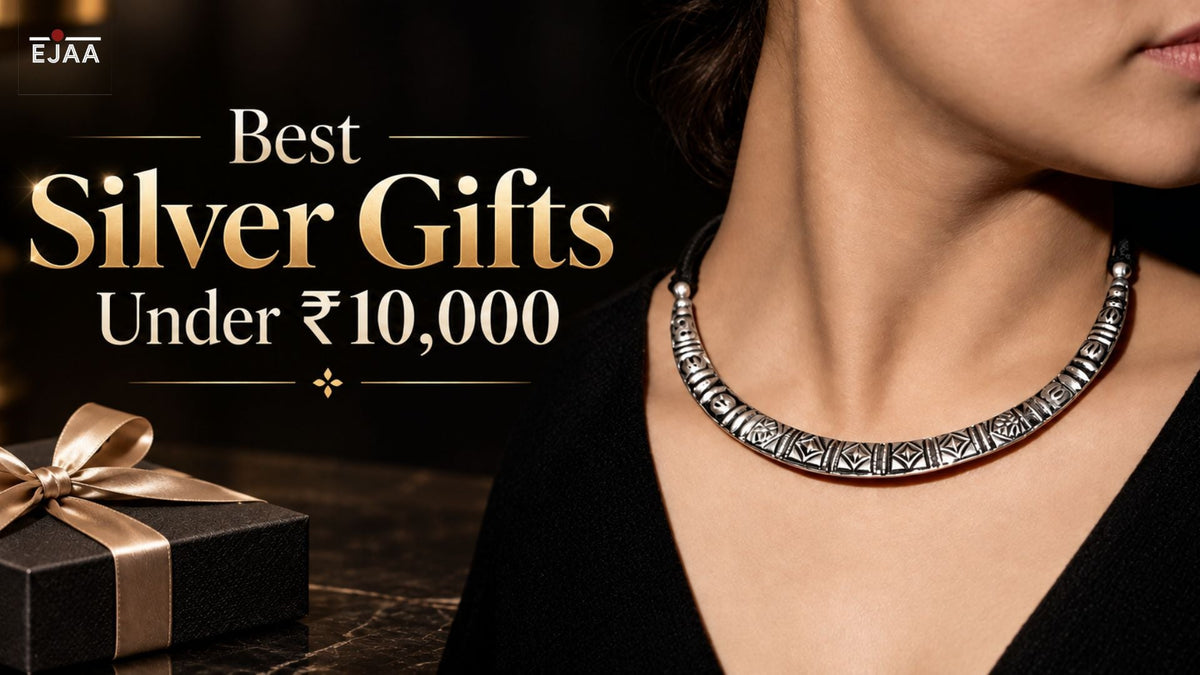
A silver choker necklace or a hasuli necklace with a deep-neck blouse
-
Silver with a gold zari saree, which is fully on trend; repeating the silver once in your clutch or blouse work ties together most silver saree jewellery combinations
-
999 silver coins for Dhanteras puja, still among the most popular silver gifts for Diwali
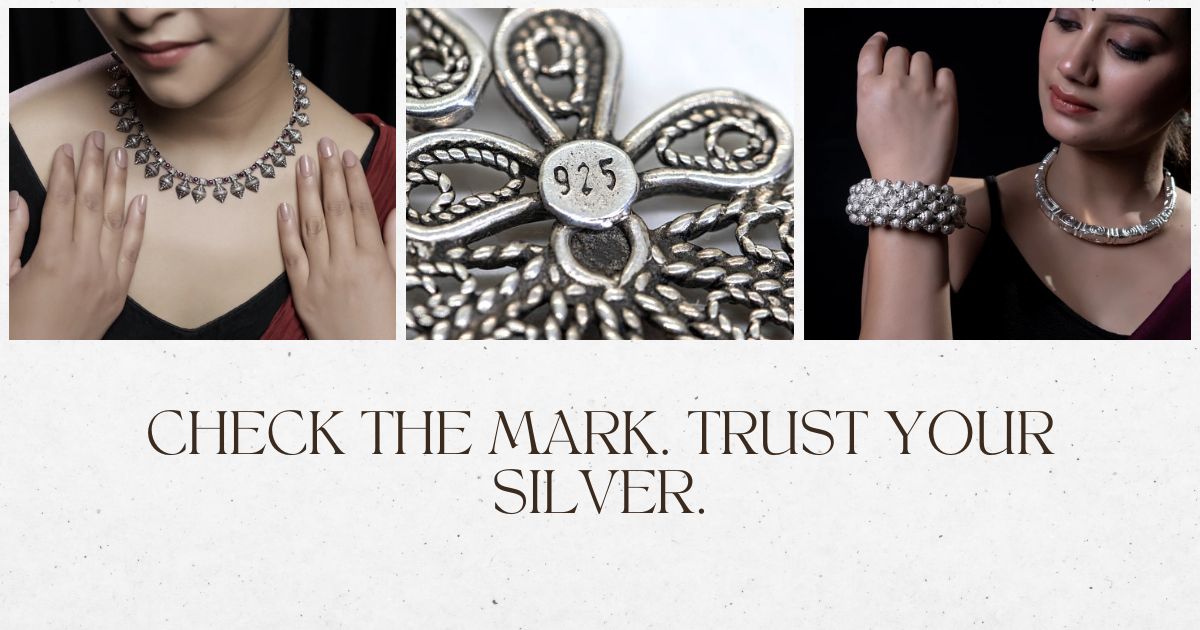
Coins and jewellery use different purities for a reason. The 925 vs 999 silver difference comes down to strength: pure 999 silver is too soft for detailed designs, so jewellery uses 92.5% silver blended with copper. For gifting, a BIS hallmark on silver shows the BIS logo, the purity grade such as 925, and a six-digit HUID code.
Before Lakshmi Puja, clean silver at home with mild soap and lukewarm water, and spray perfume before wearing jewellery, never after.
Final Thoughts
Festive silver works best when each piece suits the day: light for Dussehra, symbolic for Karwa Chauth and bold for Diwali. For designs rooted in Kumaoni and Garhwali tradition, Ejaa crafts pahadi silver jewellery in 92.5 sterling silver, from hasulis and chokers to jhumkas and payals for the whole festive season.
FAQs
1. Is it good to gift silver on Diwali?
Yes. Silver is linked to Goddess Lakshmi and prosperity, so coins, jhumkas, and bracelets are popular Diwali gifts.
2. Is 925 sterling silver good for festival wear?
Yes. It is durable, skin-friendly, and holds intricate designs well through long festive days.
3. Can I wear silver jewellery with a gold zari saree?
Yes. Mixing metals is a current trend; keep silver as the hero and let the zari act as the accent.
4. Is 100% silver better than 925?
For coins, yes. For jewellery, 925 is better because pure silver bends and scratches easily.
5. How do I stop silver jewellery from turning black?
Keep it away from moisture, perfume, and air. Store it in airtight pouches and wipe it after each use.
6. Is oxidised silver good or bad?
It is good. Oxidised silver is real silver with an intentionally darkened finish, and you should wipe it, not polish it.