




How to Restore Silver Jewelry Shine in 5 Minutes

Silver jewellery can lose its shine over time due to tarnish, but you can clean silver jewellery at home and restore its shine in just 5 minutes using simple household ingredients like baking soda, toothpaste, mild soap, or silver polish. These quick and effective cleaning methods safely remove surface tarnish, restore your jewellery's natural brilliance, and help keep sterling silver looking its best.
In this guide, you'll learn why silver tarnishes, the best ways to clean it at home, and tips to maintain its shine for longer.
Why Does Silver Jewellery Tarnish?
Silver naturally reacts with sulfur compounds in the air, creating a dark layer called tarnish on the surface, which is a sign of real silver silver react with sulfur in the air. It's pure chemistry, not damage. High humidity, perfumes, lotions, body oils, and improper storage accelerate this process. Long festival days are especially hard on silver, since sweat settles into the crevices, so it helps to know whether sweat damages silver jewellery and how to clean it afterwards. The good news? Tarnish sits only on the surface. The silver underneath remains perfect, and with the right restoration method, that brilliant shine returns instantly.
5 Proven Methods to Restore Silver Jewellery Shine
Method 1: Baking Soda + Aluminum Foil Technique
This scientifically backed method uses an electrochemical reaction that converts tarnish back into silver, with the sulfur moving onto the aluminium.
Materials Required:
- Aluminum foil
- Baking soda (2 tablespoons)
- Hot water (1 cup)
- Heat-safe bowl
Line the bowl with aluminium foil, shiny side up. Place tarnished silver jewellery on the foil. Sprinkle baking soda over the pieces and pour hot water slowly. Bubbles form immediately; that's the sulfur leaving your silver and bonding with the foil. Wait 2-3 minutes, rinse under cold water, and pat dry. The result? Mirror-bright silver that looks professionally restored. This method suits plain and polished silver rings, chains, and bracelets since no scrubbing is required. Skip it for oxidised pieces, as it removes the intentional black finish.
Method 2: Toothpaste Polishing Technique
White toothpaste contains mild abrasives that effectively remove tarnish without damaging silver.
Materials Required:
- White toothpaste (non-gel)
- Soft-bristled toothbrush
- Warm water
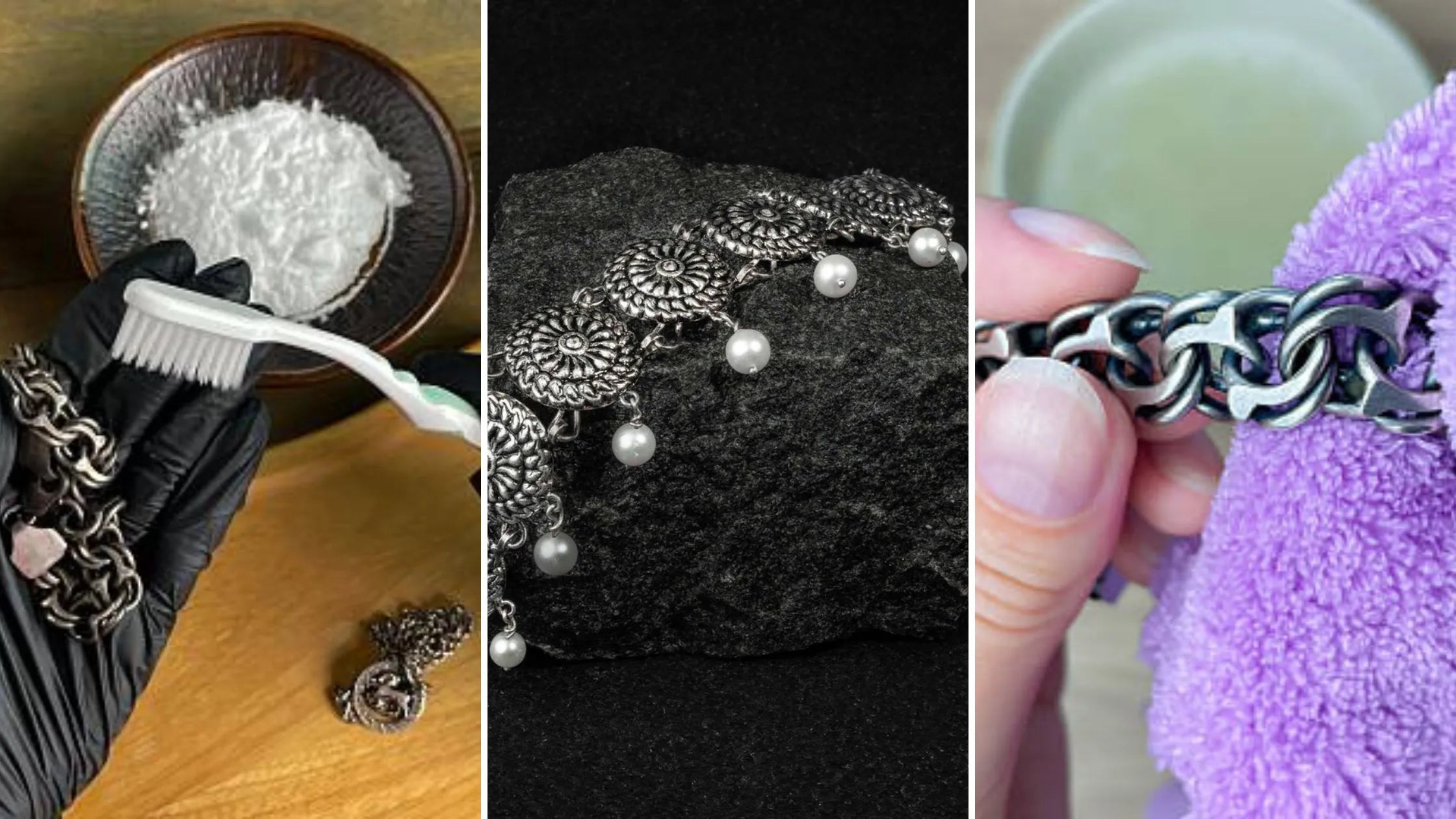
Apply toothpaste directly onto tarnished areas. Using a soft toothbrush, gently scrub in circular motions. Focus on crevices and intricate details where tarnish accumulates. Rinse thoroughly under warm water and dry with a microfiber cloth, buffing gently. This technique works well for cleaning a silver ring or bracelet at home, especially pieces with engraved patterns, as long as you keep the scrubbing gentle.

Method 3: Lemon Juice + Salt Treatment
Natural citric acid combined with salt creates a powerful yet gentle tarnish remover.
Materials Required:
- Fresh lemon juice (1 tablespoon)
- Table salt (1 teaspoon)
- Soft cloth
Combine lemon juice and salt to form a thick paste. Apply evenly across tarnished surfaces and rub gently. Allow the paste to sit for 2 minutes; this gives the acid time to dissolve the tarnish. Rinse thoroughly with warm water and buff dry immediately.
Critical Warning: Avoid this method on jewellery featuring pearls, opals, or porous gemstones. Acidic solutions can permanently damage these delicate materials.
Method 4: Mild Soap Solution
For lightly tarnished pieces or regular maintenance, a gentle soap solution provides effective results without harsh chemicals.
Materials Required:
- Mild dish soap
- Warm water
- Soft cloth
Mix several drops of dish soap in warm water. Submerge silver jewellery and soak for 3-5 minutes. Gently wipe with a soft cloth to remove residue. Rinse thoroughly and dry completely; moisture left on silver accelerates new tarnish formation. Incorporate this method into weekly jewellery care routines to prevent heavy tarnish accumulation. This is also the easiest way to clean your silver chain: soak it laid out straight, then pull it gently through a soft cloth so the links do not tangle.
Method 5: Commercial Silver Polish
When dealing with severe tarnish, quality commercial silver polish delivers unmatched effectiveness.
Materials Required:
- Quality silver polish
- Soft polishing cloth
Apply polish to a soft cloth and rub jewellery using circular motions. The polish removes tarnish while depositing a protective layer that slows future tarnishing. Follow product instructions precisely. Buff thoroughly with a clean cloth to reveal a brilliant shine. Reserve this for valuable heirloom pieces or heavily tarnished jewellery.

Does Toothpaste Really Work on Silver Jewellery?
Yes, toothpaste works for light tarnish because its mild abrasives lift the dark layer off the surface. It works best on plain white, non-gel paste. Whitening, charcoal, or gritty toothpastes can leave fine scratches, so avoid them. Toothpaste is also not suitable for silver-plated pieces, high-polish finishes or oxidised designs, because it can wear the coating or finish away. Use it occasionally for quick touch-ups, not as a weekly routine.
Professional Care Tips for Long-Lasting Shine
Storage Practices:
- Store in airtight containers or anti-tarnish bags
- Include anti-tarnish strips that absorb sulfur compounds
- Separate pieces individually to prevent scratching
- Keep away from humid bathrooms
Daily Maintenance:
- Remove jewellery before showering or swimming
- Apply perfumes and lotions before wearing jewellery
- Wipe pieces with a soft cloth after each wear
- Wear silver regularly; gentle friction from daily wear keeps tarnish from settling
Final Thoughts
Tarnish is only a surface layer, and with baking soda, mild soap or a good polish, your silver can look bright again in just 5 minutes. Silver that is worn and cared for regularly keeps its beauty for generations, which is why every piece of authentic Pahadi silver jewellery at Ejaa is crafted to be worn often, cleaned easily and passed down with pride. If you're looking for silver that holds its shine and its heritage, Ejaa's handcrafted Pahadi collection is made for everyday wear and lifelong keeping.
FAQs
How frequently should silver jewellery be cleaned?
Clean every 2-3 months for regularly worn pieces, or immediately when tarnish becomes visible. Quick wipes after each wear minimise buildup and reduce intensive cleaning needs.
Is it safe to use vinegar for cleaning silver jewellery?
Yes, white vinegar diluted equally with water works for light tarnish. Limit soaking to 5 minutes maximum and rinse thoroughly. Avoid using vinegar on pieces with gemstones or pearls.
Why does my silver jewellery tarnish faster than others?
Individual body chemistry, environmental humidity, exposure to chemicals, and storage conditions all affect tarnishing rates. Sterling silver (92.5% pure) tarnishes more slowly than lower-grade silver alloys.
Can wearing silver jewellery regularly prevent tarnishing?
Yes, silver worn often stays shinier because gentle friction from wear stops tarnish from building up. Pieces stored away for long periods tarnish faster.
How do I clean silver that has turned black?
Use the baking soda and aluminium foil method for heavily blackened silver, or a silver polish for stubborn spots. For oxidised Pahadi designs from Ejaa, simply wipe with a soft, dry cloth so the intentional black finish stays intact.
If silver turns black, is it fake?
No, blackening is a natural reaction that happens only with real silver, which is why genuine silver pieces from Ejaa can darken over time and clean up easily. Fake or plated jewellery usually peels, fades or leaves a green mark instead.