




Article: Silver Jewellery Price Guide: What You’re Really Paying For
Silver Jewellery Price Guide: What You’re Really Paying For

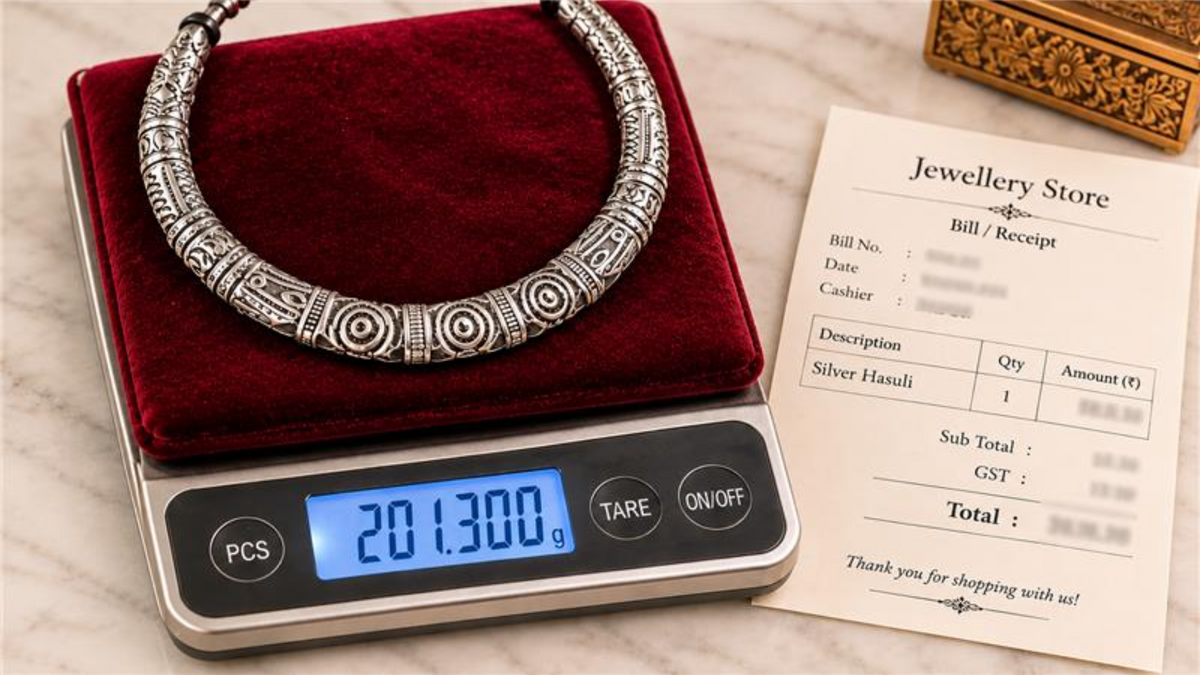
The price of silver jewellery in India is the value of the silver it contains, plus making charges for design and labour, plus 3% GST. Metal value is weight × purity × the day's silver rate, so the market rate is only one part of the price. Craftsmanship, purity, and any added pearls or stones explain why two pieces of the same weight can be priced very differently. Knowing how each part works helps you read a bill clearly and judge whether a piece is fairly priced.
The Price Formula, Step by Step
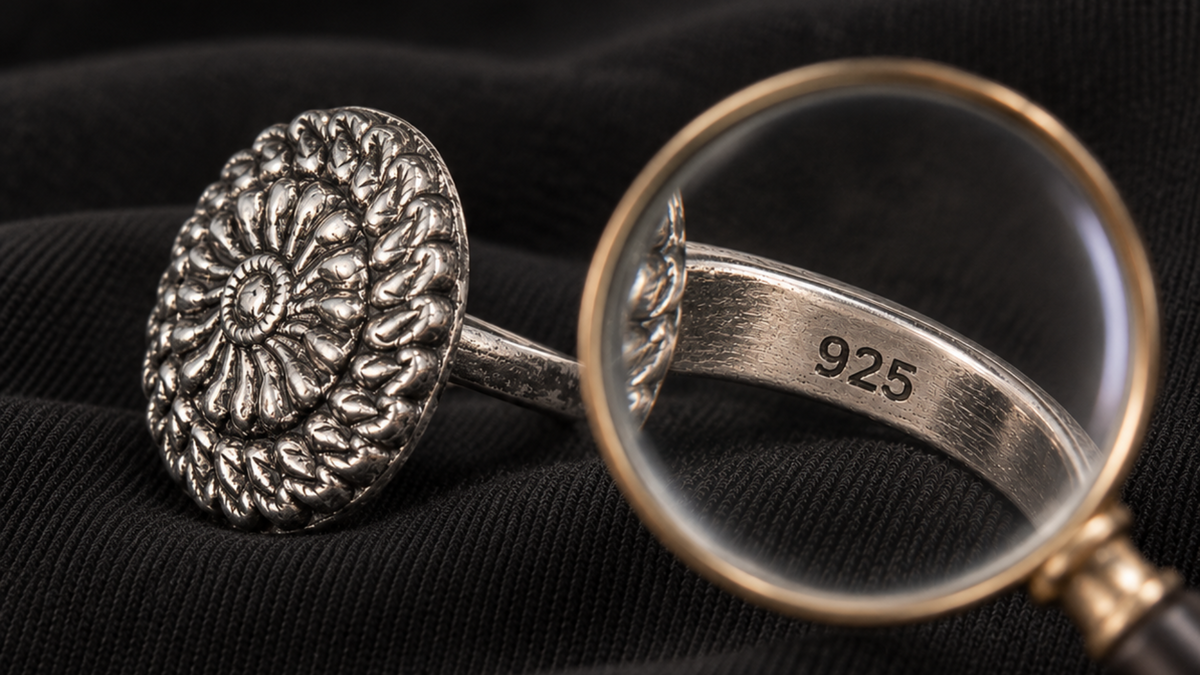
- Metal value: net silver weight × purity × the day's silver rate. For 925 sterling silver, the purity factor is 0.925, meaning 92.5% silver and 7.5% alloy for strength.
- Making charges: labour, design and finishing, charged per gram or as a percentage of metal value.
- Extras: pearls, stones or threads, priced separately.
- GST: 3% on the total value of the jewellery, including making charges billed as part of the sale.
As the silver rate moves daily, the same piece can cost slightly more or less week to week.
What You Pay for Beyond the Metal
Silver making charges cover the work that turns raw metal into jewellery:
- Designing, casting or hand-forging
- Soldering, stone setting and filigree work
- Polishing and finishing
- Wastage, the metal lost during cutting and filing
This is why making charges on silver vary so much by piece. A plain silver chain for women is mostly machine-made, so silver chain making charges stay modest. Silver ring making charges and making charges on silver payal rise with stone setting, ghungroo work or detailed links.

Explore our Silver Chain for Women Collection
Why the Price per Gram Changes
Silver making charges per gram are rarely the same across two designs:
- Handcrafted vs machine-made: handwork takes days, not minutes.
- Small pieces: fixed labour spread over fewer grams lifts the per-gram cost.
- Traditional technique: a Kumaoni silver nath or a silver hasuli needs forging and detailing that a cast piece does not.
When comparing silver nath price, hasuli silver price or guluband price, compare craft and purity, not just weight.
Check Purity Before You Pay
Under BIS standard IS 2112:2025, hallmarked silver carries three marks: the BIS logo with the word "SILVER", the purity grade, and a six-character HUID code. The recognised silver hallmarking grades are 800, 835, 925, 958, 970, 990 and 999.
Silver hallmarking is voluntary in India, but pieces hallmarked after 1 September 2025 must carry a HUID, verifiable through a silver hallmark check on the BIS Care app. Our guide to BIS hallmarking for silver jewellery explains each mark.
Is 92.5 silver pure? Read our complete guide to What is 92.5 sterling silver and Everything You Need to Know
Red Flags on a Silver Bill
- No weight mentioned anywhere
- A price lower than the silver inside it
- 925 jewellery billed at the 999 rate
- No itemised GST invoice
These tips on real vs fake silver help you test a piece at home.
Pahadi Craft, Priced for the Work Behind It
At Ejaa, every piece is 92.5 sterling silver, handcrafted in Uttarakhand by artisans carrying forward Kumaoni and Garhwali designs. The silver pochi price on a hand-forged silver pahuchi bracelet or a silver choker necklace reflects real silver and real handwork.
FAQs
How is silver jewellery price calculated in India?
Multiply the silver weight by its purity and the day's silver rate, add making charges, then add 3% GST on the total.
What are making charges on silver jewellery?
They cover design, labour, finishing, and metal wastage, charged per gram or as a percentage of metal value.
Why is handmade silver jewellery more expensive per gram?
Handwork takes far longer than machine casting. Ejaa's Pahadi pieces are hand-forged in Uttarakhand, so their price reflects artisan hours, not just weight.
Which is pure silver, 925 or 999?
999 silver is 99.9% pure, while 925 is 92.5% silver alloyed for strength. Ejaa uses 92.5 sterling silver because it holds intricate traditional designs well.
Is silver hallmarking mandatory in India?
No, it is voluntary, but any silver hallmarked after 1 September 2025 must carry a unique HUID code.
How do I know silver jewellery is worth its price?
Check the weight, purity mark and an itemised bill showing metal value, making charges and GST. Every Ejaa piece is clearly marked as 92.5 sterling silver.